

The Druze in Jordan became well-known among Jordanian tribes and within Jordanian society as the “Bani Ma’ruf clan,” the Unitarian Druze.
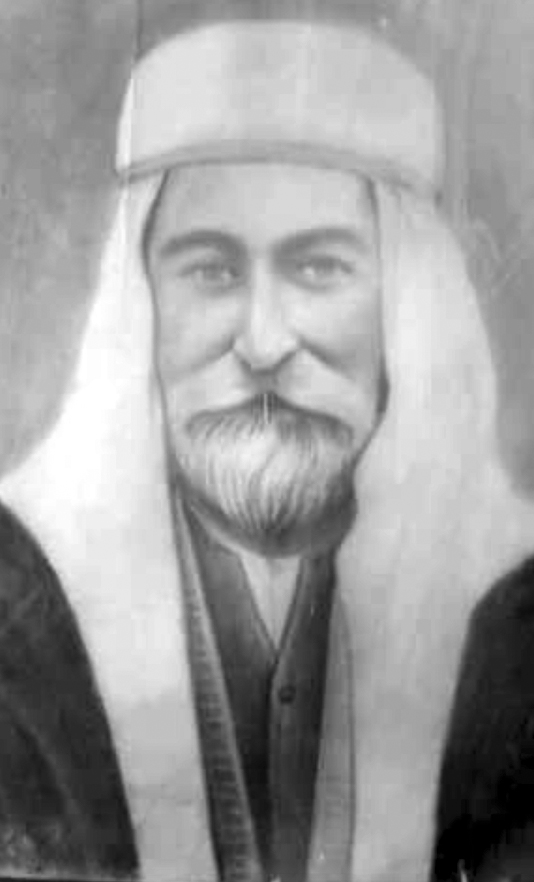
The Druze came to Jordan from various regions of the Arab world, such as Syria, Lebanon, and Palestine. Sheikh Abu Rashrash Muhammad Salman Ata was the first to make Azraq Castle a place of permanent residence and the primary founder of the Druze presence in Jordan in the late 18th century. The late Sheikh Abu Rashrash Muhammad Salman Ata traveled from the village of Al-Anat in the south of Jabal al-Arab with his sons and some of his nephews to Azraq. Sheikh Muhammad Ata was accompanied by Sheikh Fouad Al-Qadi and Muhammad Al-Eid from Lebanon, may God have mercy on them. Their stay lasted only a very short time, and they returned to Lebanon. They stayed there for a period before returning to Azraq with their families, like many Bani Ma’ruf families, to reside there permanently. At that time, there were no structures in Azraq except for its ancient castle (Azraq Castle) in the middle of the Jordanian desert, which is about 120 km east of the capital, Amman. He chose the castle as a place of permanent residence; thus, Sheikh Muhammad Ata was the first to inhabit and settle in Azraq with his relatives from the Bani Ma’ruf. This marked the beginning of stability and the presence of the Druze in Azraq, which was later named in government and land records as “Azraq al-Druze” (Druze Azraq) to this day. Today, it is considered the main headquarters of the Druze in Jordan, and it is home to the Diwan of Honor and Dignity.
The late Sheikh Abu Rashrash Muhammad Salman Ata – the first to make Azraq Castle a place of permanent residence and the founder of the Druze presence in Azraq. The migration of the Ata family from Palestine via Lebanon and Syria to Azraq in Jordan.
Historical Glimpse
In the early 1920s, families of the Bani Ma’ruf Druze began moving to Azraq from Syria, Palestine, and Lebanon, and the castle could no longer accommodate them. Sheikh Abu Sayyah Hazima Ata built the first house outside the castle in the 1930s. Then, they gradually moved out of the castle and built beyond its walls.
The Druze were at the forefront of welcoming the Arab Army coming from Mecca in the Hejaz, marching toward Damascus in Syria during the Great Arab Revolt led by the King of the Arabs (Sharif Hashemite Hussein bin Ali, founder of the Hashemite Kingdom of Hejaz in the early 20th century, and the first to call for Arab independence from Ottoman rule in 1916 AD against the Ottoman Turks).
The heroic stalwarts of Bani Ma’ruf, accompanied by the great Mujahid, the late Sultan Pasha al-Atrash and the leaders of the Mountain, were at the forefront of those who welcomed the Arab Army in the city of Ma'an, southern Jordan, led by Prince Faisal bin Hussein. He was marching with his army along the Red Sea coast, advancing north and achieving victory after victory, until he occupied the Al-Wajh area and made it a base for military operations in the north, after which the Ottomans never regained their footing in the Hejaz. In July 1917, eleven months after the declaration of the revolution, Prince Faisal's forces liberated Aqaba. Then, the Arabs headed to Ma'an, the gathering center for the Ottomans due to its location on the railway line, and occupied Jurf al-Darawish, Tafilah, and Wadi Musa. Prince Faisal later became King of Syria after liberating Damascus from the Turks, until the conspiracies and betrayal of the Allies (France and Britain) against the Arabs were revealed. France occupied Syria, and King Faisal left Damascus after the Battle of Maysalun for Baghdad, where he was pledged allegiance as King of Iraq, following what became known after the partitioning of the Arab world under the colonial Sykes-Picot Agreement between Britain and France regarding their zones of influence.
The Arab Army reached the Azraq Oasis in the Jordanian desert and used its ancient castle as a place for gathering forces and for Arab tribes and revolutionaries from various Arab lands to join the Army of the Revolution, until the troop assembly was completed in mid-September 1918.
During this time, the heroic Bani Ma’ruf revolutionaries set off toward Damascus and entered it as victors before the Arab Army arrived, raising the Arab flag over the Serail of Damascus for the first time in 400 years.
Prominent Figures at the Beginning of the Founding of the Jordanian State
The Druze of Jordan had a prominent role in founding the Jordanian state 100 years ago. Among the Druze figures who left significant imprints on the path of building the Jordanian state:
1- Rashid Ali Hassan Tali': The first head of a Jordanian government from the Bani Ma’ruf; he was from Jadidat al-Shouf in Lebanon. He was born in 1876 and died in 1926 in the village of Shabaki/Jabal al-Arab and was buried there.
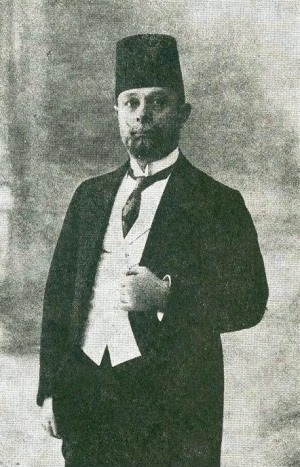
2- Fouad Yousef Hassan Salim: Born in Baakline in 1894 to a family originally from Jbaa, Shouf/Lebanon. He joined the revolution of Sharif Hussein bin Ali in 1916. He fought the Turks and the French. When Prince Abdullah bin Al-Hussein announced the founding of the Kingdom of Transjordan, he assumed the position of Chief of Staff of the Jordanian Arab Army, becoming the first army commander in Jordan. He was martyred in the Battle of Majdal Shams on 12/3/1925, after leaving the army leadership to join the Mujahid Sultan al-Atrash.
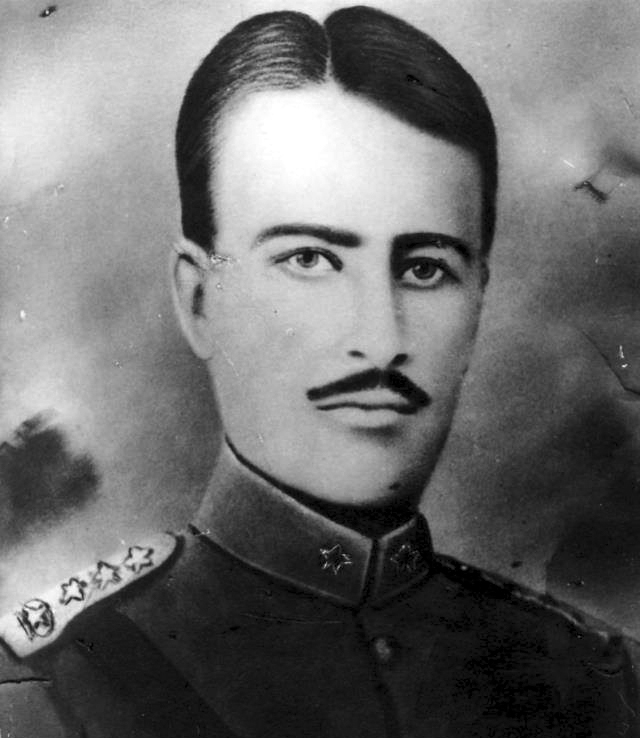
3- Dr. Suleiman Al-Najjar (Surgeon): A doctor from Lebanon who graduated from the American University of Beirut in 1917. He moved to Amman to provide medical services to citizens. He was the first Director of Royal Medical Services on 12/17/1947 and established the first field dressing station, which later turned into a military hospital.
4- Colonel Dr. Farid Tali': Appointed in 1954 as the second Director of Royal Medical Services in the Hashemite Kingdom of Jordan, and he established stationary and mobile hospitals, including the Zarqa Hospital.
5- Colonel Physician Saeed Al-Najjar: Appointed as the third Director of Royal Medical Services on 4/7/1957 in the Hashemite Kingdom of Jordan, then specialized in providing medical services to the Jordanian Armed Forces.
6- Dr. Muhammad Amin Talhouk: A doctor from Lebanon (1894–1971), born in Aitat. He moved to Jordan, joined the Jordanian Army, and reached the rank of Brigadier General. He was the commander of the main Amman Hospital in Jordan and received several medals.
7- Commander Hasib Dhubian: The personal aide to His Majesty King Abdullah I, founder of the Hashemite Kingdom of Jordan, and the first military commander of the city of Salt in 1921, and one of the companions of the Mujahid Sultan Pasha al-Atrash. He died in the city of Rusaifa in 1969.
The list continues with major figures of Bani Ma’ruf who had significant and prominent imprints on the path of building and founding Jordan.
After the founding of the Jordanian Emirate, some of the Bani Ma’ruf descendants began arriving in Jordan with their families from Syria, Lebanon, and Palestine, settling in the capital, Amman, and making Jabal al-Akhdar (one of Amman's seven hills) their place of residence. Today, some of them are located in the Marka District of the capital, Amman, as well as in some areas of Zarqa city, Rusaifa, and the Hashimiyya District belonging to Zarqa Governorate, which is 25 km from Amman, and some families reside in the coastal city of Aqaba in southern Jordan.
The Druze in Northern Jordan and Northern Azraq
The Druze were present in northern Jordan in the town of Umm al-Quttain, which was known in the past for its “fig trees” and was called Umm al-Quttain because of the abundance of fig trees there since long ago. It belongs to the Jordanian Mafraq Governorate, bordering Jabal al-Arab in Syria. This village belonged to Jabal al-Arab before the Sykes-Picot Agreement. Among its honorable families are: Al-Barihi, Nader, Al-Safadi, Al-Surayhi, and Abu al-Tayf.
They were also present in Northern Azraq, which is the main center for Bani Ma’ruf in Jordan. Azraq is a region located in the Eastern Desert of the Hashemite Kingdom of Jordan. It has been known for a long time as a beautiful green desert oasis in the middle of the Jordanian desert, rich in fresh and mineral water, and contains a number of antiquities and tourist areas, most notably the Azraq Wetland Reserve and the Shaumari Wildlife Reserve. There are also a number of desert palaces, including the Azraq Palace. Azraq has long been an important settlement in a remote and arid desert region in Jordan. The strategic value of the city and its castle (Azraq Palace) lies in its location in the middle of the Azraq Oasis, which is the only permanent source of fresh water in Jordan due to the large water basin found there.
The three largest families of Bani Ma’ruf in Jordan, most of whose members reside in Azraq, are:
1- Al Ata / Syria, Palestine, and the Golan Heights.
2- Al Abu al-Tayf / Syria and Lebanon (its branches include: Al-Qusayr, Al-Akri, Qamash).
3- Al Al-Awar / Syria and Lebanon.
In addition to 74 other honorable Bani Ma’ruf families residing in Azraq, including: Al-Afir (Zain al-Din) from Syria, Al-Balous (Shalghin) from Syria, Al-Sabra from Syria and the Golan Heights, Al-Saeed, Al-Qadi from Syria and Lebanon, Al-Eid from Lebanon, Harb from Syria, Abu Zaki from Lebanon, Al-Halh from Syria, Al-Hasaniya from Lebanon, Rabah from Syria and Palestine, Al-Safadi from Syria and Palestine, Al-Hamoud from Syria and Palestine, Kaiwan from Syria, Abu Assi from Syria, Tarabieh from Syria, Lebanon, and the Golan, Al-Salman from Syria, Al-Aisami from Syria, Al-Shaer from Syria, Hatoum from Syria and Lebanon, Abu Tariya from Lebanon, Al-Uqbani, Zuwayhed, Wali, Al-Shumari, Al-Harisha, Amer, Abu Hadeer, Al-Maaz, Suwaid/Amer, Abu Rashid, Abu Madi/Al-Safadi, Al-Bahri, Al-Halh, Al-Munawar, Al-Aqili, Qatrab, Naffa’, Al-Najm, Al-Bassar, Al-Bahri, Sarai al-Din, Masoud, Ghazlan, Faour, with our deepest apologies to all the honorable Bani Ma’ruf families whose names were not mentioned due to lapses in memory.
The Romans built the Azraq Palace (the ancient castle) out of basalt stones. It is a fortified site with two entrances that close using thick basalt stone gates. It is located in the Azraq Oasis near the water pools that were once full of fresh springs and marshes, frequented by predators, and it is a global site for migratory birds.
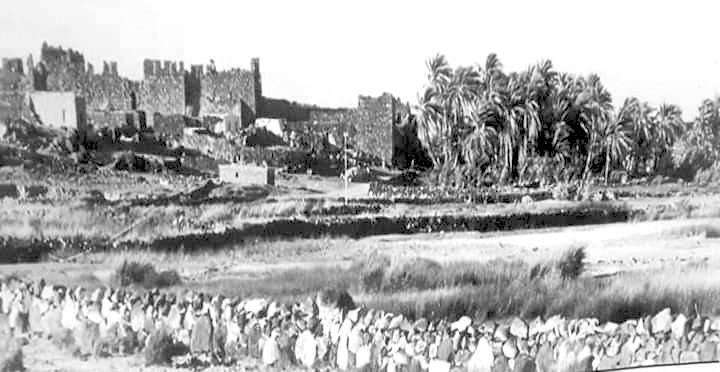
The ancient Azraq Palace was the fortified rear site for Jabal al-Arab when conditions became severe for the Bani Ma’ruf revolutionaries in their battles against the French Mandate under the leadership of the late, by God's permission, (the great Mujahid Sultan Pasha al-Atrash), may God have mercy on him, during the Great Syrian Revolt.