
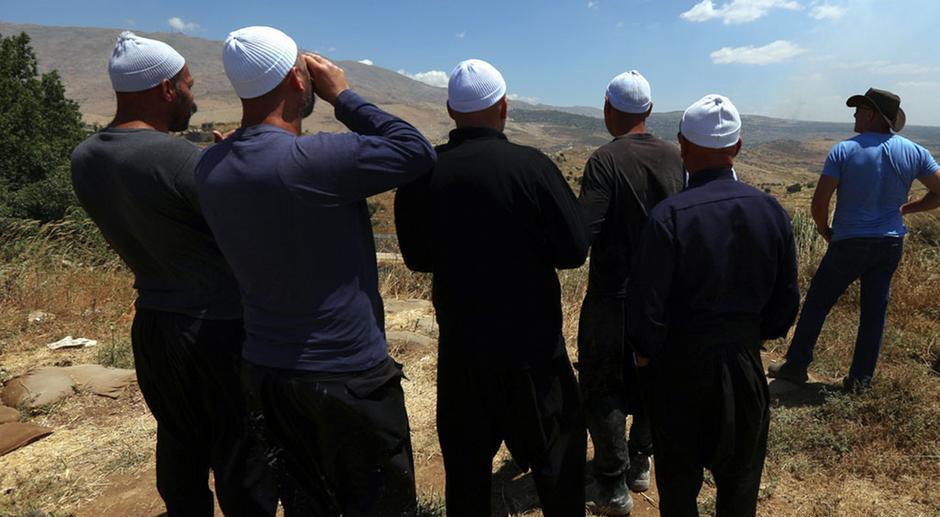
100 km south of Damascus, As-Suwayda Governorate sits atop a summit known as Jabal al-Arab. The governorate is home to the Unitarian Druze sect.
The Druze are spread across As-Suwayda, Jaramana, and Sahnaya in the Damascus countryside, in addition to the Hader region near Quneitra, the Golan Heights, and villages in Jabal al-Summaq in the Idlib countryside.
For the thousand years following the emergence of their sect, the Druze have managed to maintain their existence despite the succession of states and regimes that have ruled the region. Although this sect is found only in the Levant, with the exception of migrations to Europe and South America, the bonds between the Druze of the region are deep and interconnected.
Despite their small percentage compared to other sects and denominations in the country, the Druze of Syria are historically considered influential in the cultural, political, and artistic scene. Syrians associate the name As-Suwayda with the Druze sect and Sultan Pasha al-Atrash, the general commander of the Great Syrian Revolt that erupted against French colonialism in 1925, who at the time rejected French proposals to establish a Druze state and strengthened the sect's national identity. Similarly, many Druze in the Golan rejected Israel's decision to annex the region and participated in the 1982 protests against the decision, before the convictions of some changed in recent years.
The Druze.. History and Present
The Druze played a prominent role in the history of modern Syria, specifically during 3 important stages, as they participated in the Great Arab Revolt alongside the forces of Sharif Hussein and were among the vanguard of fighters who entered Damascus in 1918. Many sources mention that Sultan al-Atrash (1891-1982) was among the first to raise the flag of the revolt over the municipal building.
In the post-independence period of Syria, until the Ba'ath Party coup (1946-1963), the Druze were engaged in military and political circles, and many prominent figures emerged from among them.
Terrorist Attacks
In recent years, in light of the rise of terrorist groups in Syria, areas in Jabal al-Arab were subjected to brutal and bloody attacks, where “ISIS” used its armed elements to carry out suicide operations that resulted in more than 250 deaths and the kidnapping of 36 civilians, including women and children.
The response of the people of As-Suwayda to these attacks was strong, as they managed to organize fierce resistance against ISIS and defend their land and community. They were able to repel ISIS attacks and expel them from the region.
That confrontation demonstrated the strength and determination of the people of As-Suwayda in confronting terrorist organizations, and despite the significant human losses sustained by the region, the high strength and will allowed for the gradual restoration of stability and the return of life to the affected area.
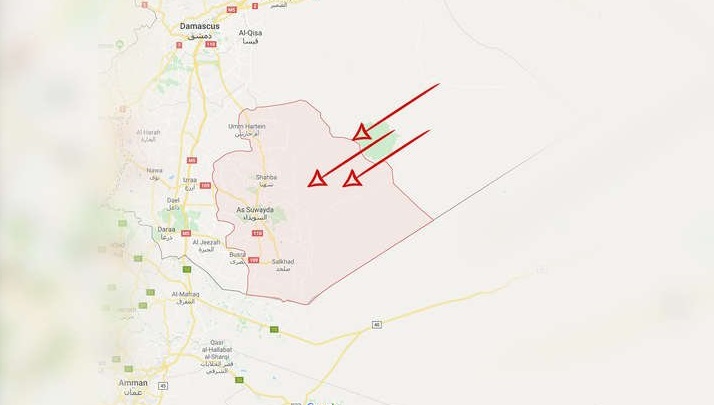
Arrows indicate the direction of the ISIS attack
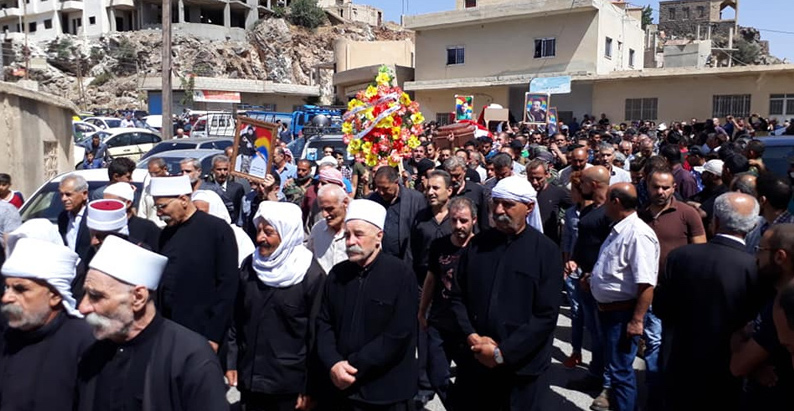
Photos of the funeral procession in As-Suwayda Governorate for the bodies of dozens of victims who fell as a result of the terrorist attacks