
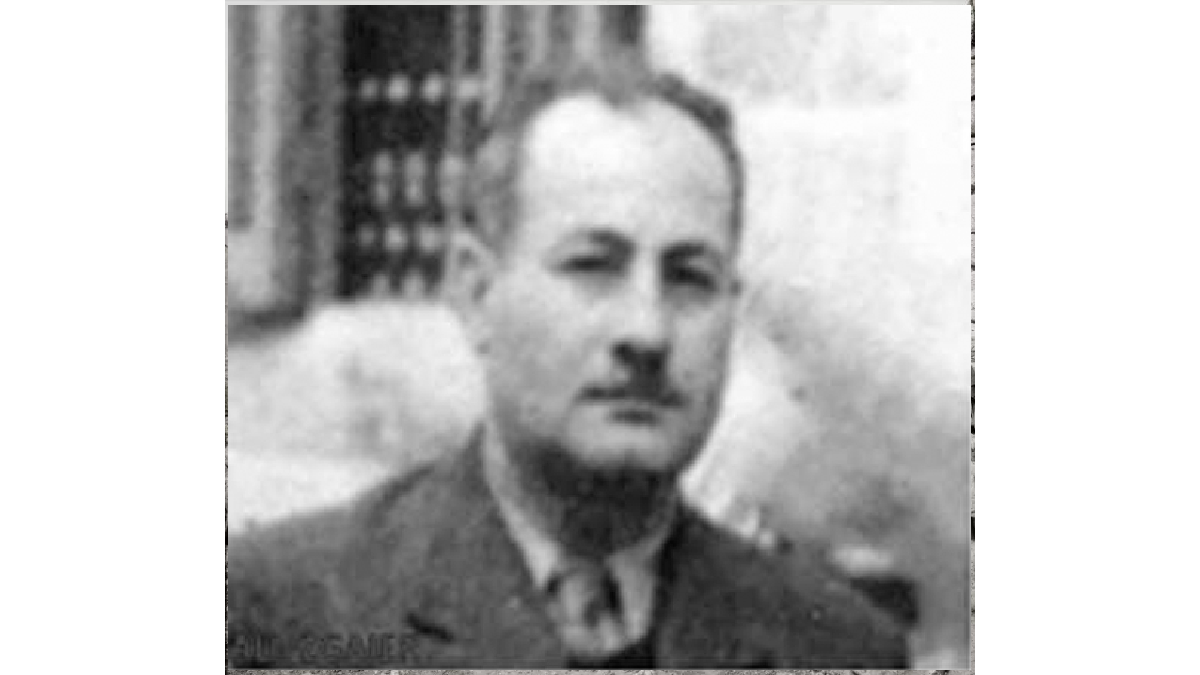
During the British Mandate, people went to seek medical treatment at Dr. Nayef Hamza's clinic in Haifa, or at Dr. Hamza's Hospital. They were referring to the new government hospital in Haifa, which was renamed “Rambam” Hospital in 1952. The hospital was, and still is, one of the largest in the country. So, who was Dr. Hamza?
He was born on August 25, 1895, in the village of Abey, Lebanon, to a Druze family. In 1919, he completed his medical studies at the American University of Beirut.
Between 1919 and 1920, he served as a military doctor with the rank of officer in the British Army in Palestine.
By the end of 1921, he was a government doctor in Jaffa. In 1922, he became a general practitioner in Ramallah. His medical license number was 193. He married in 1923 and had his daughter, Najla, in 1928.
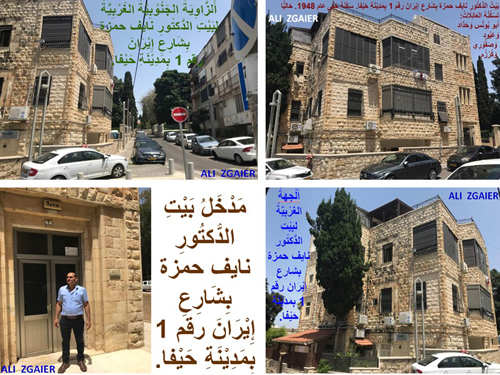
In 1931, he was transferred to Nablus. In 1934, he was moved to Jerusalem, and in 1935, he was sent to Haifa. It appears he prepared for his arrival by building a four-story house for himself, which still stands on Meir Street in Haifa. In this house, he opened a clinic known as Dr. Hamza's Clinic.
The newspaper Al-Jami'a Al-Islamiyya, issued on November 22, 1935, reported that one of the wounded from the demonstrations that broke out following the martyrdom of Izz ad-Din al-Qassam received aid at Dr. Hamza's clinic in Haifa, and was then transferred to the (old) government hospital where Dr. Hamza worked.
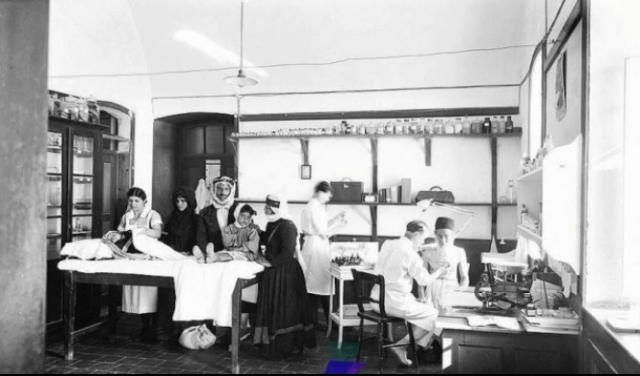
On December 22, 1938, the inauguration of the new government hospital on the seashore was celebrated in the presence of the British High Commissioner, MacMichael, and the Mayor of Haifa, Hassan Shukri.
The hospital consisted of two buildings: the first had six floors, and the second had three. Construction costs reached 150,000 British pounds. It had 220 beds and was equipped with the latest medical equipment, making it the largest hospital in the Middle East.
The hospital was comprised of three departments:
1. Department of Internal Medicine: Headed by Dr. Farid Iskandar Haddad. Shortly before the Nakba, he went to Beirut and became president of the American University;
2. Department of Surgery: Headed by Dr. Nayef Amin Hamza, who was the deputy director of the hospital under John Robert Thompson, and responsible for the ward of Arab prisoner patients;
3. The English Department for British soldiers.
In the 1940s, Dr. Nayef Amin Hamza was the chief surgeon and the de facto director of the government hospital in Haifa. It is no wonder, then, that he was awarded an honor medal on the occasion of the British King's birthday, an order published in the Official Gazette in three languages on June 2, 1943, and in Arabic newspapers such as Ad-Difa'.
People named the hospital "Dr. Hamza's Hospital" due to his widespread reputation in northern Palestine.
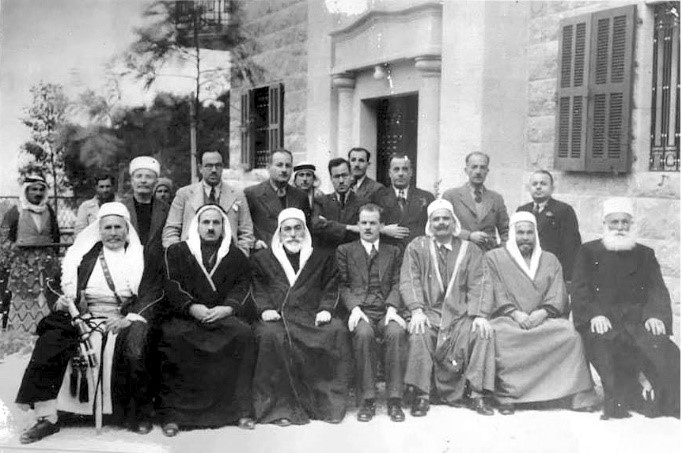
Dr. Hamza held a prestigious social standing both locally and abroad. He hosted a Syrian Druze delegation in Haifa that visited Palestine to broker peace between Palestinian revolutionary figures and the Druze following the killing of Sheikh Hassan Khunaifes on January 3-4, 1939.
The delegation consisted of five members, headed by Abd al-Ghaffar al-Atrash and Zaid al-Atrash. The delegation took advantage of its presence in Palestine to mediate in other disputes in Druze villages, including the unfortunate conflict that occurred in Daliyat al-Karmel between the Hassoun and Halabi families.
It is said that Dr. Hamza established the "Poor Druze Association" in Palestine, but there is no information about this project.
Dr. Hamza remained in the country after the fall of Haifa and the Nakba. Hebrew sources attribute to him that he hijacked an ambulance, loaded it with medical equipment, and fled in it to Lebanon.
He passed away in his village, Abey, Lebanon, in 1977.