

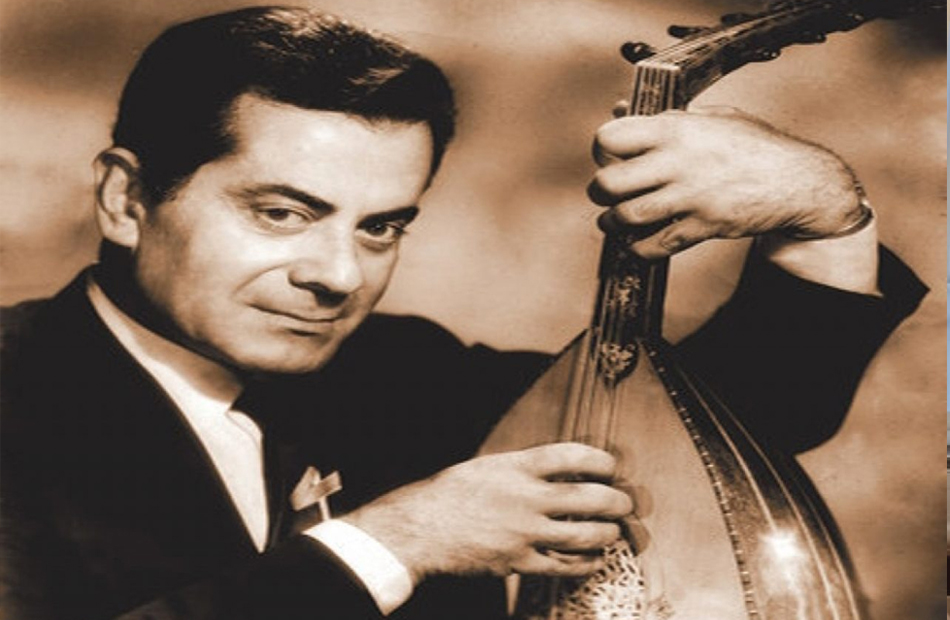
Farid Fahd al-Atrash was born in the city of As-Suwayda in the Jabal al-Arab governorate of Syria.
In 1917, the family returned to the Druze Mountain after Muhammad al-Atrash had traveled with his family to work in Anatolia for a short period. On the way back, Amal al-Atrash, Farid’s sister and soulmate, who would later be known as “Asmahan,” was born on the open sea aboard a Greek ship.
In 1921, the al-Atrash family stood against French forces in the Druze Mountain. Concerned for her three children—Fuad, Farid, and Amal—their mother, Alia al-Mundhir, decided to move them to Lebanon, where she enrolled Farid in the “Saint Joseph” school. In 1923, Alia decided to move her children to Cairo. However, upon reaching El Qantara, she was denied entry into Egypt because she did not carry a passport. She managed to reach the leader Saad Pasha Zaghloul, who had a good relationship with the al-Atrash family; he mediated on her behalf, allowing her entry into Cairo, where they settled on Al-Bahr Street.
The mother enrolled her two sons in the “Frères” school in the free section. However, Alia first had to find a surname other than “al-Atrash,” as it carried a reputation troublesome to the French. Thus, she registered her sons Farid and Fuad under the name “Koussa,” which stuck with them for several years until the school learned their true lineage. They left the school and continued their education at the Patriarchal School for Greek Catholics under their real surname.
The Emergence of Talent
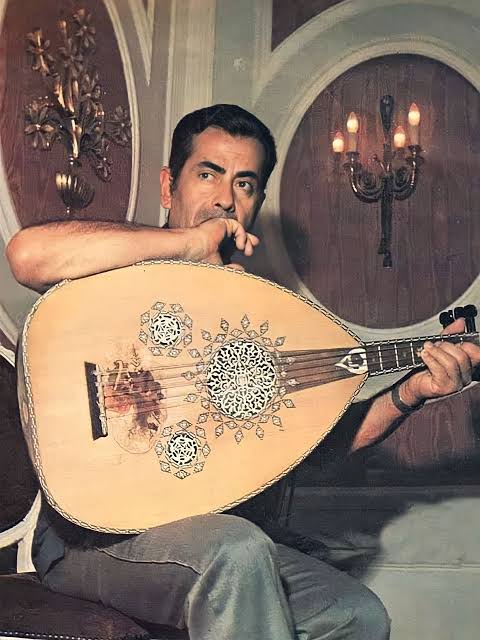
Young Farid’s talents began to appear in 1925. He had been fond of the oud since his mother used to play it and sing along to its strings. Farid enrolled in the Oriental Music Institute, where he met his first oud instructor, the musician Riad Al Sunbati. Later, Farid joined Badia Masabni’s troupe and also worked at the Pelacchi nightclub.
In 1934, the musician Medhat Assem, who was the technical director of the radio at the time, happened to be at the Arab Music Institute. He heard Farid playing the oud, was very impressed by his playing and voice, and invited him to the radio. Farid did not waste this opportunity and joined the Egyptian Radio.
In 1936, Farid presented the song “Ya Raitni Teir La’teer Hawalik” (I Wish I Were a Bird to Fly Around You) on the radio, written and composed by the satirical Palestinian author Yahya al-Lababidi. This song drew attention to his artistic capabilities. It was a song that the Lebanese singer Elia Baida had performed before, but it had been completely banned from broadcasting for censorship reasons. The following year, he presented his first composition to the public on the radio, singing “Baheb Min Gheir Amal” (I Love Without Hope).
In Europe
In 1939, Farid received two offers from the BBC to record some discs in London, marking his first trip to Europe. He later learned that the recording would be in one of the studios in Paris. He went to the address, and upon entering, he found a large orchestra. He greeted them, but they paid him little attention until his fingers began to play the strings of his oud. The beautiful melodies forced everyone to listen. Afterward, the maestro approached him and apologized for their behavior, explaining, “The composers in our country are old men with white hair, and we have never seen a composer of your age.”
Farid entered the world of cinema with his sister Asmahan in 1940 in their first film, “Intisar al-Shabab” (Victory of the Youth). The film was directed by Ahmed Badrakhan, and Farid composed the songs and the score. The film featured a selection of the most prominent stars of Egyptian cinema, such as Anwar Wagdi, Rouheya Khaled, and Bechara Wakim. Samia Gamal, the love of his future days, also appeared for the first time as a novice dancer among the extras in the final scene.
Asmahan’s Death
A sad chapter in Farid al-Atrash’s career occurred on July 14, 1944, the day his companion and soulmate, his sister Asmahan, passed away. She died by drowning in a canal after her car swerved into it while she was on her way to Ras El Bar.
In a new setback, 1946 was one of his worst years financially; he could not even pay his apartment rent. He composed the lyrics of the poet Maamoun al-Shennawi for the song “Habib al-Omr” (Love of a Lifetime), the melody of which expressed the state of despair and misery he was going through that year.
He signed a contract with the Near East Radio to record the song “Habib al-Omr,” and this contract served as a lifeline for him. He had been in a dispute with the Egyptian Radio due to his constant demands to be paid the same salary as Mohammed Abdel Wahab.
Farid the Producer
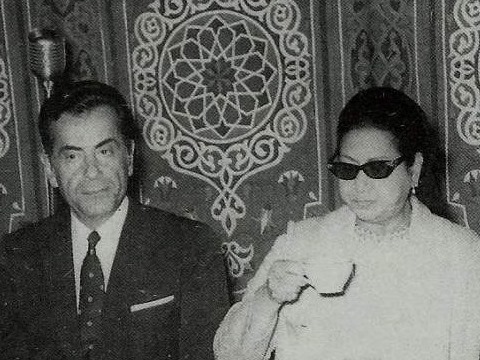
In 1947, Farid thought of using the title of his song “Habib al-Omr,” which had achieved resounding success, as the title for a new film. He decided to produce the film, but he did not have enough money. He took a risk and announced the production of the film, leading to a flood of offers from film distributors across the Arab world. Thus, he was able to raise enough money, and more, to produce his first film as a “producer.”
In 1950, Farid al-Atrash presented the operetta “Bisat al-Reeh” (The Magic Carpet) in another film with Samia Gamal, in which he traveled to all Arab countries except Algeria—a country whose fans often reproached him for not “flying” to Algeria on his magic carpet.
In 1955, Farid al-Atrash presented the film “Ahad al-Hawa” (Vow of Love), adapted from Alexandre Dumas’s “The Lady of the Camellias.” Farid played the role of Armand Duval opposite Maryam Fakhr Eddine, the “Lady of the Camellias,” while Youssef Wahbi played the father. Farid had donated the first day’s proceeds to war disabled veterans. President Gamal Abdel Nasser and the Revolutionary Command Council attended the screening, but Farid could not attend due to his severe illness that day.
1956 marked the beginning of Farid and Shadia’s meeting in the film “Wada’t Hubbak” (I Said Goodbye to Your Love), directed by Youssef Chahine. In 1957 came the film “Anta Habibi” (You Are My Love), also directed by Youssef Chahine, the second and final meeting between Farid and Shadia, in which he presented the most beautiful timeless songs and melodies, including one of the most famous duets in Egyptian cinema, “Ya Salam Ala Hobbi Wa Hobak” (Oh, How Wonderful Is My Love and Yours).
In 1959, Farid presented the film “Min Agl Hubbi” (For the Sake of My Love) with the artist Magda, directed by Kamal El Sheikh, in which he performed the song “Hekayat Gharami” (The Story of My Love).
In Beirut
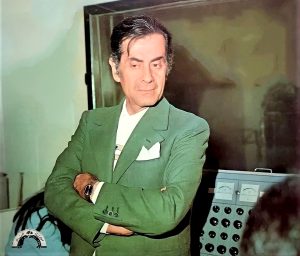
In 1965, Farid moved his mother, Alia al-Mundhir, to Beirut at her request, as she was suffering from recurring health problems at the time. He himself thought about living in Beirut, especially because he felt—as he put it—artistic persecution by the Egyptian Radio, and he had already begun preparing a villa for himself there.
It happened that in 1965, the Lebanese Georgina Rizk won the title of Miss Universe. He composed a melody for a song in her name, but the Lebanese radio refused to broadcast it because it was not permitted to sing using the names of public figures. So, he changed the lyrics of the song: from “Georgina, Georgina, we loved you, we loved you” to “We loved, we loved, we loved you, we loved.”
Farid and Abdel Halim
In 1967, Farid al-Atrash offered the singer Abdel Halim Hafez two melodies to sing: “Ya Weely Men Hobbo Ya Weely” (Oh, the Woes of His Love) and “Zaman Ya Hob” (Oh, Times of Love). Both began working on this collaboration, but “troublemakers” drove a wedge between them, and thus this collaboration never came to light.
In 1968, Farid’s mother passed away in Lebanon. He was deeply affected, and sadness returned to be the focus of his life, and he did not produce anything for two years due to the pain.
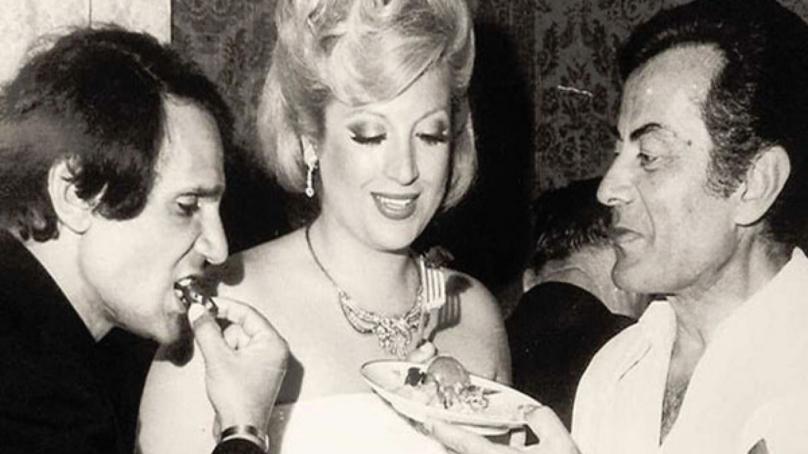
Farid’s Death
On December 26, 1974, Farid al-Atrash passed away in a hospital in Lebanon. He had instructed his brother to be buried in Egypt next to the body of his sister and soulmate, Asmahan, and his wish was granted.