
Prepared by Dr. Rim Mansour al-Atrash
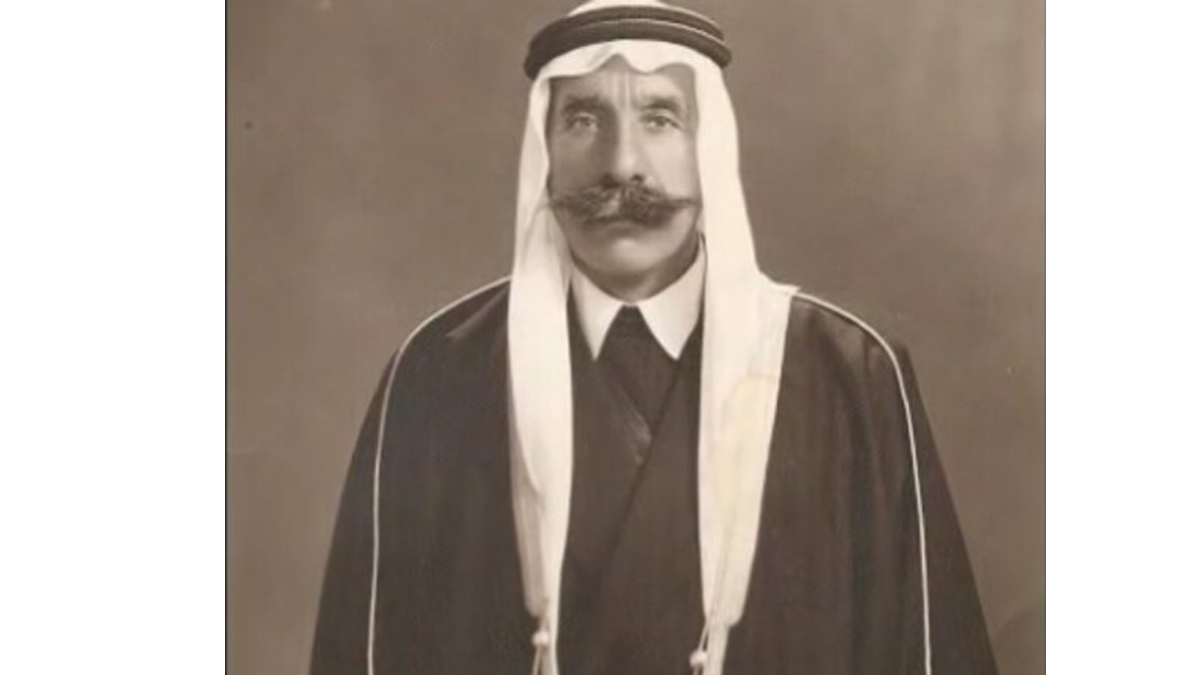
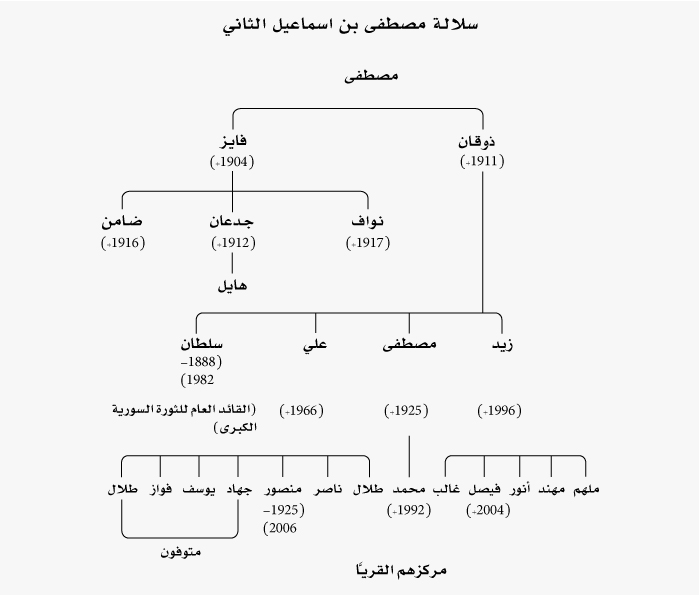
– Sultan bin Tuqan bin Mustafa bin Ismail al-Atrash was born in 1888, in the town of Al-Qurayya, As-Suwayda Governorate, southern Syria, to parents belonging to the Al-Atrash family. His father is Tuqan bin Mustafa bin Ismail II, and his mother is Shikha bint Mansour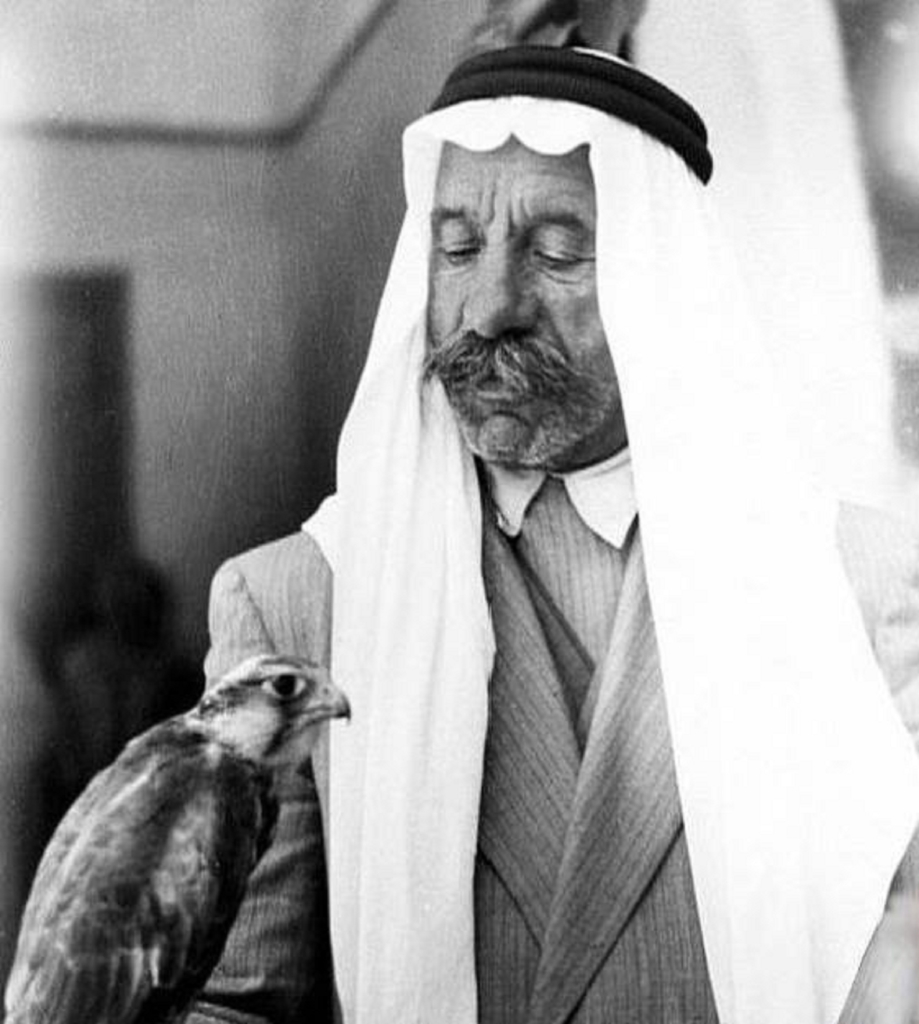 bin Ismail II, and he was the eldest of his three brothers: Ali, Mustafa, and Zaid, and had two sisters: Sumaya and Na'aim. He was trained by his father, the Mujahid Sheikh Tuqan, in horsemanship, marksmanship, hunting, and the arts of combat. – He learned to read and write at the hands of some teachers and in the traditional kuttab school, and continued his studies through personal reading.
– He lived through the campaign of Sami Pasha al-Faruqi and participated with his father in resisting the Turkish army on October 1, 1910, in the village of Al-Kafr, where the signs of heroism, leadership, and the traits of an Arab horseman appeared upon him.
– The Turks executed his late father, Tuqan al-Atrash, and a number of the mountain's leaders when the gallows were set up for the Arab free men who resisted the Turkish occupation on March 5, 1911, which was before Martyrs' Day on May 6, 1916. This incident left a deep impact on him. He became distinguished by his hatred for colonialism and colonizers, and instead of seeking personal revenge, he sought revenge against colonialism with the mentality of a unique leader.
– He was conscripted into military service in the Balkans region in late 1910 and returned to his town in 1912.
– After returning from military service, he married the daughter of Sheikh Ibrahim Abu Fakhr, from the town of Najran, who was his cousin “Shu’a” and her name was “Turkiya”. From her, he had all his sons: Talal, Fawaz, Yusuf, and Jihad (all of whom passed away), as well as Mansour, Nasser, and Talal. As for his daughters, they are: Ghaziya, Batla, Zakiya, Zumurrud, Nayfa, A’ida, and Muntaha.
– He answered the call of the Great Arab Revolt led by Sharif Hussein, so he formed a group of free Arab Mujahideen who gathered under the Arab flag and occupied the fortress of Bosra al-Sham on September 25, 1918. He also led the “Talal al-Mani’” battle on the outskirts of Damascus against the Turkish and German occupiers. He entered the city of Damascus from the direction of the Al-Midan district on September 29-30, 1918, and raised the Arab flag over the government house. That flag, which was woven by his family, was the first Arab flag to fly in the skies of Damascus after an occupation that lasted 400 years. Prince Faisal arrived in Damascus on October 2, 1918, and had granted him the title of Pasha, which is a military rank. Sultan had previously refused the same rank from the Turks and placed it around his dog's neck to express his contempt for a rank coming from a colonizer.
– Sultan had a distinguished relationship with King Faisal I, and before him, Sharif Hussein, his father, and other Arab leaders and figures.
– He rushed with his horsemen to rescue Yusuf al-Azma in the Battle of Maysalun, and he reached the town of Baraq, south of Damascus, with his horsemen, but the battle had been quickly decided. He then said: “Losing a battle does not mean surrendering to the occupiers.” Therefore, he sent a special messenger, his companion—later the martyr—Hamad al-Barbour, to King Faisal to convince him to come to the Mountain of the Arabs (Jabal al-Arab), establish the Arab state in As-Suwayda, and continue resisting the French occupation. He followed him to Bosra, then Jerusalem, then Haifa, but King Faisal felt that the opportunity had passed after boarding the British cruiser in Haifa toward his exile.
– The leader Ibrahim Hananu took refuge with Sultan Pasha al-Atrash after the collapse of the Northern Revolt while he was on his way to Transjordan, so he sent three men with him who delivered him safely to Amman.
– There was a permanent dispute between Sultan and the French, and he never missed an opportunity to express his dissatisfaction with their presence in his homeland. His first opportunity to revolt against them was when they arrested the Mujahid Adham Khanjar, who was accused of attempting to assassinate General Gouraud on the Quneitra road with the assistance of the martyr Ahmed Muraywid. Adham Khanjar had arrived in Al-Qurayya seeking protection while Sultan was away. Sultan went out with his men demanding the release of their guest, and he sent a telegram of protest to the governor of the mountain. When his request was not met, Sultan and his companions attacked the French with weapons; it was the “Tall al-Hadid” battle against French armored vehicles, which retreated before his horsemen, as they disabled two and killed their crews. This was his first revolt, which lasted nine months during the year 1922, in rejection of colonialism and in dedication to the authentic Arab traditions of protecting the stranger and safeguarding the guest. The French sentenced him to death and demolished his house in Al-Qurayya by bombing it with aircraft. When the French were unable to capture him, they negotiated with him for fear of the rebellion spreading, so they issued a pardon for him and his group. After the pardon, Sultan did not concede any of his demands, which were total withdrawal from his unified homeland and its complete independence, and he did not limit his activity in strengthening relations with patriots inside the country.
– He led the Great Syrian Revolt in 1925, as the best of the nation's Mujahideen and its most prominent leaders gathered around him with unparalleled national consensus, and he fought the most honorable battles against the French occupation. Among them were:
– The “Battle of Al-Kafr” on July 23, 1925, which was the first battle of the revolt, a lightning battle in which the French column was completely wiped out, with only a few survivors who carried the news of the defeat to their command in As-Suwayda.
– After declaring the revolt, Sultan Pasha al-Atrash issued the historic declaration of the revolt, which he headed with the slogan “Religion is for God and the Homeland is for All,” and in it, he called out to the Arabs saying: “To arms! To arms!” He demanded the unity of the country and the appointment of a popular government to hold elections for a constituent assembly to draft a basic law based on the principle of the absolute sovereignty of the nation and on law, justice, freedom, and equality. This call met with a wide response in the country, after which Sultan was chosen as General Commander of the National Revolutionary Armies.
– The “Battle of Al-Mazraa” took place on August 2-3, 1925, after the French colonialism launched a major campaign consisting of several divisions armed with the latest weapons of that time, including aircraft, tanks, heavy artillery, and lethal machine guns. They numbered thirteen thousand soldiers and officers led by General Michaud. However, the revolutionaries, numbering four hundred, managed to wipe out this campaign as well in one of the most honorable battles in modern history, and the campaign leader, General Michaud, fled dragging the tails of defeat and shame. News of the revolt and its victories spread throughout the homeland and also reached Europe, so journalists from Germany and Austria came to the mountain and witnessed the aftermath and horrors of the battle.
Thus, the resistance spread throughout the Syrian homeland as well as the nearby Bekaa in Lebanon, including the battles of Golan, Al-Majdal, Halwa, Sahita, and Rashaya—the most famous of them—where the revolutionaries climbed the walls of the fortified castle, seized it, and burned it.
Then there were the Battle of Al-Musayfirah, the Battle of As-Suwayda, the Battle of Rassa, the Battle of Ura, the Battle of Umm al-Rumman, and other bloody battles, such as the Battle of Qaysama, in which the revolutionaries defeated the “volunteers” and captured a French officer who was leading the cavalry.
– The French tightened the noose on the revolutionaries and brought successive campaigns and new reinforcements, so the revolutionaries were forced to move to Al-Azraq in the Emirate of Transjordan. The British did not allow them to stay long, so Sultan al-Atrash and his group of Mujahideen moved to Wadi Al-Sirhan and Al-Nabek in the north of the Kingdom of Saudi Arabia, then to Karak in Jordan, with the hope of returning to the battlefields soon. He refused to hand over his weapons to the colonizer and was sentenced to death.
– Sultan al-Atrash sent his messengers to King Abdulaziz Al Saud, as well as King Faisal I, then to Egypt and Palestine, to emphasize the unity of the Arab struggle and the unity of the goal, and to request aid to continue the revolt. However, the agreement of Allied interests and the weakness of the Arab resistance led to the cessation of combat operations. Yet, Sultan and his Mujahideen companions remained loyal to their principles and remained firm in their belief in Arab unity, the unity of the Syrian land, and the necessity for their homeland to have complete independence. They believed that the Arabs would extract their freedom no matter how long the struggle lasted and how high the sacrifices were. Sultan al-Atrash’s connections with the national movement inside Syria were never severed throughout the period of his exile, which lasted more than ten years. Sultan al-Atrash called for a conference in Wadi Al-Sirhan under his presidency on 10/25/1929, called the Desert Conference, to discuss the Syrian issue. Most Syrian and Lebanese patriots attended this conference in Wadi Al-Sirhan, and the conference reached important decisions that had a major impact on what happened later and on the negotiations and the path taken to achieve complete independence. This exile was an expression of the refusal to surrender to the colonizer and the revolutionaries' resistance to his presence on the soil of their precious homeland; hence, Sultan al-Atrash considered the Great Syrian Revolt to have lasted 12 years, from 1925 to 1937. Zaid al-Atrash expressed this refusal and the continuation of the resistance in a poem of his folk poetry, saying:
We have quenched our swords with the people ***** We will not cheapen you, like the enemy with prices
The nights of misery must pass ***** And the banner led by Sultan shall rise
And if our usurped right is not restored ***** Oh my home, we are not your inhabitants
– Sultan al-Atrash and his companions returned to the homeland after the Syrian-French Treaty of 1936, so France issued a general amnesty for all the Mujahideen, and Sultan and his companions were received in Damascus on May 18, 1937, with historic popular celebrations. He was considered a historic leader of the nation and was awarded the highest national medals, and poets and writers sang of his heroism and deeds. Among the most prominent of these poets was the Village Poet, Rashid Salim al-Khoury, when he wrote in exile his famous poem “Sultan Pasha al-Atrash and the Tin” (Tin is the tank), after the Battle of Tall al-Hadid in 1922, saying:
And around you were a gathering of the Bani Ma'ruf **** With them and without them, the masses sing
You leaped onto the hump of the Tin with a leap ***** Wonderful, taught the eagle how to fall
So the soldiers fell dead upon the Tin **** And the Tin fell dead beneath them
What a raid it was, had you not broadcasted it ***** Our enemies, we would have called the broadcaster a liar
And what an Atrash (deaf) you were when we called ***** For revenge, you were the one who heard us all
– Sultan Pasha al-Atrash was distinguished by his opposition to dictatorship (his telegram against Decree 50 of 1946, which forced the government at the time to cancel it) and the dictatorial rulers who succeeded one another in Syria. His conflict with the dictator Adib Shishakli reached the point of armed resistance. Adib Shishakli launched a military campaign against the mountain, which resulted in more than a hundred martyrs, so Sultan al-Atrash fled for the third time to Jordan, avoiding civil war until the end of Shishakli's rule. He returned to his village and was welcomed with popular celebrations that spread throughout the country.
– Sultan Pasha al-Atrash welcomed the establishment of the Syrian-Egyptian union in 1958 and met with President Gamal Abdel Nasser, shaking his hand and expressing his hope for achieving the Great Arab Union.
– Sultan always stood by the Palestinian revolution, supporting and encouraging it, and his famous phrase was always on his lips: “What was taken by the sword, shall be regained by the sword.”
During the Great Syrian Revolt, French aviation bombed the revolutionaries, killing Sultan's horse, Jawad, and his neck was severed; shrapnel from French bombs pierced the cloak he was wearing, but Sultan al-Atrash was not wounded. Mr. Subhi al-Khadra took this cloak and placed it in the Al-Aqsa Mosque museum in Jerusalem, where it remains to this day.
– Sultan Pasha al-Atrash, may God have mercy on him, was tender-hearted and compassionate; his eyes would tear up at the sight of a bereaved mother or an orphaned child. He was a jealous family man, loving to his sons, daughters, grandsons, and granddaughters (he had 26 grandchildren). He was a diligent farmer who loved the land, a pious and devout believer who upheld original Arab traditions and customs. He was also open to others and the spirit of the age, as he was interested in encouraging education and spreading it, so he sent his sons and daughters to universities even outside Syria, and he built more than one school in his village from his own money and from the donations he received from benefactors for this purpose. He also donated a piece of his land to build a church in his village and gifted it the bell. He was ascetic in the matters of the world and honorable.
– He departed from this world on March 26, 1982, and the President of the Syrian Arab Republic, President Hafez al-Assad, mourned him and paid a final farewell to his body at his home in Al-Qurayya. His funeral was a historic, witnessed day that gathered more than half a million mourners, and his coffin was carried in a helicopter that flew over the sites of the immortal battles he fought, and he was buried in his village, Al-Qurayya, carried on a gun carriage.
– By order of President Hafez al-Assad, a great memorial for the Great Syrian Revolt was erected in Al-Qurayya, opposite the house of Sultan Pasha al-Atrash, which will house the body of the General Commander of the Great Syrian Revolt, Sultan Pasha al-Atrash.
– He left behind a national political testament in which he expressed his national wishes and his nationalist recommendations. This testament is considered the first of its kind left by a unique nationalist leader for future generations.
Sultan Pasha al-Atrash's Call
23/8/1925