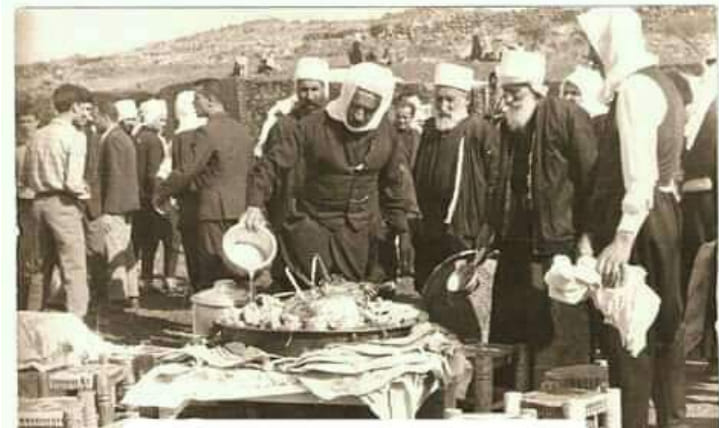


Hospitality is an Arab tradition practiced by Bani Ma'ruf wherever they are, although what the Lebanese adopted from the Western city has made the style of hospitality differ between Mount Lebanon and Jabal al-Arab, while they agree on honoring the guest. Even in the diasporas where the youth of Bani Ma'ruf headed across the globe, they compete in holding banquets for guests, though the manifestations of hospitality in Jabal al-Arab, the Iqlim, Wadi al-Taym, and the villages of Ghouta are closer to the Arab origin.
In most homes, the most beautiful and largest room is designated as a "madafa" (guest room) to receive visitors. The owner must prepare Arabic coffee daily to serve to every visitor, whether from inside or outside the village. These madafas are considered social clubs where those gathered discuss political and social events, as well as news of battles and wars. The guest is served food and snacks, and is surrounded by warmth and honor from the host and his friends, making them feel as if they are among their own kin.
The English writer "Nimri" says: "Their hospitality toward strangers, and the hospitality they show one another, is legendary throughout the East. Whoever gets the chance to visit them, even just once, cannot deny their congeniality, chivalry, and kindness."
The French poet "Lamartine" also says: "Hospitality among them is a sacred matter; neither promises nor threats could induce a Druze to surrender a guest who has sought refuge with them, even if their own prince demanded it." During the time of the Battle of Navarino, Europeans residing in Syrian cities who feared Turkish retaliation took refuge with the Druze and stayed with them for several months, safe and completely reassured. Their moral motto is that all people are brothers; therefore, protecting the guest and honoring the traveler are among the qualities that earned them the title of Bani Ma'ruf (People of Benevolence).