
It is said that several years after the Battle of Al-Mazraa took place between the revolutionaries of the Mountain and the French army, five Syrian young men went to study at a university in France. One day, a lecturer came to deliver a lecture on the history of Arab and Eastern civilization. He asked about the students and learned that there were five Syrian students among them. He then posed a question to them: Who can define the meaning of the word “Al-Mazraa”? So the Syrian students began to answer:
The first: Al-Mazraa is cultivated land or an orchard.
The lecturer replied: No.
The second: Al-Mazraa is a farm or a small village that relies on agriculture.
The lecturer replied: No, you are wrong.
The third: It is orchards planted with various types of trees and plants that are surrounded by the greenery of nature.
The lecturer: No, that is not it.
The fourth: It is as the colleagues mentioned, but provided that there are poultry farms in it as well.
The lecturer: No, not this either... Do you not know the meaning of Al-Mazraa?
The fifth student rose up, and he was a Druze from the Mountain: I know it, Mr. Lecturer.
The lecturer: Go ahead.
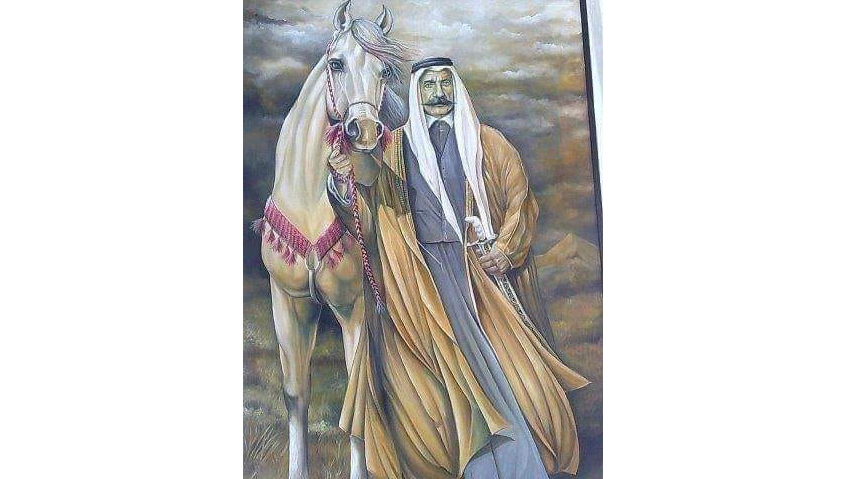
The student: Al-Mazraa is a land located in As-Suwayda Governorate in our country, Syria. It was the site of the Battle of Al-Mazraa between the French colonial army—which was advanced and heavily equipped with all kinds of modern heavy weaponry, from airplanes and tanks to armored vehicles, machine guns, and cannons under the leadership of the cunning General Michaud—and my people and kin, the valiant revolutionaries, heroes of the Mountain, who possessed nothing but hunting rifles, swords, axes, and some Ottoman rifles they had acquired from their previous victories over the Ottoman colonizer. They were under the leadership of the Druze Arab leader and hero, Sultan Pasha al-Atrash, who later became the Commander-in-Chief of the Great Syrian Revolt against the occupier, alongside other Mujahideen who fought bravely in this battle, repelled the French colonizer, and almost completely wiped them out. They wounded their commander, General Michaud, who fled, heavily injured, and was one of the few who escaped and survived to bear witness to the greatness of the defeat and the setback of the greatest army at the time, and the most advanced in terms of equipment. That was despite the vast differences and the lack of the most basic military machinery and war equipment by his Druze opponents. But through their gallantry, courage, strength of character, and intense chivalry, they were able to repel the enemy from their land and inflicted upon him one of his greatest historical defeats. Thus, Syria became independent, and the spark of the Great Syrian Revolt was ignited, which led to the independence of Syrian land from the hands of the colonizers.
The hero Mujahid, Sultan Pasha al-Atrash, was crowned with the title of Commander-in-Chief of the Great Syrian Revolt. The page of mandates and colonialism was turned across the entire Arab world, through the resolve of our valiant fathers and our courageous grandfathers.
The lecturer shouted: You are right... You are right.
Applaud him, applaud him.
And I am Michaud!
Yes, this lecturer was Michaud, the general of the French army and its commander in that unequal battle, who fled after being severely wounded. He then escaped and returned to France to recover. He then began practicing the profession of a lecturer in universities about modern history, and the history of the Arabs and the modern East... until fate brought him together with this hero student, the son and grandson of the heroic Mujahideen of the Syrian revolution... to applaud him and bear witness for him, his fathers, his grandfathers, and the heroes of the revolution to their victory, in front of everyone present in the lecture, and with an immortal cry from the tongue of Michaud himself:
You are right... You are right.
Applaud him, applaud him.
And I am Michaud!