
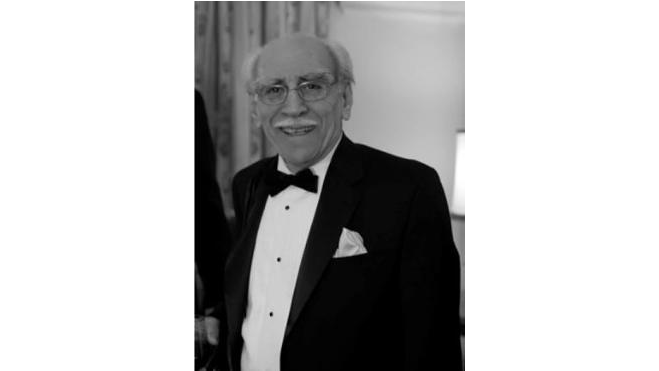
Nadim Kassem was born on May 15, 1931, in the Palestinian town of Rameh. That day marked the beginning of his unique story as the third child of parents Yousef and Afifa Kassem. However, Nadim's early days were not without difficulties; fate led him to lose his mother early on, when he was only a few months old. His cousin Ghazala adopted him heart and soul, as if she were his real mother.
His father Nadim married his "aunt Fadwa" in 1934 and had 5 other children. Shortly thereafter, during the Palestinian uprising against British colonialism in 1938, his family was forced to move to Aley in Lebanon, where Nadim attended the National School for two years.
In 1940, the family returned to Palestine, where Nadim completed his primary education in Rameh. Due to his outstanding academic performance, he was selected as one of 25 students from across Palestine to attend high school at the Arab College in Jerusalem. Nadim graduated from the Arab College in 1947 with a Palestinian matriculation certificate. The Arab College was converted into a university in 1948, the same year Nadim's father passed away and the war began.
To ensure the safety of his younger siblings, he traveled back to Aley, this time as a refugee. His older siblings, Qasim and Shakib, remained in Rameh to protect the family home and land. Nadim refused to live in a refugee camp or accept aid from the United Nations Relief and Works Agency for Palestine Refugees (UNRWA). Instead, Nadim worked tirelessly day and night to support a family of eight, renting a two-room apartment, buying food and clothing, and providing private education for his three sisters and two brothers. To achieve these goals, Nadim worked as a teacher at St. Joseph's School in Aley during the day and gave private English lessons in the evening.
In 1952, they returned to Rameh where Nadim worked at the village school. However, due to the lack of high schools in the Arab sector and a desire to provide better education for their sisters, Rameh High School was established with contributions from Shakib, Nadim, and two others, where Nadim taught Arabic, English, and mathematics. Rameh High School remained, under the leadership of his brother Shakib, the most successful high school in the country. Shakib was the principal from 1957 until his death in 1987.
In 1955, Shakib encouraged and supported Nadim to pursue medicine. Nadim studied and was accepted into the Hadassah Medical School at the Hebrew University of Jerusalem. In order to attend medical school, he had to learn Hebrew. He taught himself the language and became fluent in it. During his six years at medical school, there were many surprises and challenges, along with his activism in advocating for the rights of Arab minorities in education, health, and infrastructure, and the development of their towns and villages. Nadim played a crucial role in organizing students and establishing the "Arab University Students Committee," which he chaired for three years. The committee was recognized by the university administration and helped resolve a variety of issues facing Arab students, from housing to financial aid and obtaining travel permits.
In 1961, Dr. Kassem graduated from medical school and began his internship in 1962, followed by his residency in internal medicine and clinical research at the Hadassah Medical Center at the Hebrew University. In 1965, he moved to the Old Administration Hospital in New York, in the Bronx, where he continued his specialization in internal medicine and gastroenterology, becoming a senior fellow at the same institution in 1970. He then joined the pharmaceutical industry, advancing his career to become a Senior Vice President and Senior Medical Director at a single company while continuing his private practice as an internist and gastroenterologist. During those years, he was the medical director of St. Joseph's Home for the Aged, a position he held for over 25 years until he retired in 2004.
Nadim was involved with the American Druze community from the early 1970s until his death in 2013. He was elected president in 1981. He helped establish the Tri-State chapter of the American Druze Society and played a vital role in revitalizing the Religious Affairs Committee by attracting very dedicated individuals, including Dr. Antar Obeid, Mr. Samah Halal, Dr. Abdullah Najjar, Mr. Hassan Ezzidine, and the late energetic Dr. Wahbi Al-Sayegh, under whose presidency five books for the Religious Affairs Committee were published and prayers were prepared. He was a founding member of the American Druze Society and a member of its committee for religious reform.
Those who knew Dr. Kassem know that he was proud of his heritage, culture, family, and his belief in Tawhid. He was passionate about uniting all Arabs around the world. Although this brief summary provides an overview of his life, it only touches the surface of this beloved, respected, and honored man whom many will remember.