
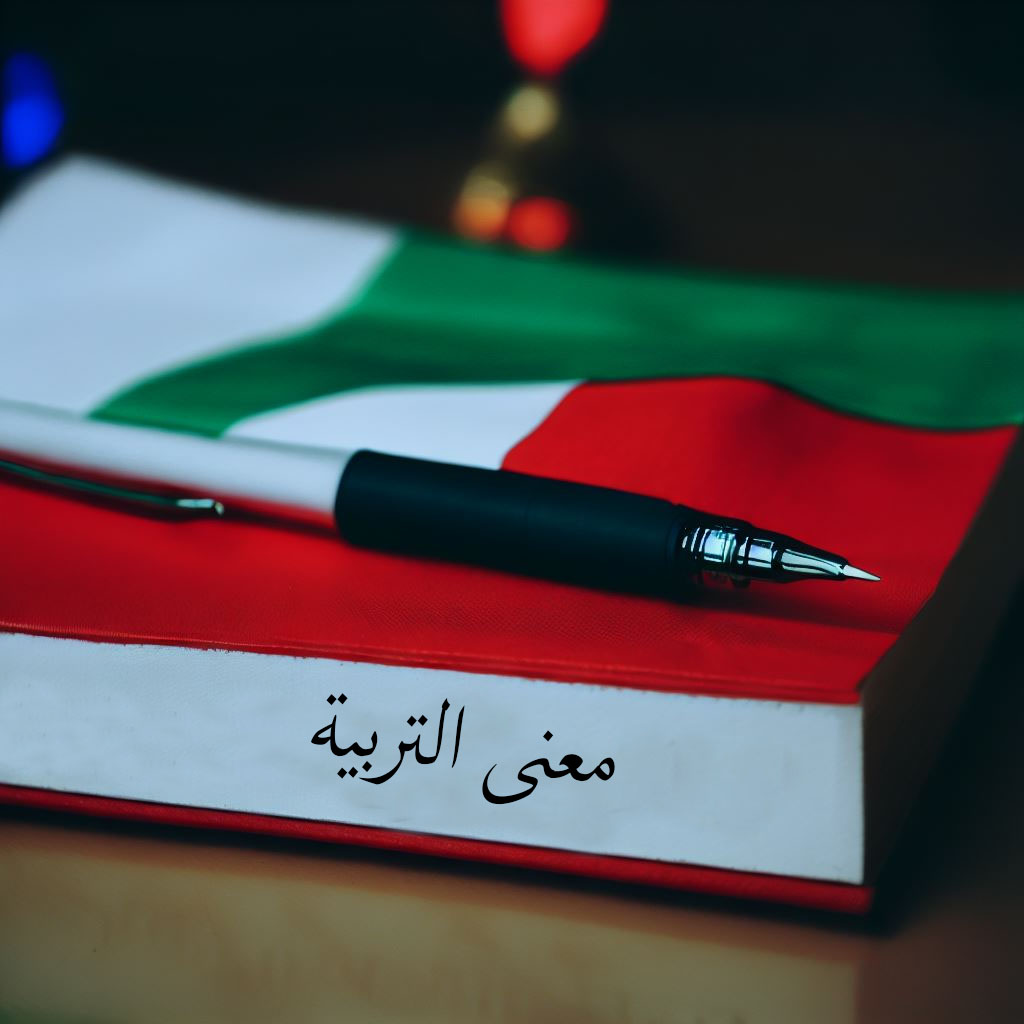
Linguistically, the word 'tarbiya' (education) is derived from the triliteral verb 'rabba', meaning to nurture, nourish, raise, and refine. This meaning applies to both the physical and psychological states of the student, because the human being is composed of a subtle, rational soul and a dense, composite body. Nurturing and caring for the body so that it harmonizes with the laws of nature through rules of exercise, hygiene, and protection from pollution on all levels is the subject of physical education. Refining temperaments and taming wild ones with good habits and moderate traditions, caring for the mind and progressing in rational guidance from one field of knowledge to a higher one until the student reaches the perception of abstract universals and the laws that govern the becoming of existents is the subject of educating the rational soul.
For the Greek philosopher Plato, education means the practical and theoretical pursuit of reaching a balance between the individual's various psychological and physical powers; that is, the balance between instinct, emotion, and reason. This balance is not in the form of a quota, but rather the submission of instinct to emotion and the submission of emotion to reason, because happiness, in Plato's opinion, lies in the human mind's perception of abstract universals, i.e., the Forms existing in that non-sensible world called the World of Forms. As for education according to the philosopher Aristotle, it is the gradation in teaching the individual until they are brought to grasp the science of logic, which teaches us to perceive the first principles that, once obtained, allow us to derive others through syllogism. Aristotle says that the human soul arrives as a blank slate, meaning it has no innate knowledge at all, but it is distinguished from all other animal souls by being knowledgeable in potential, meaning it has the potential to acquire knowledge. Since man, in Aristotle's view, is social by nature, the family is, in his opinion, the first and fundamental nucleus for building society. Aristotle considers that the individual's bond with the family is an essential bond, and that basic education is obtained from the family because the relationship with the state involves much independence. As for contemporaries, René Hubert defines education by saying that it is "the set of actions and influences that a human being exerts intentionally upon another human being." Proper education is a permanent and continuous process throughout life. It is said that in adulthood, the educator is the family and the school—meaning education is indoctrination and training—and after reaching adulthood, the educator is life, meaning education becomes a series of practical and theoretical experiences and tests. As for the thinker Kamal Jumblatt, he defined education by saying: "Education, in our view, means the interaction of two approaches: one aims to refine the mind, organize it, and charge it with the necessary information; the second approach intends to refine emotion and behavior. A person is not complete, or rather does not head toward completeness, unless an internal and external harmony occurs between the heart and the mind." As for my humble personal opinion on the subject of education, it is that there is a triangle with three corners: the family, the school, and life.