
Minister of Culture Judge Mohammad Wissam Al-Mortada emphasized that the Bani Ma'ruf have always been committed to the causes of Arab nationalism, steadfast in siding with the truth, possessing a creative ability to spread awareness, and continuing with firm determination on the path of opposing suspicious projects plotted against this region and its peoples. They have proven that the presence of culture is the strongest and most effective weapon in the face of westernization and its projects.”
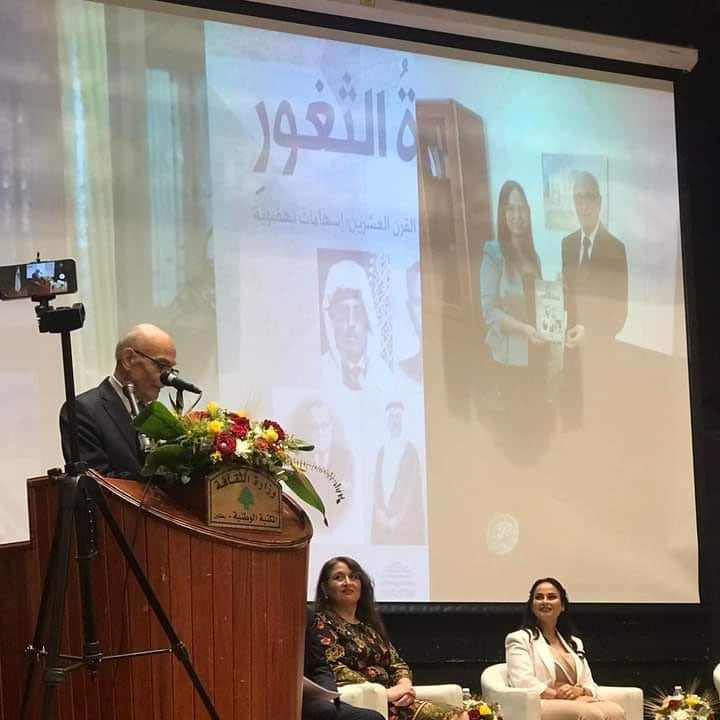
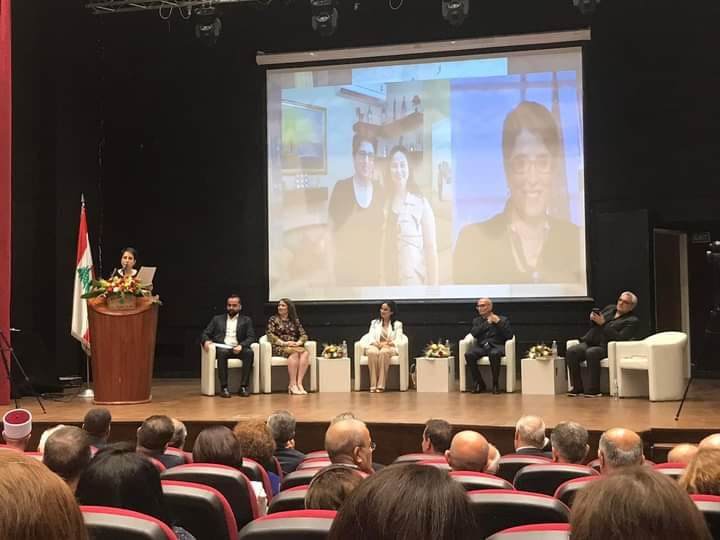
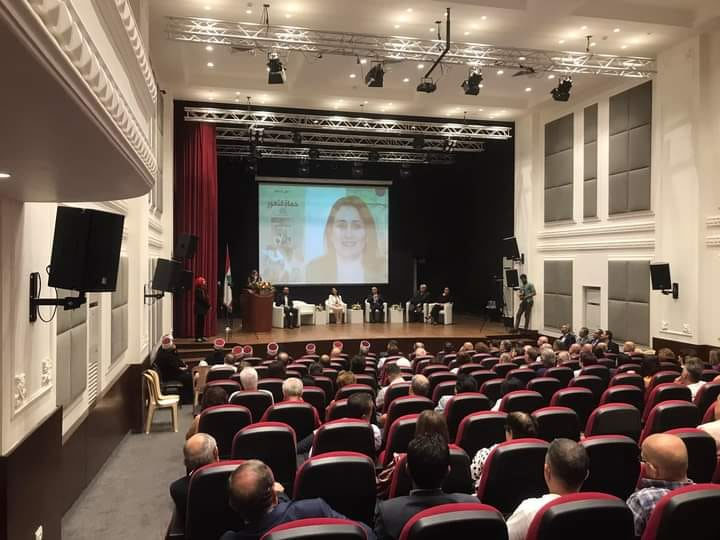
Minister Al-Mortada’s remarks came during his sponsorship and attendance at the signing ceremony of the book “Protectors of the Frontiers” by Dr. Laila Abu Shaqra at the National Library headquarters in Baakline, in coordination with the Cultural Committee of the Druze Unitarian Community Council in Lebanon, and in the presence of a large crowd of political, cultural, and literary figures.
In his speech, Minister Al-Mortada said: “Every time you are here, in the National Library in Baakline, you must… first of all… among other things, remember that this magnificent place was, in times past, a prison with cells… headed by a police chief assisted by jailers, and in its depths sat humiliated inmates… You must summon this image and compare it to the current reality, which speaks to the fact that this place has become a fresh source of knowledge and learning from which generations drink, fortifying themselves with honor, adorning themselves with science, elevating their character, and proceeding toward becoming clouds of goodness.”
He said: “We must, beloved ones, summon all this and recall at the same time the proverb that says: ‘Whoever opens a school closes a prison,’ signifying the greatness of the act and the nobility of the actor. So how is it in the act and actor of closing a prison and turning it into a library? Yes, beloved ones, we must acknowledge that one of the signs of Baakline's greatness is that it is almost alone in all this chained and shackled East in reversing the image—a consequence of a cause or a result of a reason—making what was a proverbial saying a visible example when it closed a prison and turned it into a cultural oasis, and replaced the jailer with Ghazi Saab. So blessed is this cultural landmark, blessed is the one who took the initiative to establish it, and blessed is our dear Ghazi, the faithful guardian of its smooth operation.”
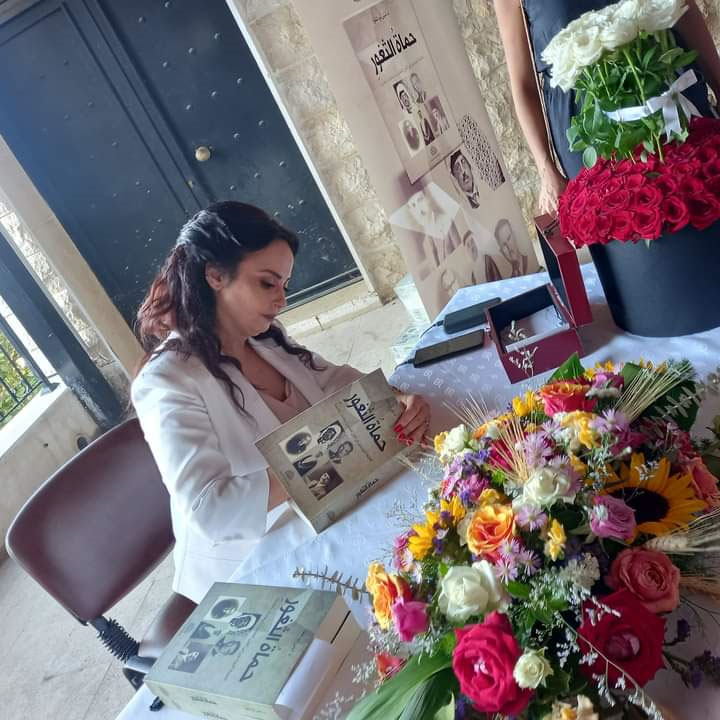
He added: “I contemplate all this, friends and beloved ones, and conclude that it would not have been possible were it not for the rootedness of thought among the Bani Ma'ruf and its extension through the arteries of the nation and Arabism, since the princes Shakib and Adel Arslan, Ajaj Nuwayhed, Aref Abu Shaqra, and Aref Bey Al-Nakadi, not to mention the great figures before them whose names are too vast for this world, leading up to the martyr and teacher Kamal Jumblatt, and his students who followed his life and path, including the dear author Dr. Laila Abu Shaqra, who documented the lives of these towering figures in her valuable book ‘Protectors of the Frontiers,’ for whose birth we are gathered today... And if I forget anything, I will not forget the great Shawqi Hamadeh, sitting on the throne of the ‘Dad’ (Arabic language) empire, happy and reassured. And how could he not be... while the tongue of truth seeks permission from Gibran Khalil Gibran to proclaim: If the garden of literature boasts of its tall trees, we boast of our palms, so we are equal, and if we want to boast, we boast of ‘Shawqi’ and we prevail.”
Al-Mortada continued: “‘Protectors of the Frontiers,’ according to Dr. Laila Abu Shaqra’s thesis, is the title that summarizes the glorious and bright history of the Unitarian scholars in the twentieth century who entered glory through its wide door and proved that the presence of culture is the strongest and most effective weapon in the face of westernization and its projects. The project would not have been so dangerous had it not been for the predatory nature of the Zionist project in our country even before the 1948 Nakba, as the conspiracy was woven decades before the Balfour Declaration, and was prepared for Palestine and the region by the global Zionist movement, which was waiting for the opportunity to pounce on the peoples of the Arab East.”
He considered that “Dr. Laila’s book, which documents the achievements of the great figures of the Bani Ma'ruf, not only establishes the Unitarians as a founding sect, but confirms the confirmed: that the society from which these figures emerged was the incubator for the rise of awareness-raising resistance thought in all its dimensions. The positions of the two brothers, Princes Shakib and Adel Arslan, and their role in uncovering the curtains and exposing the Zionist schemes, the fate of the region, and the conspiratorial agents who counted themselves as part of the Arab nation (which was also thoroughly explained by Ajaj Nuwayhed, Aref Abu Shaqra, and Aref Bey Al-Nakadi), is nothing but evidence—proof beyond which there is no proof—that the Bani Ma'ruf have always been committed to the causes of Arab nationalism, steadfast in siding with the truth, possessing a creative ability to spread awareness, and continuing with firm determination on the path of opposing suspicious projects plotted against this region and its peoples.”
He added: “Dr. Laila’s book overflowed with historical and documentary evidence, accurately conveying media interviews, statements, lectures, and positions. It also documented some political and economic events and made them witnesses to the achievements and influence of Ma'rufi thought, as well as its belonging to Islam, without compromising their uniqueness and private experience that led to their prominent role in history. All this is a clear response to attempts to isolate the Ma'rufis and portray them as a splinter faction. ‘Protectors of the Frontiers’ is a documentary book, and this is true, but it is also, and forcefully, a foundational book for the role, mission, project, and true Ma'rufi identity, which is based on a set of pillars, the most important of which is the concern for values and the principle of living together, stemming from a firm belief that coexistence, shared values, and Lebanon are synonymous. They are the two primary features of the Lebanese formula; if we are stripped of them, our homeland will perish as a result of the collapse of the formula that is its distinguishing mark and its raison d'être.”
He continued: “What is noted to Dr. Laila’s credit is her focus in the book on the fact that the attachment of the Bani Ma'ruf to the Mountain does not mean confining them to a region, district, town, or country. They are the conscience of the Arab nation and part of its wounds, rise, and renaissance. The positions we see and hear regarding the Palestinian cause and the Syrian crisis bring to mind the legacy of the great figures whose achievements are mentioned in the book ‘Protectors of the Frontiers,’ and this is proof that the Bani Ma'ruf are makers of history in our region, and that trying to minimize, dissolve, or affiliate them is a form of intellectual delirium, for they are leaders, not followers; they make history and history does not make them, and they are loyal to Palestine.”
Al-Mortada added: “Yes, beloved ones, this is a testimony of truth that we say with all honesty and freedom of conscience: The Bani Ma'ruf have always been, and remain, protectors of the frontiers—but not just geographical frontiers, rather the frontiers of morality, values, national unity, and the causes of truth in general. We have a living witness to this: how yesterday, men in white turbans—I mention among them His Eminence the Aql Sheikh Dr. Sami Abu Al-Muna and the senior Sheikh of Al-Bayada, Sheikh Fandi Shuja—stepped forward, at a time when many have retreated and speakers have become rare, not only to support the Minister of Culture in his endeavor to defend the common values of the Lebanese, but they proceeded to be, in every sense of the word, the spearhead in the battle to defend these values, with absolute clarity and unmatched courage. Through this, our feet were steadied, our passion for the values of this homeland increased, as did our determination to defend them, and our belief that one of the most beautiful things we have in Lebanon is your ‘Qaf’ (the letter Qaf), oh Bani Ma'ruf.”
He reiterated: “That ‘Qaf’ which we said in ‘Khalwat Al-Bayada’: ‘will continue to resonate in the throats of the Bani Ma'ruf as a pure legacy they pass down from throat to throat, reminding us when we hear it of the magnificence of the Arabic language and the majesty of speaking it. It will also remain the irresistible force capable of speaking the truth and preserving values, morals, and traditions, and will remain a hammer falling on the positions of anyone who wishes harm upon our homeland, our society, our unity, and our identity.’”
Addressing the author, he said: “And oh Dr. Laila, blessed be your documentary and reliable book, which will be an extraordinary guest on the shelves of the National Library at the Ministry of Culture, and blessed be your great effort that respected scientific research methodologies, thus cementing history in history and making our books and thinkers, even if they belong to a specific sect, Arab and global beacons to be guided by. May God grant us all the success to do what He loves and is pleased with, and to be the conscious, faithful, loving, and cooperative guardians in protecting every frontier of our homeland and our Arab nation... Amen. Long live you, the sons and grandsons of the Protectors of the Frontiers... Long live the culture of awareness, unity, and values, so that Lebanon may remain.”
The celebration began with a welcoming speech by the director of the Baakline Library, Mr. Ghazi Saab, and a speech by the Cultural Committee of the Druze Unitarian Community Council in Lebanon by Dr. Mona Raslan, followed by objective critical readings of the book and interventions by the following: University Professor Kamel Farhan Saleh, Director General of Sessions and Committees in the Parliament Riad Ghannam, Head of the Research Center at the Faculty of Information and Documentation at the Lebanese University Dr. Wafaa Abu Shaqra, and a speech by the author Dr. Laila Abu Shaqra. The seminar was moderated by journalist Abdullah Malaeb.