
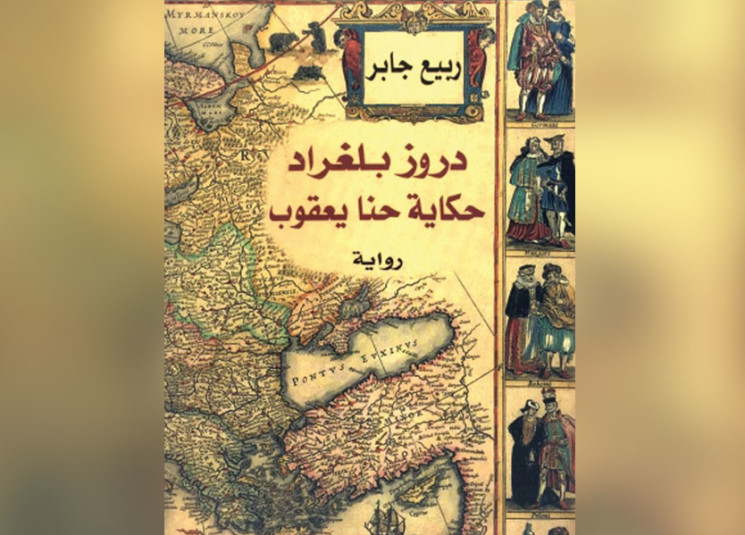
“The Druze of Belgrade – The Story of Hanna Yaqub” is a historical novel by Rabee Jaber that addresses the situation in Lebanon following the 1860 events in Mount Lebanon, a real-life incident in which 550 Druze were exiled to Belgrade and Tripoli, Libya, in the nineteenth century. It won the International Prize for Arabic Fiction in 2012.
The novel tells the story of Hanna Yaqub, a Christian man from Beirut whose profession is selling eggs. He happened to be on the port docks when a group of Druze fighters was taken following the civil war in Mount Lebanon in 1860, and an Ottoman decree was issued to deport 550 Druze to the kingdom's prisons in the Bulgarian lands. Hanna Yaqub was included among them; he was exiled and taken by sea to the Belgrade Fortress at the fringes of the Ottoman Empire, in place of another person who was released after his father bribed the Ottoman officer. The novel revolves around the suffering of Hanna and the rest of the prisoners over the course of 12 years of imprisonment in Belgrade and other parts of the Balkans.
This journey was followed by much suffering. Some perished in the Belgrade Fortress, and others in Serbia, Montenegro, and Pristina, due to the harsh conditions. Nevertheless, imprisonment united those who were once divided; these people, who had been fighting each other, became harmonious once they were placed in the same location, which is the essence of the historical incident.
Back home, the novel speaks of Hanna Yaqub's wife, 'Helana Constantine,' and their daughter, Barbara, and how the husband's absence—having left in the morning with his basket of eggs never to return for twelve years—affected them, and how the wife struggled and resisted all hardships with the single hope that her husband would return.
The structure of the story was built on the pattern of parallelism between the two narratives: the detainees in exile and the story of the wife. A single narrator tells both stories—an omniscient narrator who is aware of the events in all locations, even though they sometimes leave the narration to the character in the first person.
Critics on the International Prize for Arabic Fiction jury considered this novel to be: "The most distinguished, brilliant, and diligent work, thus deserving the 2012 International Prize for Arabic Fiction for its powerful portrayal of the fragility of the human condition through the recreation of a historical reading of the past in a highly sensitive language."