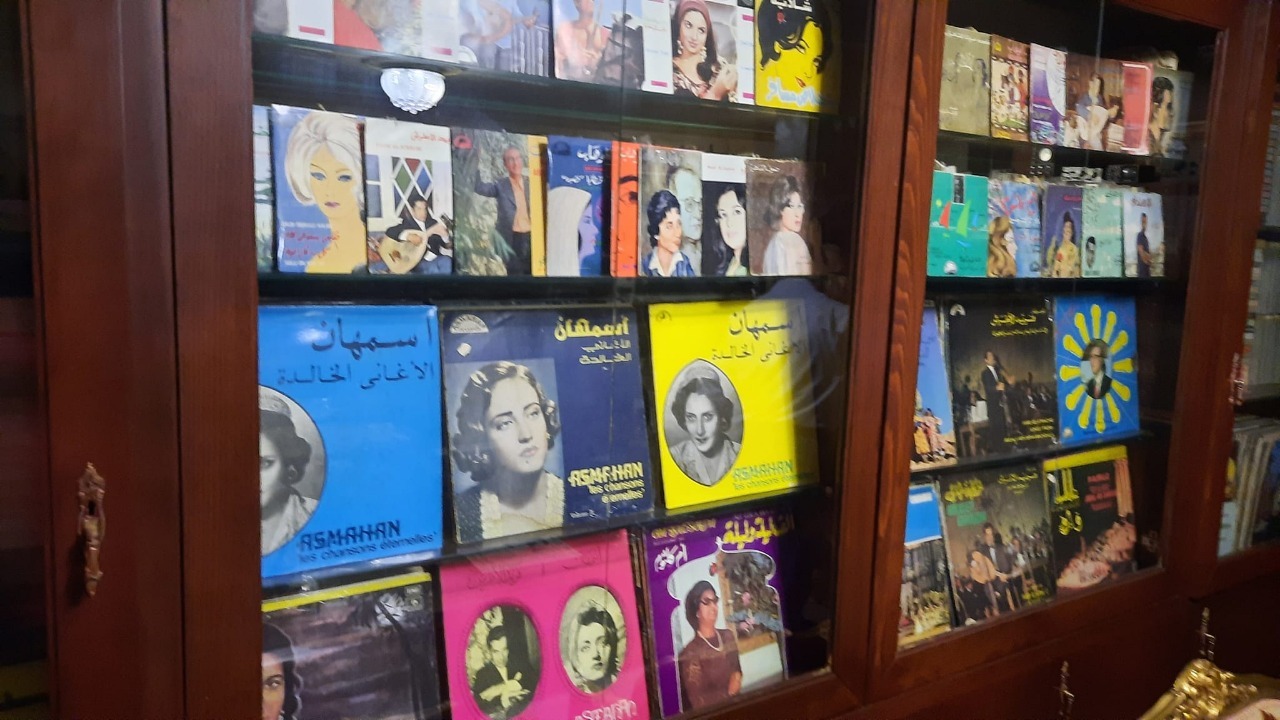

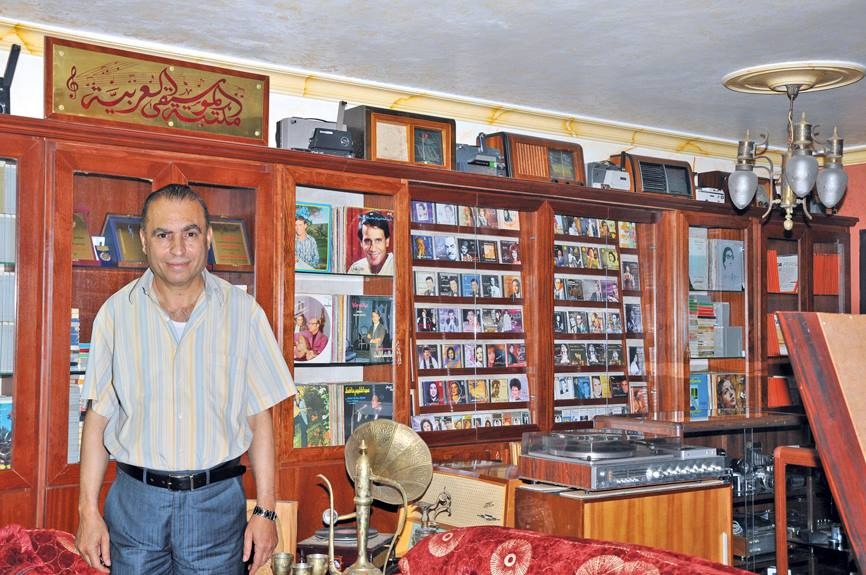
In a house in Choueifat lies a priceless treasure. A treasure in one of Lebanon’s regions that is unparalleled in the entire Middle East. This was confirmed by a comment from the Tunisian Ambassador during his visit to this house, saying: “There is a real treasure in this place.” So what is its story?

Walid Khoueis, the artist and music historian, was driven by his love for art and music to turn his home into the largest and most massive library of Arabic music in the Middle East. The accountant, a native of the town of Btater in Mount Lebanon, found his passion in music and reflected that in his home and family. Since 1986, Khoueis had been collecting gramophone vinyl records of Arabic music stars. The spark started from his love for the late artist Farid al-Atrash, one of the most important icons of 20th-century Arabic music, as the process of building the Khoueis music library began when his family decided to collect the complete works of al-Atrash. However, after that, the works were no longer limited to those of Farid al-Atrash; rather, the collection grew significantly until it covered the shelves from floor to ceiling in his home.
Rare Pieces
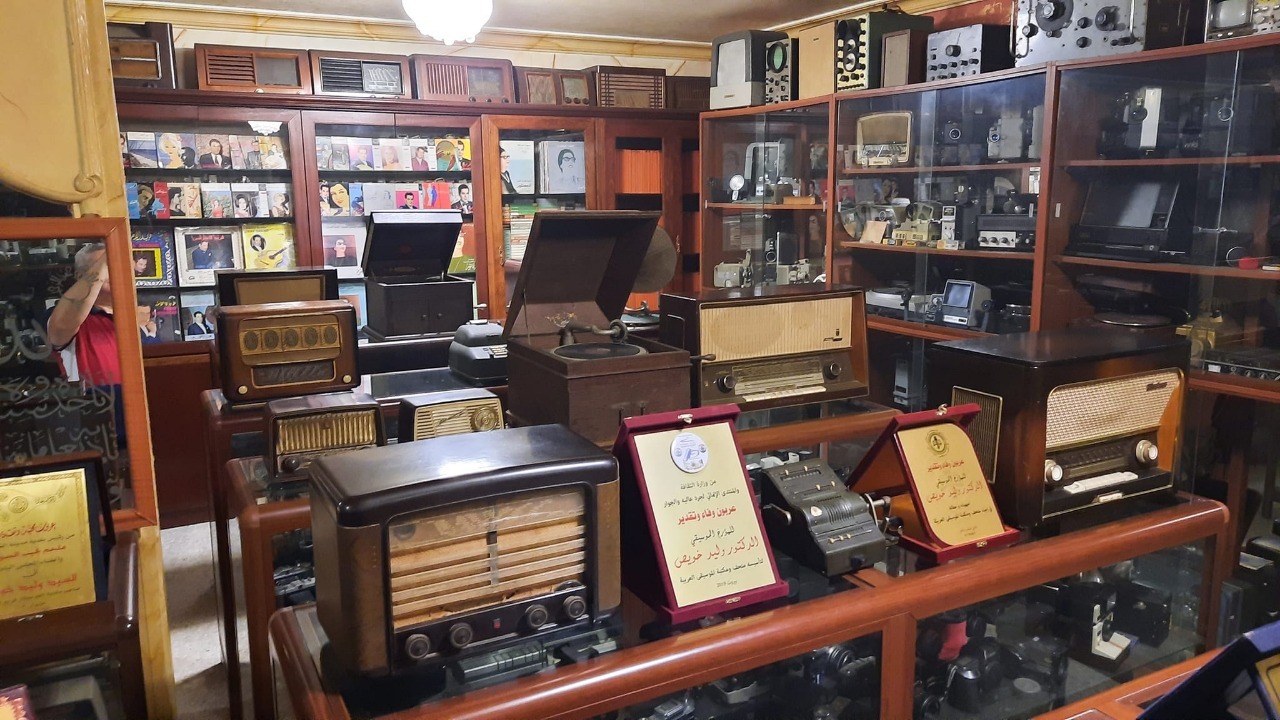
Walid Khoueis initially focused on collecting the complete series of old records by great singers such as Umm Kulthum, Asmahan, and Farid al-Atrash, before deciding to expand his collection to include music from all corners of the globe. This is in addition to a large collection of rare items, including old photography and cinema projection equipment such as phonographs or gramophones, old television sets, and a reel of rare photos. His collection also contains about 20,000 black-and-white photographs of Beirut, Palestine, Egypt, and Jordan dating back to 1914, in addition to several antiques, instruments, and references, which have made his home a library and a massive museum that welcomes visitors for free to enjoy this cultural and artistic legacy.
The First Music Library
Khoueis always pointed out that his goal was to make music accessible to a larger audience. Khoueis stated in an interview with “Reuters”: “In 1986, I started the Arabic music library. My family and I established the first music library in the Arab world. It contains stone records from 1905 when the French company Odeon began printing Arabic records. We also have the complete English series from the French company Odeon.” Khoueis added in the interview at the time: “The Arabic music library was not completed until we moved to the World Classical Music Library. The World Classical Library contains stone records with original sound (in English) from 1860. They are sets (in English) of Bach, Beethoven, Tchaikovsky, Mozart, Rossini, and Haydn. We were able to collect all these classics from around the world. The magic of it is that the musical score is on every record, and there is a hand-drawn illustration, as photography did not exist then. Back then, they used to hand-draw Mozart, Beethoven, and Tchaikovsky on the record.”
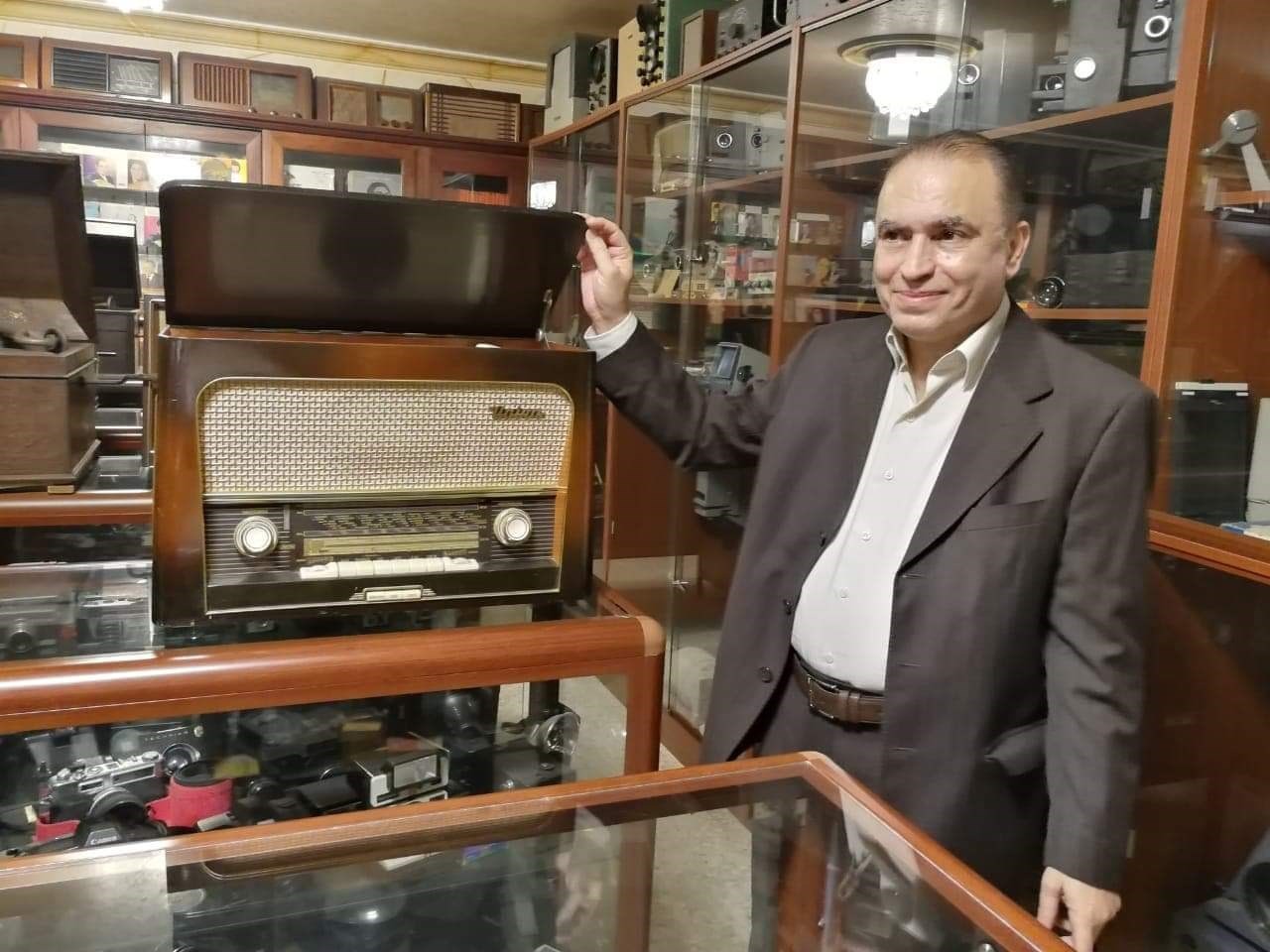
Khoueis received many awards from the Lebanese Ministry of Culture for his efforts in preserving the Arabic musical heritage. A seeker of authentic art, a collector, an archivist, and a traveler to every place in pursuit of musical “icons” and “masterpieces,” music historian Walid Khoueis passed away suddenly on January 30, 2022, at the age of 65, leaving behind a “dream home” fragrant with history.