
Historian Ibrahim Joudieh recounts that in May 1927, when the battles of the Great Syrian Revolt ended and the revolutionaries moved to the Azraq region in Jordan, Britain pledged to France to end the revolt and besieged the revolutionaries by various means of oppression and starvation until they left for Wadi Al-Sirhan, beginning a journey of suffering in this harsh desert and an urgent need for food for children and women.
Sultan Pasha al-Atrash informed and requested aid from the Mufti of Jerusalem, Amin al-Husseini. The Mufti indeed aided them and tasked Subhi al-Khadra with accompanying a relief convoy carrying life necessities. After an arduous journey, the convoy reached Wadi Al-Sirhan - Al-Haditha - and had a profound impact on saving the mujahideen and their families.
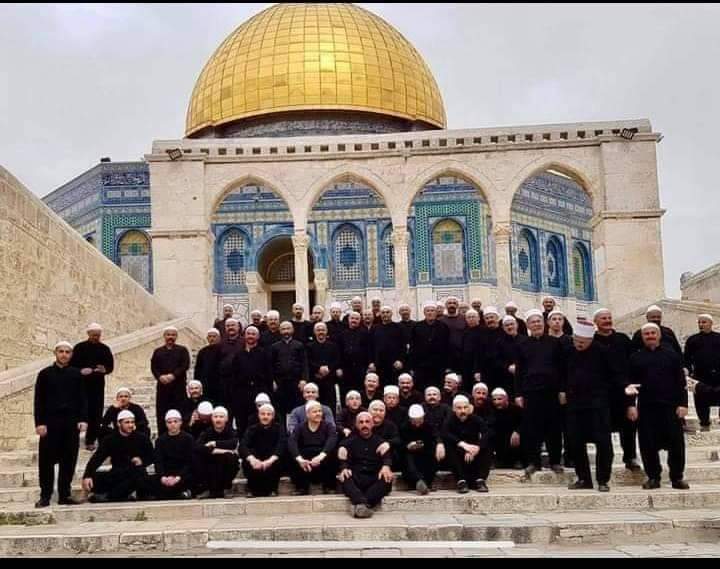
Subhi al-Khadra noticed that the mujahideen were using wooden spoons made from the crates that contained the aid, due to the lack of metal spoons. Subhi al-Khadra asked the General Commander of the revolution for permission to take these spoons, and when he returned to Jerusalem, he spoke to the members of the Supreme Muslim Council about the suffering of the revolutionaries, providing these spoons they used to eat with as evidence... The Mufti al-Husseini ordered that these spoons be placed in Al-Aqsa Mosque, and he wrote a phrase next to them: "Whoever wishes to be connected to the land and national dignity must contemplate and eat with the Druze spoons."
This phrase remained in the mosque until 1948.