
This song has been sung by people, and continues to be, at weddings and occasions, and it has been sung by some singers, without any of them knowing its story or who sang it for the first time and why?
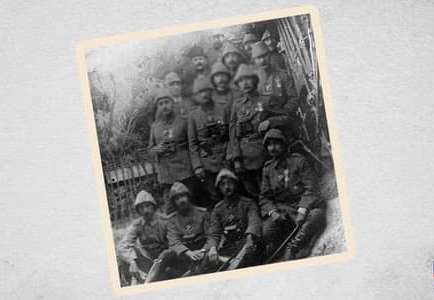
The history of this song dates back to the year (1837), when Sharif Pasha of the Ottoman Empire sent a large military campaign led by (Ali Agha al-Busaili) to discipline the people of Jabal al-Arab (As-Suwayda) and subject them to the control of Ottoman rule....
The campaign arrived from the direction of Hauran, heading towards As-Suwayda, and positioned itself near the village of (Al-Tha'lah), west of As-Suwayda. Among this campaign was a special, trained unit called the (Al-Hawara Unit), which was famous for achieving rapid victories...
The revolutionaries of Jabal al-Arab, led by the Sheikh, poet, and knight Abu Ali Qassam al-Hinnawi, were monitoring the campaign and its positions. When night fell, as part of a well-orchestrated plan, the revolutionaries advanced in silence and launched a surprise attack with cold steel (bladed weapons), wiping out the campaign within their camps. The commander of the campaign (Ali Agha al-Busaili) managed to escape the battle with some of the campaign's soldiers, so the revolutionaries pursued them outside the borders of Jabal al-Arab. After finishing the pursuit of the enemy, the revolutionaries formed Dabke circles, singing the Hawara song, whose lyrics were improvised by their leader, the poet Abu Ali al-Hinnawi.
He said:
Al-Hawara... Al-Hawara...
War requires skill...
How kind... and how kind...
They plucked the soldiers apart...
The slaughter of the campaign and the cleanup...
Took only the time to smoke a cigarette...
Al-Hawara... Al-Hawara...
The soil of our homeland is precious...
The people sacrifice for it...
And the invader and the arrogant...
We bury them under its stones...
Al-Hawara... Al-Hawara
People have sung this song in their weddings and occasions without mentioning or knowing that this song was written by the swords of the people of Jabal al-Arab in 1837 AD in defense of the land, honor, dignity, and national pride.
The Story of the Song "Al-Hawara"... Written by the Swords of Jabal al-Arab