
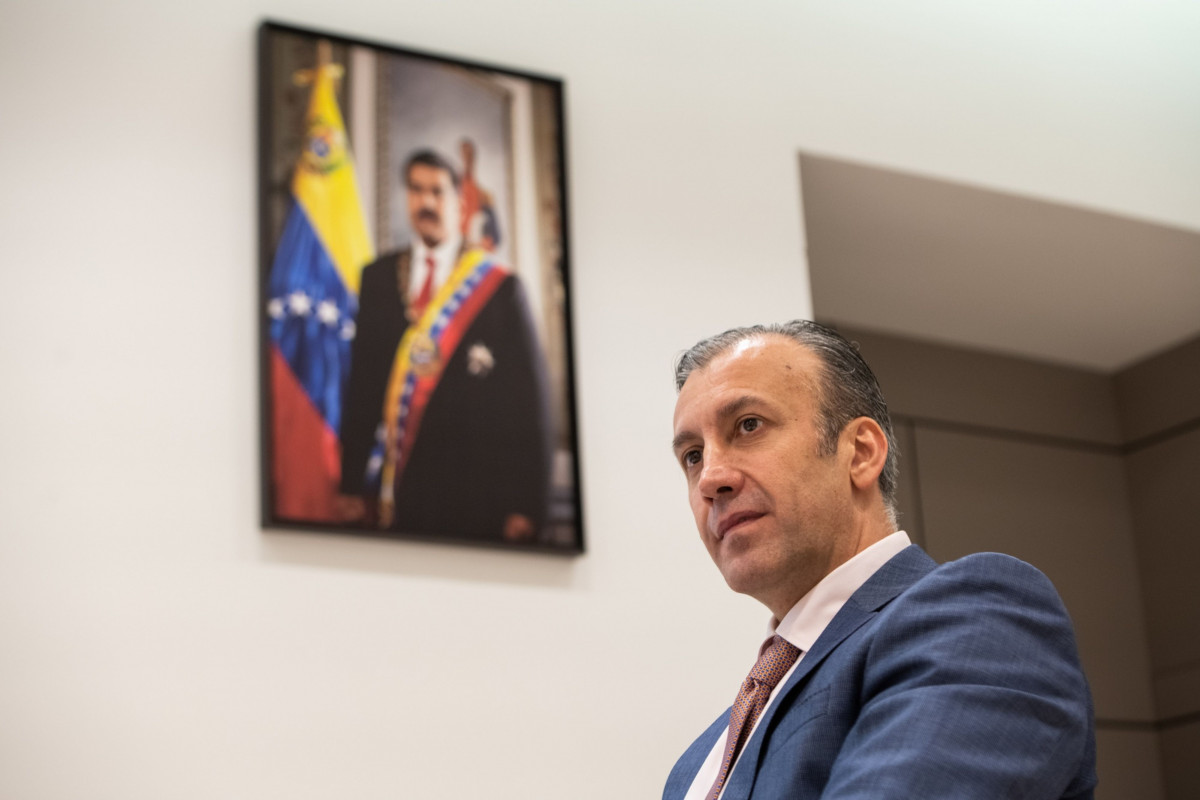
Many viewed him as the "second man" in Venezuela, and many went on to describe this man, the Syrian-born politician Tarek El Aissami, as a powerful "shadow man."
Tarek Zaidan El Aissami was born on November 12, 1974, in the El Vigía area of Mérida state in western Venezuela. He was born to an immigrant family from As-Suwayda Governorate in southern Syria, belonging to the Druze Unitarian sect. In El Vigía, Tarek spent his childhood with his family, consisting of his father Zaidan "Carlos" Amin El Aissami, his mother – who is of Lebanese origin from the Maddah family – and five children (including the former Venezuelan ambassador to the Netherlands). He is married and a father of two.
In his youth, Zaidan belonged to the Ba'ath Arab Socialist Party branch in Venezuela, and he had ties to leftist forces there and in the Arab world. He was also a supporter of Hugo Chávez during his attempted coup in February 1992, for which he was arrested at the time. The family also shares a direct kinship with the prominent Ba'athist leader Shibli al-Aysami, the Assistant Secretary-General of the National Command of the Ba'ath Party (the Iraqi Ba'ath). For information, the origins of the El Aissami family trace back to the town of Imtan in the south of As-Suwayda Governorate and the town of Hasbaya in southeastern Lebanon. 'Aisam is the name of a small village located on the eastern slopes of Mount Hermon in southwestern Syria. As for the origins of his mother's family (the Maddah family), they trace back to the village of Mimes in the Hasbaya District of southeastern Lebanon.
Radical Student Activism
Tarek El Aissami received his university education at the University of the Andes in the city of Mérida, where he specialized in law and criminology. During his studies at the university, he met Adán Chávez, the later former Minister of Education (2007 – 2008) and Hugo Chávez's older brother; he was influenced by him and became one of his close associates. He also became active in leftist student movements related to revolutionary organizations, joined the leftist student movement "Utopía," and was soon elected president of the university student union.
Relationship with Chávez
In 2003, a few days after the U.S. invasion of Iraq, Tarek and his father Zaidan participated in a press conference with the Iraqi ambassador to Venezuela, where the invasion was attacked, and the participants declared their solidarity with the "defenseless Iraqi people." Indeed, Tarek El Aissami's friendship with President Hugo Chávez began that year, and after he began his postgraduate studies, he started supporting the "Fifth Republic Movement" founded by Chávez.
He continued to strengthen his relationship with him following his graduation; in fact, a number of his peers and companions from his university days and leftist student activism later found their opportunity to occupy government positions after Chávez took power.
Consequently, after the success of Chávez's "revolution"—who ruled Venezuela between 1999 and 2013—El Aissami began his rapid political rise, but this time from the capital, Caracas. As previously mentioned, the most prominent step was his entry into Parliament in 2005.
Ascent to Power
Two years later, in 2007, he was appointed Deputy Minister of the Interior for Citizen Security.
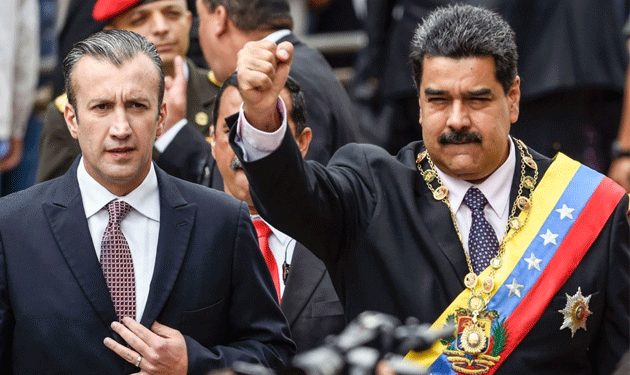
However, the massive leap in El Aissami's political history came the following year, 2008, when Chávez entrusted him with the portfolios of both the Interior and Justice ministries, and he retained both ministries until his election as Governor of Aragua state in 2012. Following Chávez's death and Nicolás Maduro's assumption of the presidency succeeding him in 2013, El Aissami remained one of the keys to power and political references until he was chosen as Vice President in January of that year (2017).
Here, a Colombian academic points out that what is remarkable is that the position of Venezuelan Vice President does not constitutionally involve security powers, but Tarek El Aissami was effectively holding the national security and defense file by assuming leadership of the "Defense and Security Council."
El Aissami continued to hold official responsibilities, the last of which was the position of Venezuelan Oil Minister before he submitted his resignation in March 2023.