
Exclusive “Kayan 24”
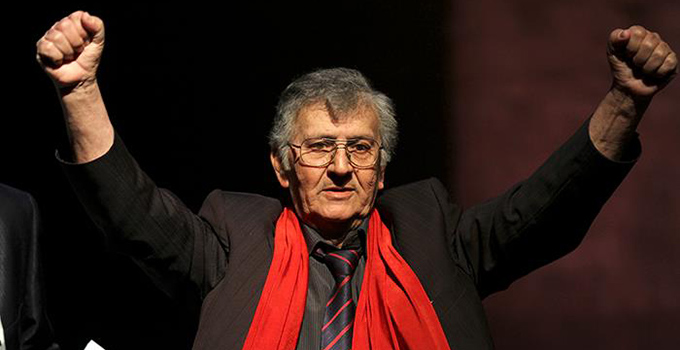
Anyone who enters the garden of the Palestinian Arab poet Samih al-Qasim can harvest a great many poetic titles bestowed upon him by leading critics, thinkers, writers, and poets. While the title of “Poet of Palestine, the Revolution, and Resistance” and “Poet of the Sun” remain the most prominent and widely used, Samih al-Qasim was a poet who rose above labels and transcended personal concerns and the self-absorbed, individual world to enter the orbit of collective anxiety, especially the existential anxiety preoccupied with forging a different vision for the Palestinian revolution. This revolution occupied a large space in his poetry, representing a crossing toward a new horizon of freedom and liberation, and breaking the chains imposed by the Arab collapse during the phase of defeat. Alongside this came the need for resistance poetry to revive the spirit of the revolution, making the struggle with the pen and the poem no less important than the struggle with the rifle. Therefore, al-Qasim chose to seize the mastery of the word and the efficacy of speech, perhaps to awaken the consciences of rulers, officials, and the complacent. For over three decades, his poems inflamed the feelings and ears of the Palestinian people and Arab nations, responding to their issues and visions. He transformed the function of poetry from an activity secondary to liberation movements into an activity directed at the Palestinian mind—a mind searching for space for a homeland—and at the broken conscience, turning it into a revolutionary one that believes in a cause and a right, and seeks justice, sometimes through a stone intifada, sometimes through resisting throats, and always through bullets confronting the tyranny of the occupier.
His Upbringing
Samih al-Qasim al-Hussein was born in Jordan in the city of Zarqa on May 11, 1939. He was originally from the city of Safad, from the village of Rameh in the Galilee, and came from a family of Druze origin. His father was “Muhammad al-Qasim Hussein” and his mother was “Hana Shehadeh Muhammad Fayyad.” He was married to “Nawal Salman Hussein,” with whom he had four sons: “Watan Muhammad, Omar, Yasser, and Waddah.” He had four brothers: “Mahmoud, Sami, Saeed, and Qasim,” and two sisters: “Shaqiqa and Sadiqa.”
Samih al-Qasim grew up in the town of Rameh in occupied Palestine, where it was customary to call them “1948 Arabs.” He studied at the Rameh school and then in Nazareth. He later worked as an Arabic language teacher, a journalist, and an editor. This coincided with his involvement in political work within the Communist Party, from which he later resigned to dedicate himself to his literary, intellectual, and national activities, focusing on writing, authorship, and creativity.
His Imprisonment
Samih al-Qasim was imprisoned several times and was placed under house arrest and restricted by the Israeli occupation authorities due to his resistance to the decision to impose compulsory military service on the youth of his Druze sect, as well as his political positions and poetic writings. He was also fired from his job due to his literary, youth, and political activities, and was threatened with death more than once, both in his homeland and abroad. Al-Qasim revealed an attempt in 1958 to leave the homeland in search of a new horizon of freedom after the crackdown on him intensified and the threats against him and his family increased. However, the intervention of some of his relatives prevented that attempt, as he had been banned at that time from participating in a massive poetry festival.
His Works and Fame
Samih al-Qasim wrote poetry, prose, and plays, enriching the Arab and international library with dozens of works that occupied a prominent space in contemporary culture. They exceeded seventy books, with poetry forming their backbone, in addition to his prose books and plays. He also wrote articles for a number of Palestinian, Arab, and international newspapers and magazines.
Samih al-Qasim’s literary works have been translated into many languages, most notably English, French, Spanish, Russian, Italian, Turkish, and other international languages. In light of this, he was awarded various prizes, plaques, medals, and certificates of appreciation, in addition to honorary memberships in several institutions. He received the “Poetry Gar” prize from Spain, and won two French prizes in recognition of his selections translated into French by the Moroccan writer Abdellatif Laabi. He also won the Al-Babtain Prize, was twice awarded the “Jerusalem Medal for Culture” by the late President Yasser Arafat, and received the Naguib Mahfouz Prize from Egypt, the “Peace” Prize from Oasis of Peace, and the Palestinian “Poetry” Prize.
Samih al-Qasim published his first poetry collection before he was 19 years old, and released his second collection in 1964. In the early 1960s, al-Qasim held several journalistic positions, most notably at the magazine *Al-Ghad* and the daily newspaper *Al-Ittihad* in Haifa. He played an active role in establishing the Arabesque Publishing House in Haifa in 1973, managed the Institute of Folk Arts in Haifa, and later headed the General Union of Arab Writers in Palestine.
Al-Qasim was a member of the Druze Initiative Committee and the National Committee for the Defense of Arab Lands. He also held an honorary position as an editor for the magazine *Kul Al-Arab*.
His Bibliography
Samih al-Qasim’s works are divided into poetry, prose, plays, novels, research, and translation. According to Wikipedia, they are: *Processions of the Sun* (poems, 1958), *Songs of the Paths* (poems, 1964), *Iram* (surreal poem, 1965), *My Blood on My Hand* (poems, 1967), *Smoke of Volcanoes* (poems, 1968), *The Falling of Masks* (poems, 1969), *And It Shall Come, the Thunderbird* (poems, 1969), *Iskanderoun on a Journey Out and a Journey In* (surreal poem, 1970), *Qarqash* (play, 1970), *On Stance and Art* (prose, 1970), *Diwan Samih al-Qasim* (1970), *Quran of Death and Jasmine* (poems, 1971), *The Great Death* (poems, 1972), *Elegies of Samih al-Qasim* (surreal poem, 1973), *My God, My God, Why Have You Killed Me?* (surreal poem, 1974), *From Your Mouth I Condemn You* (prose, 1974), *They Did Not Kill Him and Did Not Crucify Him, But It Seemed So to Them!* (poems, 1976), *Carbon Trioxide* (surreal poem, 1976), *The Black Book - Land Day* (documentation, 1976), *To Hell, O Lilac* (story, 1977), *Diwan al-Hamasah / Part 1* (poems, 1978), *Diwan al-Hamasah / Part 2* (poems, 1979), *I Love You as Death Desires* (poems, 1980), *The Last Picture in the Album* (story, 1980), *Diwan al-Hamasah / Part 3* (poems, 1981), *The Dark Side of the Apple, The Bright Side of the Heart* (poems, 1981), *The Black Book - The Banned Conference* (documentation, 1981), *Directions of the Soul* (poems, 1983), *Sacrifices* (poems, 1983), *Collage* (formations, 1983), *The Desert* (surreal poem, 1984), *Persona Non Grata* (poems, 1986), *I Ask No One's Permission* (poems, 1988), *A Rosary for Records* (poems, 1989), *Letters* (prose, with Mahmoud Darwish, 1989), *Selections from an Anthology of Palestinian Poetry in a Thousand Years* (research and documentation, 1990), *Ashes of the Rose, Smoke of the Song* (prose, 1990), *The Abduction of Princess Yabus* (poems, 1990), *Accomplished Works* (7 volumes, 1991), *The Departed* (documentation, 1991), *Blue Memory* (translated poems, 1991), *Accomplished Works* (7 volumes, 1992), *Accomplished Works* (6 volumes, 1993), *The Seven Books* (poems, 1994), *Elusive Land. Stagnant Silk. No Problem!* (poems, 1995), *Jasmine* (translated poems, 1995), *The Deserts Failed Me* (surreal poem, 1998), *The Deceased's Speech at His Memorial Festival* (surreal poem, 2000), *I Will Walk Out of My Picture One Day* (poems, 2000), *The Actor and Other Poems* (2000), *Regret of the Earthquake* (prose, 2000), *The Book of Perception* (prose, 2000), *King of Atlantis* (surreal poems, 2003), *Wonders of New Cana* (surreal poem, 2006), *Ibn Muhammad’s Introduction to the Visions of Nostra-Samih-Damus* (poetry, 2006), *Baghdad and Other Songs* (poems, 2008), *Without Violets (Words in the Presence of Mahmoud Darwish's Absence)* (2008), *I Am Sorry* (surreal poem, 2009), *A Very Personal Call (with Mahmoud Darwish)* (poetry and prose, 2009), *Collage 2* (poetry, 2009), *Do Not Provoke Strife!* (prose, 2009), *The Jerusalem Book* (poetry, 2009), *The Suicide Rose Belt* (poetry, 2009), *The Walls (Operetta)* (poetry, 2010), *Children on a Mission of Salvation* (story, 2010), *A Small Spoon of Poison, Three Times Daily* (autobiographical story, 2011), *It’s Just an Ashtray* (memoir, 2011), *Standing Tall I Walk* (poetic selections, 2012), *Premonitions for the Descendants' Rituals* (surreal poem, 2012), *Collage 3* (poetry, 2012), *The Phoenix and Other Poems* (2012), *Guantanamo and Other Poems* (2012), *Regardless* (poetry collection, 2012).
His Death
After a three-year battle with liver cancer, during which Samih al-Qasim resisted with patience, faith, and mockery of death—even facing it with writing until his last breath—his health deteriorated in his final days. He passed away on Tuesday, August 19, 2014.