
On the shoulder of that coastal slope in western Aley once rested the Tanukhid Emirate, which was nothing but a center of scientific and intellectual radiance and a center of political and social power, especially during the era of Emir Al-Sayyid Abdullah Al-Tanukhi, who achieved a qualitative shift in the history of the Druze Unitarian community. He was the first of the reformers and those who kept pace with his era, presenting to his generation and future generations a great scientific legacy that had a great merit in overcoming the difficult stages that the Druze have gone through in their modern history.
Emir Al-Sayyid drew much from the Holy Quran and the sources of knowledge in his era, calling for the pursuit of knowledge. In fact, his orders were clear and binding in urging the pursuit and dissemination of knowledge in accordance with the noble Hadith: “Seeking knowledge is an obligation upon every Muslim.” Seeking and acquiring knowledge has always been the concern of the great reformers and people of high ambition from this enlightened community throughout successive eras, such as Al-Sayyid Al-Emir, Sheikh Al-Fadil, Sheikh Al-Kafraqawi, and others.
Emir Al-Sayyid used to dedicate one day a week to students, teaching them lessons so that they, in turn, would go and perform religious education in various regions, following in the footsteps of the prophets and messengers, who did not spare their knowledge and wisdom to their students, who were later faithful in passing on their legacy to the world.
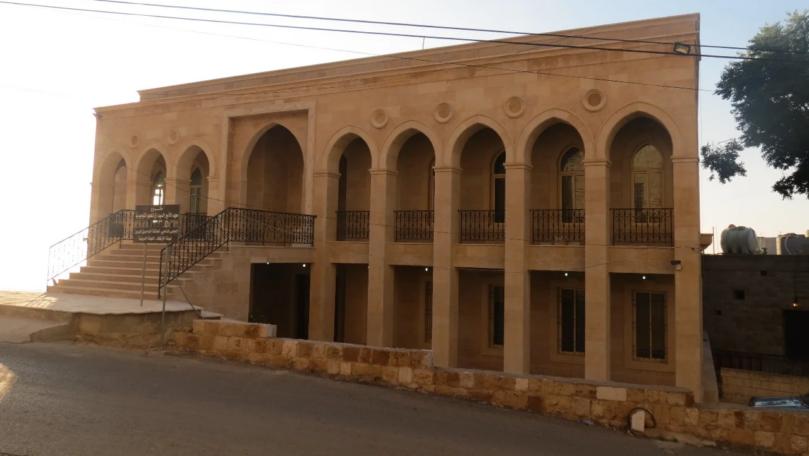
This is what the students of Emir Al-Sayyid did, and from here the idea of establishing the Emir Al-Sayyid Abdullah Al-Tanukhi College for Unitarian Sciences in Abey was born. It was approved by the Lebanese Council of Ministers on Wednesday, May 16, 2018, to be a private university college licensed by the Ministry of Education and Higher Education and affiliated with the Mashyakhat al-Aql of the Druze Unitarian community. This was achieved with follow-up and support from Sheikh al-Aql Naim Hassan and the head of the Democratic Gathering, MP Walid Jumblatt, who provided significant assistance to complete the construction of the institute and equip it, after Sheikh Farid Saab had already provided generous assistance, and the Endowments Committee of the Mazaabi Council undertook the construction of the ground floor and the completion of restoration and equipping works.
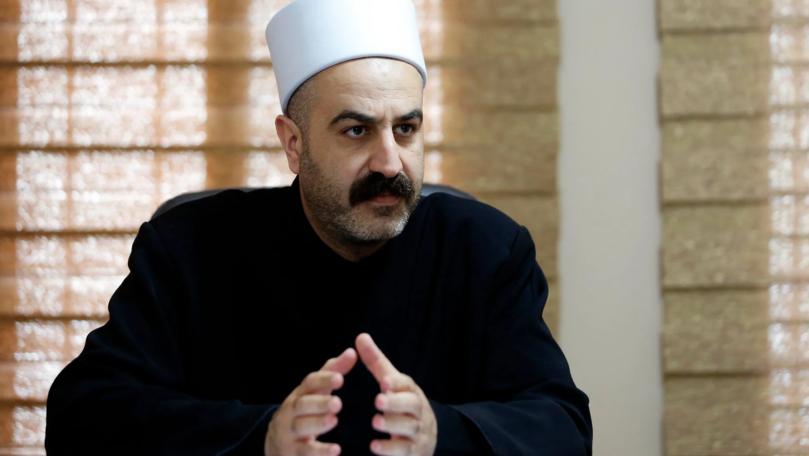
The head of the Religious Committee in the Mazaabi Council, Sheikh Hadi Al-Aridi, spoke about this step, pointing out that "the college building is built on the endowment of Al-Sayyid Al-Emir, who willed that the endowment money be spent on religious education. We have named the college 'Emir Al-Sayyid Abdullah Al-Tanukhi University College for Unitarian Sciences' to seek blessings by his name and to commemorate this great figure," revealing that based on the will of Emir Al-Sayyid, education at the college is free.
Al-Aridi explains the goals of the college, which is intended to be a leading religious center and to fulfill its purpose of understanding Monotheism (Tawhid) as a creed, law, and comprehensive methodology, and contributing to building a balanced Unitarian personality and enshrining moral values within it.
This is in addition to preparing scientific cadres and religious figures capable of addressing contemporary intellectual challenges, developing the sense of responsibility placed on the shoulders of the Unitarian towards their family and society, and educating and qualifying the student to become a teacher in the field of teaching knowledge and Unitarian education in religious institutes and modern schools.
The adopted curriculum is subject to continuous evaluation and is characterized by the following features:
-Starting from clear and carefully and accurately drawn goals, and utilizing the curriculum to secure these goals.
-Focusing on developing the student's capabilities and urging them towards self-learning, and qualifying them to make the most of available capabilities and resources by training them to utilize various learning techniques.