
Exclusive to “Kayan 24”
It is extremely difficult to encompass the political and social role whose threads and details were mostly held by the Lady of the Palace, Sitt Nazira Jumblatt, during an exceptional and highly sensitive historical phase—whether in terms of external conflicts and the calculations and alliances surrounding Lebanon and the Mountain in particular during the Mutasarrifate and Mandate eras, or in terms of internal calculations, the positioning of sects and denominations, and the network of relationships between families and factions within the same family. The political leadership of Sitt Nazira Jumblatt represented a major turning point for the influence and position of the Jumblatt leadership following the assassination of her husband, Fouad Jumblatt. It would have been difficult for that leadership to continue in that role at the time had Sitt Nazira not chosen the path of challenge and confrontation, defying prevailing norms that suggested a woman should not manage the affairs of the Druze leadership, as some feudal families and factions considered it illegitimate. However, she chose to take hold of the reins of leadership so that Al-Mukhtara would not fade from the political landscape on one hand, and to play its historical role at the level of Druze leadership and national leadership, which the Jumblatt family derived from sharing the leadership of the Mountain with the influential powers of that era.
It is no exaggeration to say that one of the secrets of the continuity of the Jumblatt leadership was linked to that fateful historical decision, which blocked the way for the Jumblatt family's competitors from influential Druze families on one hand, and for Druze figures from within the Jumblatt family itself. Many turned against her, and others conspired, but thanks to her wise and courageous political leadership and her tact in managing the affairs of the leadership, she repelled those conspiracies and managed to guide it to political and social safety, preventing strife between the components of the Mountain, especially between Christians and Druze. She spared the Mountain and the Druze a bloodbath, as she was able to preserve the security of the Mountain and prevent the attacks of the French colonial forces, which had witnessed violent battles in Jebel al-Arab, and worked to maintain political balances by dealing realistically with the events of that period and understanding the structure of Mount Lebanon, which differed in its composition and balances from Jebel al-Arab.
Her Life and Upbringing
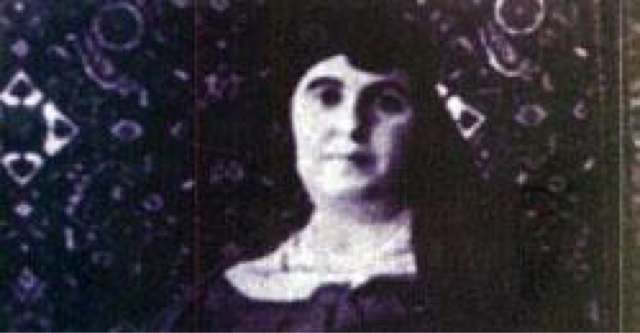
On March 27, 1890, Nazira Jumblatt was born in the town of Ain Qani, Shouf, one of the villages of South Mount Lebanon. Her father was Sheikh Fares Jumblatt, and her mother was Sheikha Farida Saeed Jumblatt. In her childhood, she did not have the opportunity to receive her education at school, especially since the traditions of that era were strict regarding sending girls to schools. She was educated by her grandmother, Badr Aman al-Din, who provided her with much essential knowledge, especially regarding traditions, customs, and norms. However, at a later stage, she received private lessons at home from tutors, acquiring—in addition to Arabic—the English and French languages, as well as scientific and educational knowledge that enabled her to attain a political culture rarely available to a Druze woman at that time. These sciences and knowledge opened a door for her to participate in political life and understand the historical and social events unfolding.
At the age of fifteen, Nazira Jumblatt married Fouad Jumblatt (born 1885) during the phase of the end of the Ottoman Empire and the beginning of the French Mandate in Lebanon, where he was appointed in 1906, and later the French appointed him Qaimaqam of the Shouf in 1919.
The Assassination of Fouad Jumblatt
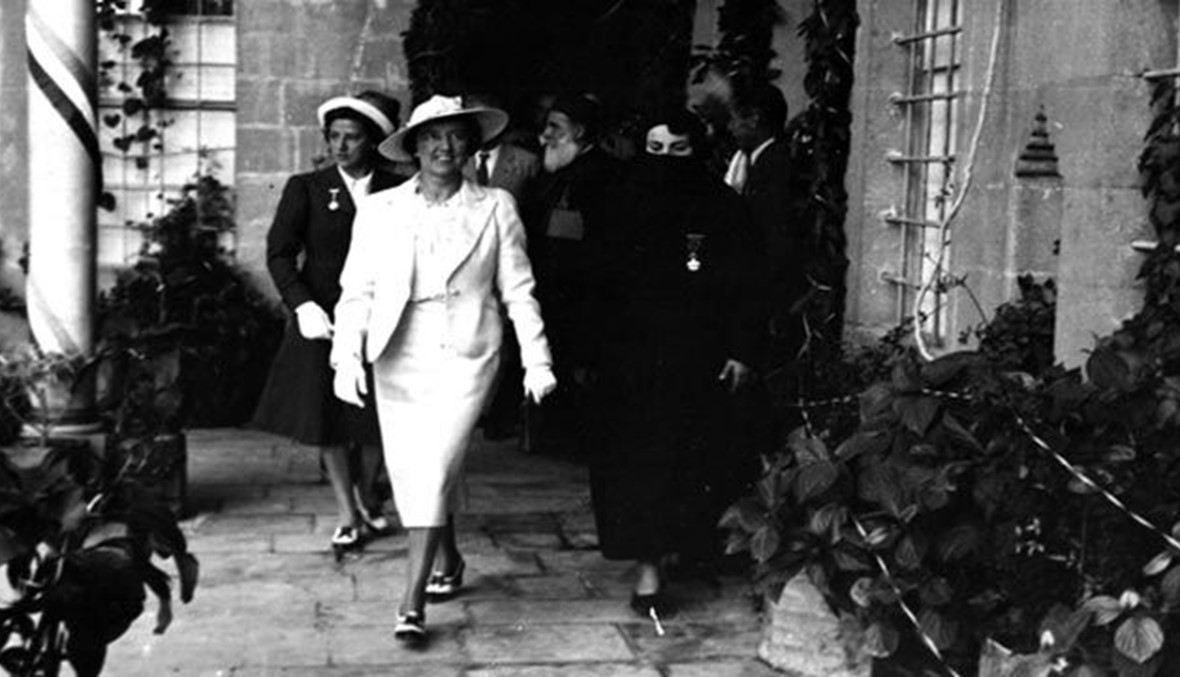
Fouad Jumblatt was assassinated on September 6, 1922, in Wadi Ainbal, during a delicate phase that had witnessed unrest and tensions against the French Mandate in Lebanon and Syria. Sitt Nazira faced fateful challenges and bore immense responsibilities, foremost of which was raising her son, Kamal Jumblatt, who was four years old, and her daughter, Linda Jumblatt, in a phase where the rule of men prevailed without allowing space for a woman's rule in Druze society. She was the first Druze woman to assume a political position and office in the governorship of the Shouf Mountain in place of her late husband. She entered it as the Lady of the Palace, playing an advanced role in governing the Mountain, and was able to preserve this role so that the legitimate heir, Kamal Jumblatt, could lead the phase and assume responsibility towards the leadership, the family, and the Jumblatt legacy.
Sitt Nazira Jumblatt established new rules for political work that were compatible with the interests of her sect's members and the interests of the Shouf Mountains. Through her stances and practices in governance, she showed flexibility in the relationship with the components of the Mountain and keenness on civil peace and strengthening relations in Lebanon, especially in the Mountain. She prevented the extension of political and military events and tensions that erupted in Jebel al-Arab during the Great Syrian Revolt into Mount Lebanon, exerting maximum efforts to ward off Christian-Druze strife at a dangerous and delicate political moment. The logic of mutual intimidation between the two parties vanished, and Jumblatt was able to protect diversity and cemented the logic of a natural relationship between the components of the Mountain, despite all the accusations and obstacles that faced her project.
Preserving the Security of the Mountain
On the Druze level, she stopped a massacre that was about to be committed in the Shouf town of Baadarane following bloody events in Mazraat al-Shouf, where she met, in the presence of the Sheikh Aql of the Druze Unitarian community, with the French commander of the campaign and pledged to preserve security and stability in the Mountain in exchange for halting the military operations carried out by French forces. Thus, she was able to protect the Shouf region and deter the strife that was being planned by those hostile to the Jumblatt rule at that time. She also managed to protect the region from regional and international shocks and their negative repercussions on the Druze, away from populism, personal interests, and the whims of the street, which gradually accepted the political direction of the Al-Mukhtara leadership despite their historical hostility at that time to the French Mandate over Syria and Lebanon.
An Iconic Image
Sitt Nazira Jumblatt's experience remained governed by the horizon of family and feudal rule and by the trend of customs and traditions, especially since family concerns, the requirements of leadership, and its demands forced her into a social and political path governed by the reality of the environment in which she lived, without achieving a radical breakthrough on the national scale. However, her experience in governance, as a woman who entered the world of politics, was a distinct experience from the experiences of women who entered this world. Even Prince Shakib Arslan said of her: “In truth, there is no peer for her, nor a Nazira (a name meaning 'equal' or 'peer').” Mrs. May Jumblatt, wife of the martyr Kamal Jumblatt, said of her: “A hero's biography in the femininity of a woman, in the gravity of a Sheikh among the Sheikhs of the Mountain, in the image of a legend, according to what was stated in Dr. Shawkat Ishti's book: 'Sitt Nazira.. From the Limits of the Family to the Realms of the Nation'.”
Kamal's Distinctiveness
However, a prominent and fundamental distinction was clear between her and the heir to the Jumblatt leadership, her son Kamal Jumblatt, at the level of the concept of leadership, political performance, the orientations of the Mukhtara Palace, and the social horizons and human scope, which differed in practice and vision with Kamal Jumblatt taking over the keys of Jumblatt leadership and the leadership of the palace since the beginning of the 1940s.
Feminizing the Leadership
Sitt Nazira Jumblatt passed away in 1951 at the age of 61, leaving behind that great Jumblatt legacy that continued with the carrier of the Jumblatt banner, Kamal Jumblatt. She was able to lead the Mountain out of the time of obscurantism, sectarian conflicts, the injustice of the Ottoman Empire, and the fluctuations of mandate politics to the light of togetherness through her openness and her keenness on the Christians just as she was keen on the Druze. She was a Lady of the Palace for three decades during the French Mandate and the beginning of the formation of the Lebanese authority. Feminizing the Jumblatt leadership at a decisive moment between two histories was a bridge to consolidate and fortify that leadership and protect it until its legitimate heir reached the age of maturity.