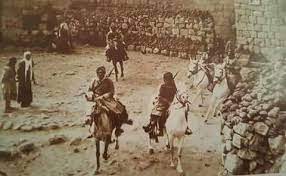

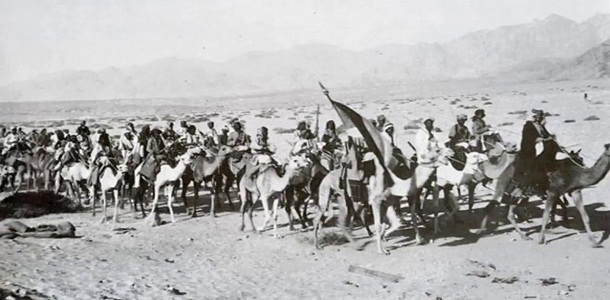
The Great Syrian Revolt, also known as the Jabal al-Arab Revolution, which erupted in 1925 in Syria, marked an exceptional turning point in the path of the French Mandate over Syria. This period was considered one of the most violent phases in the history of the Syrian people's struggle, leading France to recognize some of the political rights of Syria and Lebanon. As writer Omar Farroukh stated in the newspaper Al-Bayan, issue 6027, dated February 17, 1951: “The Druze heroism in the Syrian Revolution was one of the direct reasons for France’s recognition of a significant portion of the political rights of Syria and Lebanon, and for the declaration of republican rule in both Syria and Lebanon.”
This revolution was often portrayed as a negative act and a reaction to the ruling administration at the time, with some sources considering it a vindication for Druze dignity that was insulted at the French High Commission in Beirut following security and political events that occurred in a number of As-Suwayda villages. In reality, this perception is superficial and naive, even if it is not devoid of truth, especially since the causes of the revolution were deeper and more complex than some phenomena suggest. It aimed to dismantle an existing rule in order to build a new one more compatible with the nature, customs, and traditions of the people of the Mountain—a rule that does not conflict with their dignity, beliefs, and good neighborliness with their brothers in the homeland, because their freedom can only be guaranteed by ensuring the freedom and dignity of their neighbors and brothers in the country. It sought a rule capable of leading the country to independence and the right to self-determination to liberate it from French tutelage.
Consequently, the goal evolved from local independence to comprehensive and broad independence. Meanwhile, as a result of negotiations, some revolutionary leaders began their attempts to reconcile French and Syrian theories in a way that guaranteed Syria its independence and France its interests. Even the term 'Syria' was subject to a dispute regarding its definition between 'Natural Syria' and other nomenclatures, not to mention the various interpretations of the words 'unity' and 'union' that accompanied the revolution. Despite its political and national immaturity, the revolution managed to achieve reforms in the French and local administrative apparatus.
The Syrian Revolution shook France violently and sparked a wave of serious consideration about leaving the country, the result of which was the creation of a constitutional life in Lebanon and then in Syria.
The Start of the Revolution
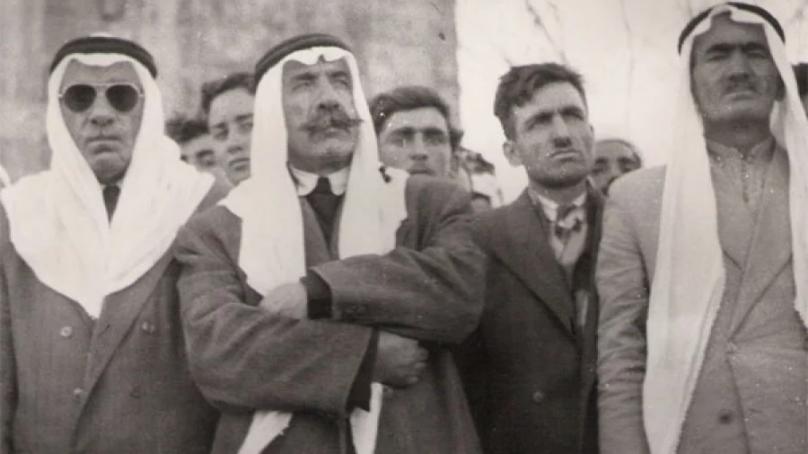
The Great Syrian Revolt began in Jabal al-Arab, Syria, against French colonialism on July 21, 1925, led by the general leader of the revolution, Sultan Pasha al-Atrash, supported by the rebels of Jabal al-Arab in southern Syria, who were joined by rebels from various regions of Syria, Lebanon, and Jordan. The revolution confronted the arbitrary, dictatorial, and military policies pursued by the French authorities, which sought to fragment and divide Syria into several mini-states, stifle freedoms, pursue and arrest patriots and free individuals, and implement a policy of sectarian incitement, creating communal strife, and altering the identity of the Arab nature of the Mountain, in addition to the Mandatory authorities' refusal to set a timetable for Syria's independence.
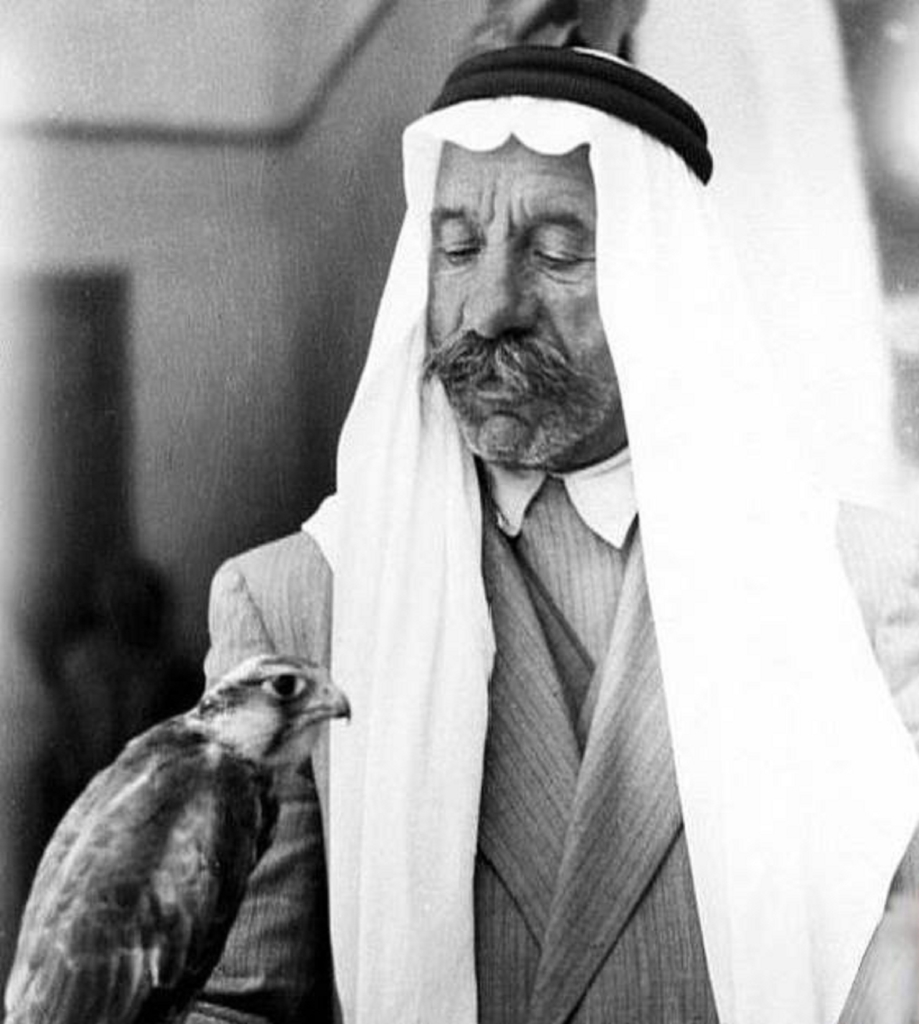
Sultan Pasha
Sultan Pasha al-Atrash is the general leader of the Great Syrian Revolt. He was born in the village of Al-Qurayya in the As-Suwayda Governorate, in the Salkhad region of Syria, in 1888, into the Druze Al-Atrash family. His father, “Zouqan bin Mustafa bin Ismail II,” was the founder of the Al-Atrash Sheikdom in 1869. He was known as a mujahid and a local leader who led a fierce battle in the Al-Kafr region in 1910—one of the battles of the people of the Mountain against Sami Pasha al-Farouqi, which was waged by the Ottoman Empire on the Mountain of the Druze to break its spirit and bring it under its control. The Turks hanged him for his rebellion in 1911. Sultan’s mother was “Sheikha bint Ismail II.”
In a statement, Sultan Pasha al-Atrash announced his support for the Great Arab Revolt led by Sharif Hussein, saying: “We did not make our decision to support Sharif Hussein out of emotional impulse or passion, but because we draw inspiration from the long history of our sect, its political and military stances similar to those against the foreign elements that established themselves within us, and the greedy invaders who came to colonize us and plunder our wealth from abroad.” Following this, Al-Atrash recruited groups of young men from his town and neighboring villages in the Mountain to be the vanguard of the Arab Army in the liberation of Damascus. On September 5, 1918, Sultan Pasha al-Atrash marched to Damascus with the Arab Army forces, participated in the Battle of Tal al-Mani’ near Al-Kiswah, and was at the forefront of the forces that entered Damascus a few days before the arrival of King Faisal, raising the Arab flag on the government house and the municipality building in Al-Marjeh Square in Damascus.
To Arms, O Patriots
On July 21, 1925, Sultan Pasha al-Atrash ignited the flames of the Great Syrian Revolt with a statement he broadcast, which read: “To arms, O patriots, to arms to realize the aspirations of the country; to arms to support the sovereignty of the people and the freedom of the nation; to arms after the foreigner has stolen your rights, enslaved your country, violated your covenants, failed to uphold the honor of official promises, and forgotten national aspirations.” During the revolution, Al-Atrash fought many battles, including the Battle of Al-Kafr on July 20, 1925, the Battle of Al-Mazraa on August 1, 1925, and the battles of Al-Musayfirah and As-Suwayda. These battles shook the French Mandatory authorities, who found themselves in a major dilemma and resorted to sending thousands of soldiers to Syria and Lebanon equipped with the latest weapons, compared to the rebels' limited supply sources, which tipped the balance in favor of the French, allowing them to regain control of many cities liberated by the rebels.
Since the events of Maysalun and the arrival of the French Mandate forces on the Syrian coast in 1920, Syria witnessed security events, uprisings, and popular disobedience in several Syrian regions in rejection of the Mandate and its practices, and these events continued until the end of June 1927. Despite the Mandate authorities' ability to settle the battle in their favor with aircraft, bringing in armies, equipment, and military machinery, and striking with fire and iron, and despite suffering heavy losses, the 1925 revolution shook the French policy and forced them to reunify Syria, stop its division plan, and hold parliamentary elections that paved the way for the French withdrawal from Syria in 1946.
French Campaigns
The French exerted all their power to tighten their grip on the rebels, bringing in large campaigns and requesting new reinforcements. They forced the rebels to flee to Al-Azraq in the Emirate of Transjordan, but the British did not allow them to stay long. Sultan Pasha al-Atrash and his group of mujahideen moved to Wadi Al-Sirhan and Al-Nabk in the north of the Kingdom of Saudi Arabia, then to Al-Karak in Jordan. He had refused to surrender or hand over his weapons to the colonizer, so he was sentenced to death.
Sultan Pasha al-Atrash and his companions returned to their homeland after France issued a general amnesty for all mujahideen following the signing of the Syrian-French Treaty in 1936. Sultan and his companions were received in Damascus on May 18, 1937, with large popular celebrations.
Half a Million Mourners
On March 26, 1982, the leader Sultan Pasha al-Atrash passed away at the age of 91. His funeral was a historic day, attended by more than half a million mourners. His coffin was carried in a helicopter that flew over the sites of the immortal battles he fought, and he was buried in his village of Al-Qurayya, carried on a cannon carriage.
Sultan Pasha al-Atrash was known for his adherence to customs, traditions, values, and genuine chivalry. He would not remain silent in the face of injustice, would not accept the insult of a guest, and would not spare anything he possessed for the homeland and the nation. Much was said about him, and the poet 'Al-Qarawi' Rashid Salim al-Khuri was one of those influenced by his revolution, addressing him:
You rushed to aid the distressed, angry; had the lion seen you, it would have trembled
And around you, a gathering of the sons of Ma'ruf
With them and without them, you would annihilate the throngs
You leaped to the peak of the tank, a strange leap that taught the eagle how to fall
And electrified the plains with the blade of a sharp sword, stunning the enemies, causing them to fall to their knees