
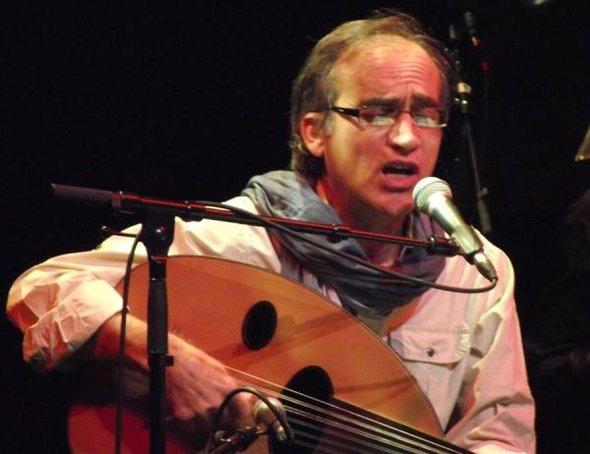
Samih Choukeir, the prominent Syrian artist who was born in the town of Al-Qurayya in the As-Suwayda Governorate in southern Syria in 1957, is considered one of the notable artistic figures who left a strong mark on the world of art and music. Samih Choukeir is known for his committed and revolutionary songs that express the issues of Arab peoples and their struggle for freedom and dignity.
Artistic Beginnings and Studies
Choukeir began his artistic career in 1982, the year that witnessed the entry of Israeli occupation forces into Beirut. He studied art at a higher institute of music in the city of "Kyiv," the capital of Ukraine, between 1990 and 1994, where he was characterized by his artistic and intellectual uniqueness.
Artistic Works
He became famous for his distinguished music albums, including "Liman Ughanni" (For Whom I Sing) in 1983, "Bi-yadi al-Qithara" (With the Guitar in My Hand) in 1984, "Hanajirukum" (Your Throats) in 1985, and "Zahr al-Rumman" (Pomegranate Blossom) in 1990. He also presented a special work for children entitled "Ya Bah Ya Bah" in 2007.
He has always been a politically and socially committed artist. He presented his songs addressing the concerns of the Syrian people and the issues of Arab peoples in the occupied territories. Despite the challenges and the advice given to him to change the direction of his art, he continued to express his vision through his committed art.
His Artistic Legacy
He represents a distinct voice in the world of committed art and struggle. His songs and artistic works have influenced many generations and inspired many to think deeply about their social and political issues. His artistic legacy remains alive and influential to this day, and will remain a source of inspiration for artists and audiences alike.
He is an artist who embodies commitment and denunciation through his art, and is an example of an artist who uses his voice and music to convey his messages and causes. His artistic legacy remains etched in the history of Arab culture and committed art.