

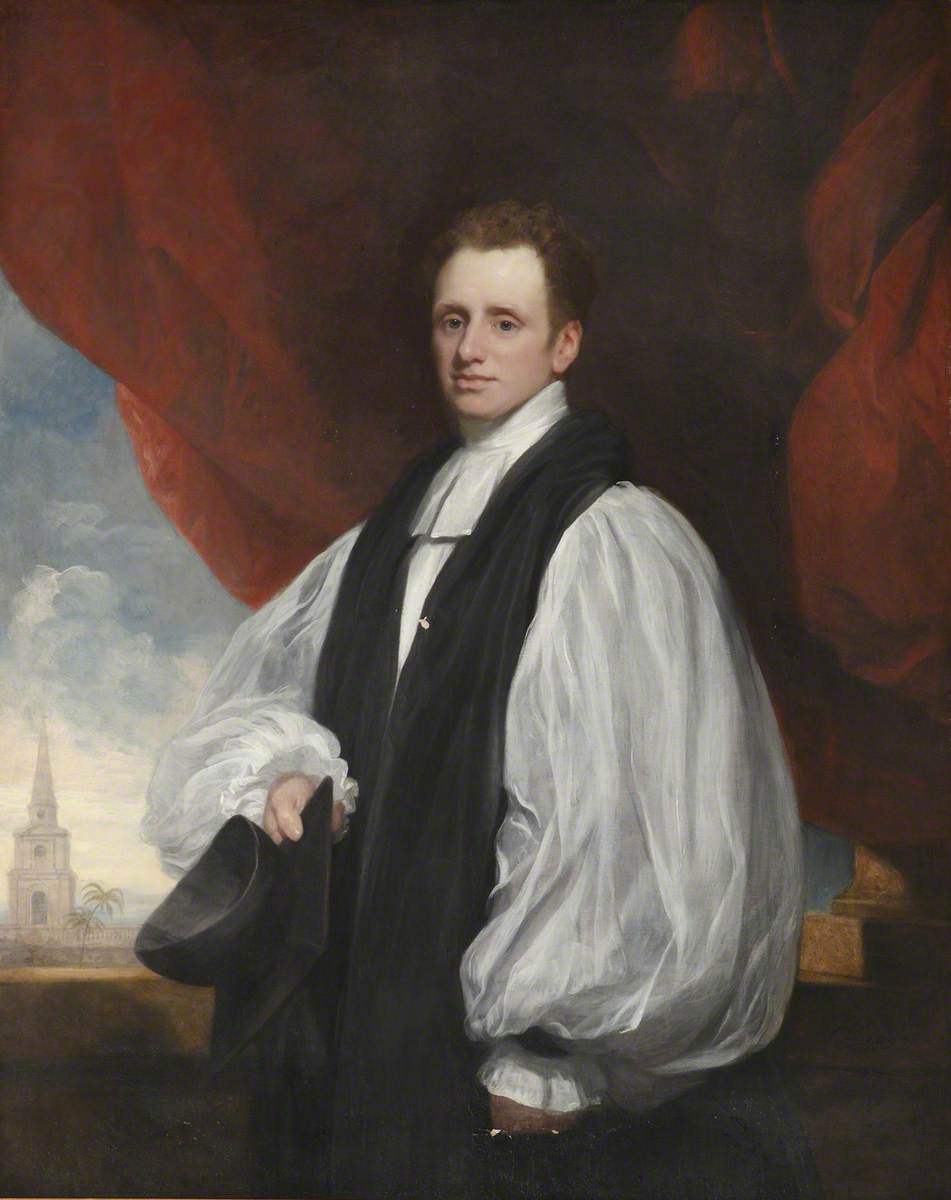
Translator Mahmoud Abbas Masoud writes:
Years ago, I stumbled upon an old English book titled 'History of Islam and Sects' by the historian William Cooke Taylor, printed at the John Parker press in London in 1834.
The tenth chapter of the book (starting on page 270) is dedicated to the Druze, where the author quotes a poem titled 'Palestine' by the English poet Bishop Reginald Heber, a poem originally dedicated to the Druze.
Bishop Heber was born in 1783 and died in 1826; he was a graduate of Oxford University. He was known as a pious man, highly knowledgeable, and possessing refined literary taste and practical energy. He was also famous for his spiritual hymns and chants, which occupied a prominent place in the English language.
The words of the poem are archaic, somewhat resembling the language of Shakespeare and classical writers. There are references and allusions that cannot be translated while maintaining a logical meaning. Therefore, I did my best to preserve the essence of the verses, and I did not adhere literally to the original because it is difficult to marry ancient concepts with a modern translation. Examples of this include words like 'Lusitanian', 'Ophir', 'Tyrian sail', and 'Sidonian dyes'... If translated literally, they would have been out of context.
Therefore, I attempted to keep the essence of the poem and dispense with what could not be easily translated or made palatable. I was also forced to delete some words due to their historical inaccuracy, even by the admission of Mr. Taylor himself.
I read the poem several times and checked its words using the best dictionaries to present a reasonable and acceptable translation of this poem, which I do not believe has been translated into Arabic before. I publish it here with some brevity.
Fierce in might,
Inflamed with zeal,
Defiant, generous of soul,
Brave and strong,
They love freedom and independence.
Those are... the Druze
Who dwell in the lofty mountains, standing firm
In the face of storms and hurricanes.
Their pure blood bears witness to their noble lineage.
And their courage, akin to the boldness of beasts and the intrepidity of lions,
Confirms their deep-rootedness and the authenticity of their origins.
And while others kneel... in humiliation and servility
Before tempered iron and steel,
They alone, and no others, make the tyrannical despots
Tremble in terror in the darkness of the nights...
Yes, O brave and valiant leaders,
You whose resolve is not deterred by arrogance and conceit,
Even if the stormy winds cease to respond to your will
And refrain from blowing upon the chest of your white masts...
And even if your trade fails
And the world does not turn to you with its treasures,
Your portion remains abundant
In contentment and satisfaction with what you have,
Where diligent, honest work leads to rest and tranquility.
And the hand of thieves does not reach your ripened seasons,
And where your vineyards are overflowing with their abundant bounty.
Your sons, too, are yearning to perform the noblest deeds
That distinguish tough men...
When the sun abandons the plains of Syria
And sinks behind the pink horizon bordering the sea,
It leaves behind rays of radiance
And crowns the brow of the mountains with light...
And so, too, does the light of your glory and resolve shine
Amidst the gloomy atmosphere,
Just as a bright lamp shines in a dark vault.
Truly, those souls that mock the chains of tyrants are few in number,
And few are they who accept no substitute for freedom...
And those are the Druze.