
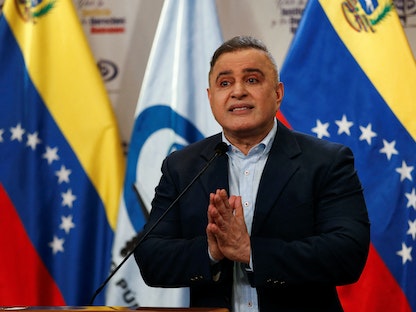
Tarek William Saab, born September 10, 1962, in El Tigre – Anzoátegui, Venezuela. He is a Venezuelan lawyer, politician, and poet, and a former student leader. He comes from a Lebanese Druze family from the town of Yenta in the Rashaya District.
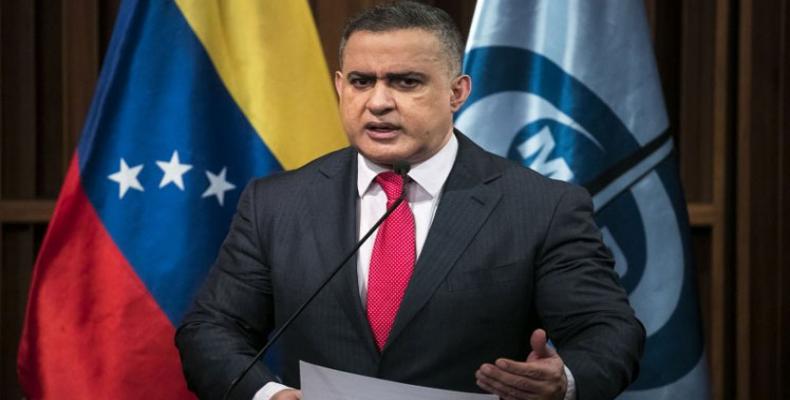
Saab was the head of the Human Rights Office in the Caracas Metropolitan Council from 1993 to 1998, a member of the Federal District Congress in Caracas from 1998 to 1999, and a member of the 1999 National Constituent Assembly. He was elected a member of the National Assembly for the state of Anzoátegui from 2000 to 2004, and governor of the same state from 2004 to 2012. In 2014, the National Assembly elected him as Ombudsman. In 2017, he was appointed Attorney General of the Venezuelan Republic by the National Constituent Assembly.
Early Life
His passion for writing emerged at the age of fifteen, and he began publishing poems and articles in the newspaper Antorcha in his hometown. He was a student leader and an activist in extreme left-wing movements since his youth. From the age of fourteen, he joined Douglas Bravo, the former commander of the guerrilla group (guérillero) affiliated with the Venezuelan Revolutionary Party (PRV-Ruptura), becoming his personal assistant from the late 1980s to the mid-1990s. He was elected president of the Student Center at the Briceño Méndez High School from 1978 to 1980, and president of the Student Federation of southern Anzoátegui state from 1979 to 1980.
He chaired the High School Graduates Committee of the University of the Andes (los Andes) in Mérida state from 1981 to 1982. At that time, he decided against pursuing literature studies at the university and chose to study law at the Santa Maria University in Caracas.
He holds a master's degree in Criminal Law and Human Rights Studies from the Central University of Venezuela (UCV).
Political Life
He was appointed head of the Human Rights Office in the Caracas City Council in the early 1990s and established the university chair on human rights at the Caracas Police Academy, where he taught from 1994 to 1996. At the San Carlos military barracks, he met Lieutenant Colonel Hugo Chávez, one of the leaders of the 1992 coup. He defended him with the help of a group of lawyers until he was granted a pardon by Venezuelan President Rafael Caldera in 1994. That same year, Venezuela nominated him for the "Reebok Human Rights Award."
In 1997, he was appointed coordinator of the Committee for the Defense of Cases of Forced Political Disappearance in Venezuela during the 1960s, 1970s, 1980s, and 1990s.
He is also a member of various human rights defense committees and non-governmental organizations, such as the Petare Committee for Justice and Peace.
Parliamentary Membership
After Hugo Chávez was released from prison, he became a contributor to the Revolutionary Bolivarian Movement – 200 (MBR-200), which preceded the Fifth Republic Movement, and through it, he endorsed and supported Chávez's candidacy for the presidency in December 1998.
Thanks to this political organization, he was elected to the National Congress in the same year's elections, where he served as chairman of the Culture Committee in the House of Representatives. He was then elected as a member of the National Constituent Assembly to draft the new constitution in 1999, where he chaired the Human Rights Committee and was involved in drafting Chapter III on duties and human rights.
Due to the principles of the new constitution, new general elections were held in 2000, and he was elected as a deputy to the National Assembly, where he served as chairman of the Foreign Policy Committee. Thanks to this new position, he was at the highest level of parliamentary representation, which allowed him to accompany President Hugo Chávez on his international tours. That year, he visited ten member countries of the Organization of Petroleum Exporting Countries (OPEC) as a member of the official delegation of the Venezuelan President.
April 11 Coup
During the events of the April 11, 2002 coup, Saab was present at a session held by the National Assembly; he was then the chairman of the Foreign Policy Committee. At the end of the meeting, he went with other deputies to the Miraflores Palace to support President Hugo Chávez. At 11:00 PM, after the coup and after speaking with the President, some deputies decided to move to a safe area.
Saab returned home the following morning to be with his two children, aged three and seven. A few hours later, a mob surrounded his family's home. Saab was arrested by the Directorate of Intelligence and Prevention Services (DISIP) and imprisoned in the basement of the Helicoide prison along with Chavista activist Lina Ron.
Thanks to pressure from prominent figures and human rights movements, Saab was released on the afternoon of April 13. After his release, he alleged that he had received threats while in detention to appear before military courts and that he had been assaulted during his release. He then turned to the national channel (Venezuelan television), where he took charge of relaunching the channel's broadcast.
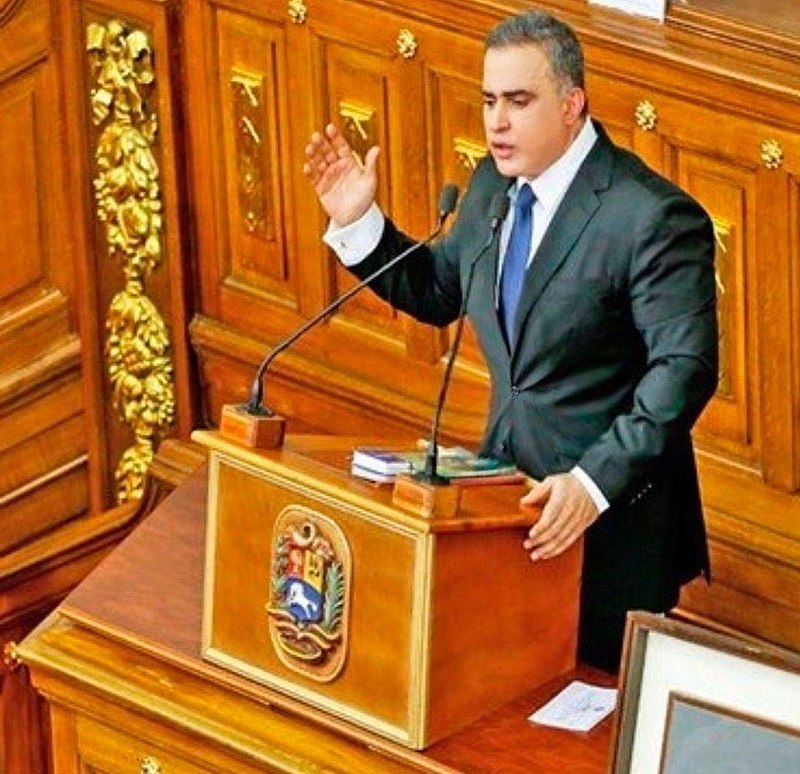
A few months later, Saab and Democratic Action party deputy Edgar Zambrano chaired the National Assembly committee that investigated the events of the coup, which concluded with identifying the soldiers involved.
Governor of Anzoátegui State
In 2004, Saab decided to leave his post as a national deputy to run for the regional elections for governor of his home state, Anzoátegui, for the Fifth Republic Movement party. On October 31, he defeated his opponent, opposition candidate Antonio Barreto, with 57% of the vote (187,209 votes), thus succeeding David De Lima and becoming the fifth governor of Anzoátegui.
In June 2007, he successfully countered a petition drive, led by former minister Luis Alfonso Dávila, to trigger a recall referendum against him. After the dissolution of the Fifth Republic Movement party, he joined the United Socialist Party of Venezuela.
During his tenure as governor of Anzoátegui, he succeeded in implementing major infrastructure projects, including: Section 8 of the Gran Mariscal de Ayacucho highway connecting Unare and Píritu, the José Antonio Anzoátegui Olympic Stadium, the Simón Bolívar Sports Complex, the José Leonardo Chirinos Ophthalmology Center, the Tomás Moro Home for the Elderly. He managed to reactivate the Razetti Hospital in Barcelona, the Dr. Luis Felipe Guevara Rojas Hospital in El Tigre, the Fabricio Ojeda Comprehensive Diagnostic Center, and the Dr. Rafael Tobías Guevara Children's Hospital. When his term ended, Saab confirmed that he had overseen the implementation of 1,500 projects. During the same period, the following cultural institutions were opened: the Armando Reverón School of Visual Arts, the Pedro Báez Art Gallery, and the Miguel Otero Silva Cultural Center. During this period, a bust of Federico García Lorca was unveiled and a monument in honor of Bob Dylan was erected.
The 2008-2012 Period
In June 2008, Saab won his party's internal elections to seek a second term as governor of Anzoátegui in the upcoming regional elections. On November 23, he was re-elected with 55% of the vote (311,344 votes), defeating opposition candidates Gustavo Marcano and Benjamin Rausseo.
During his new term, Saab inaugurated new infrastructure works, including the Fabricio Ojeda, Américo Silva, and Noel Rodríguez highways, the Viñedo water treatment plant, the "Chima Sahar" comprehensive diagnostic center, the Caripa and Luisa Cáceres de Arismendi institute chains, as well as ten operating rooms and a gynecology room at the Luis Razetti Hospital, the El Tigre Zoo, the Los Boqueticos fish market, the "Pancho Alegría" soccer field, the "Américo Silva" bridge, the "Eneas Perdomo" promenade overlooking Lido Beach, the "Silvio Rodríguez" promenade overlooking Cangrejo Beach, and the "Mercedes Sosa" promenade overlooking Los Canales Beach.
During his tenure, 94 sports facilities were built and major achievements were made in the sports sector. The José Antonio Anzoátegui Stadium is considered the venue where the Venezuelan national soccer team plays most of its home games. In 2011, Anzoátegui state hosted the 18th edition of the Venezuelan National Games.
In the cultural sector, several busts were created "in tribute to world-renowned singers and authors who supported the spiritual liberation of the people." In addition to honoring Federico García Lorca and Bob Dylan, statues were placed for Rita Valdivia, Roque Dalton, Ernesto Sifontes, Bruce Springsteen, Victor "Chino" Valera Mora, Andrés Eloy Blanco, Ernesto Che Guevara, Neil Young, Fabricio Ojeda, Arthur Rimbaud, and José Gervasio Artigas in Andrés Eloy Blanco Park. 13 free festivals were held for national musicians.
Additionally, eight food stores were opened in Cantaura, Lechería, El Tigrito, Pariaguán, Anaco, Puerto La Cruz, and El Tigre.
Ombudsman
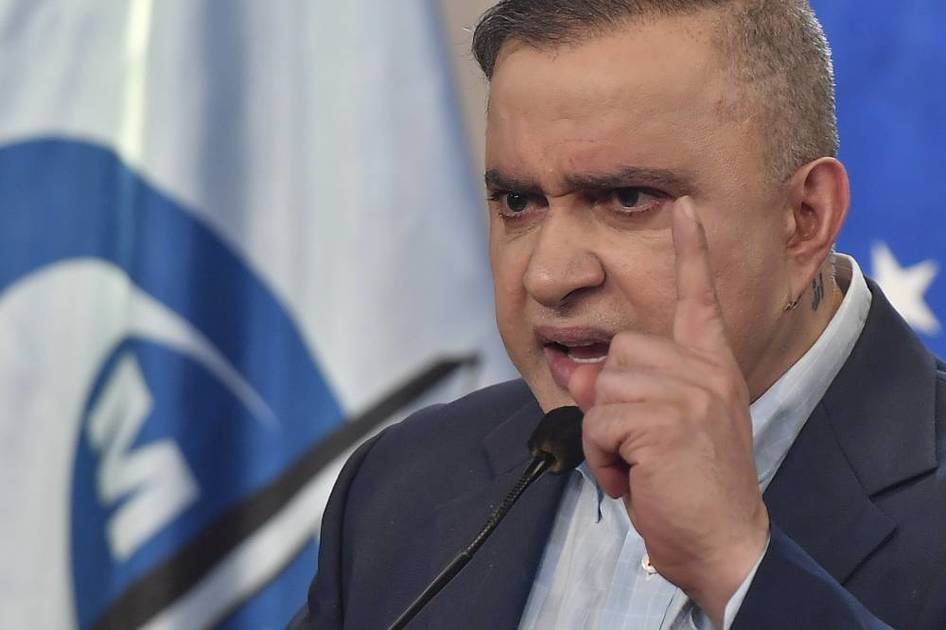
On December 22, 2014, the National Assembly appointed Saab as Ombudsman. At the time, Saab was a member of the Truth and Justice Commission, which was sworn in on February 27, 2014, to investigate murders, torture, disappearances, and human rights violations committed between 1958 and 1998.
His leadership contributed to the academic development of the Ombudsman's office. Saab acknowledged that 30,418 complaints had been processed and more than 40,000 files had been resolved between 2010 and 2015.
Saab mediated with the judiciary through the Criminal Chamber of the Supreme Tribunal of Justice to request the release of imprisoned citizens who were ill, while implementing necessary humanitarian measures. He also negotiated the release of politicians Yon Goicoechea and Wilmer Azuaje, and 14 police officers from the Chacao municipality, in addition to modifying the house arrest order for opposition leader Leopoldo López.
In addition, Saab denounced the participation of masked minors in opposition protests and attacks by Chavista militants against opposition deputies in the National Assembly. He also supported the sanctions imposed on members of the Venezuelan National Guard suspected of killing young Fabián Urbina.
In 2017, Saab paid an official visit to Lebanon and met with Lebanese President Michel Aoun and Lebanese Parliament Speaker Nabih Berri.
Republican Moral Council
At the end of 2016, Tarek William Saab was appointed president of the Republican Moral Council, the main body consisting of the Ombudsman's Office, the Office of the Attorney General of the Republic, and the Office of the Comptroller General of the Republic. In 2017, he was ratified once again to hold the same position.
Attorney General of the Republic
On August 5, 2017, the Supreme Tribunal of Justice exceeded the authority of the National Assembly and removed Luisa Ortega Díaz from her position, froze all her assets, and banned her from leaving the country. On the first day of its session, the National Constituent Assembly received the Supreme Court's ruling to remove Luisa Ortega Díaz from her position.
Constituent Assembly member Diosdado Cabello proposed removing Ortega Díaz and appointing Tarek William Saab as "interim" Attorney General. He was indeed appointed as the new head of the Public Prosecutor's Office on the same day. Cabello justified what happened, saying: "This position cannot be left vacant because it would create a problem that we have already faced with the inaction of the Public Prosecutor's Office."
Since his arrival at the Public Prosecutor's Office, Saab has implemented reforms such as the creation of the National Prosecutor's Office for Pets and Wildlife, the National Prosecutor's Office specializing in human trafficking crimes, the National Prosecutor's Office for crimes of trafficking in children and adolescents, the National School of Prosecutors, and he also established a plan to accelerate the delivery of stolen vehicles.
Regarding the case known as "Cadivi-Cencoex," Saab confirmed that 200 new companies had been added to this investigation on charges of overvaluation and embezzlement. As a result of these investigations, 21 businessmen accused of fraud were deprived of their liberty. Saab also announced the opening of two investigations: one against Juan Pablo Guanipa and the other against Rafael Ramírez due to his relationship with Diego Salazar Carreño, related to the investigations in the "Andorra Bank case." Saab claims that 18 people responsible in the Venezuelan state oil company have been arrested.
On December 19, 2017, Saab announced the dismantling of the "El Malecón" criminal organization after the arrest of Yoel Palmar, accused of large-scale drug and psychotropic substance trafficking. During this operation, 13 people were arrested, including Jeffry Rojas, security coordinator and platform for the airline "Laser," and several members of the Venezuelan National Guard. This was made possible thanks to the interception of one of the phone calls.
Saab was appointed president of the Truth Commission by the National Assembly on June 14, 2018, taking into account the appointment of Constituent Assembly member Delcy Rodríguez as Vice President of Venezuela. On September 26, Saab reported the embezzlement of $100 million at the Venezuelan state oil and gas company (PDVSA) in Colombia. Based on this complaint, arrest warrants were issued for five people. They were charged with corruption crimes related to them, implied agreements between workers and operators, and the creation of a criminal gang.
On February 8, 2018, Saab expressed his willingness to cooperate with the International Criminal Court in investigations related to the cases of violence that occurred during the 2017 demonstrations in Venezuela. Later, on August 15, Saab announced the arrest of 14 people involved in a drone attack on President Nicolás Maduro.
On July 25, 2019, Saab confirmed that during his tenure, several decisions had been issued regarding 3,203 convictions for drug-related crimes. After the start of a dialogue between the government of Nicolás Maduro and the opposition on September 18, Saab requested the release of parliamentary vice president Edgar Zambrano. The following day, September 19, Saab reported that during his tenure there had been 2,779 convictions for murder. He then announced on October 17 the release of 24 detainees as part of the "Dialogue Table" agreements. At the end of that year, on December 10, Saab obtained the conviction of 131 officials involved in human rights violations, including two officials who were sentenced to 30 years in prison for the attempted murder of young Rufo Chacón and blinding him.
On January 27, 2020, Saab announced that charges had been brought against 4,335 people, of whom 1,340 were convicted, in relation to 8,966 cases of sexual assault against minors. Two days later, on January 29, Saab also announced the arrest of Aída Merlano, a Colombian congresswoman who had fled to Venezuela. On February 20, Saab seized 88 tons of drugs and 42 aircraft related to their trafficking. Out of 26,052 cases, 37,490 indictments, 11,611 lawsuits, and 3,391 convictions were pronounced.
In July 2020, UN High Commissioner for Human Rights Michelle Bachelet presented a report in which she praised the work of Tarek William Saab and the Public Prosecutor's team in defending human rights. Several paragraphs in this report highlighted Saab's work, stating: The Public Prosecutor's Office worked to achieve justice in cases of torture and ill-treatment and took serious measures regarding the incident of deaths in Los Llanos prison. The conclusions in the report stemmed from Michelle Bachelet's investigation into the actions of the Venezuelan Public Prosecutor's Office since her meeting with Saab in Caracas in June 2019. On September 14, in a speech delivered at the 45th session of the Human Rights Council in Geneva, Switzerland, Bachelet noted the cooperation of Attorney General Tarek William Saab in order to enhance the exchange of information regarding individual cases and cases of human rights violations, adding that Saab: "has affirmed his intention to move forward with the investigation into 58 alleged extrajudicial killings by security forces and 35 deaths documented by my office in relation to the demonstrations."
In the framework of investigations into violations committed by the police, Saab announced the investigation of several police officers on charges of violence against detainees, in addition to the arrest of several leaders of the Special Forces of the Bolivarian National Police for the murder of two journalists belonging to the Guacamaya TV channel, and the arrest of four members of the Bolivarian National Guard regarding the death of a citizen during a protest demonstration against gasoline shortages, and the arrest of five members of the Special Forces unit of the Bolivarian National Police regarding a case of death that occurred on the highway connecting Caracas and La Guaira.