
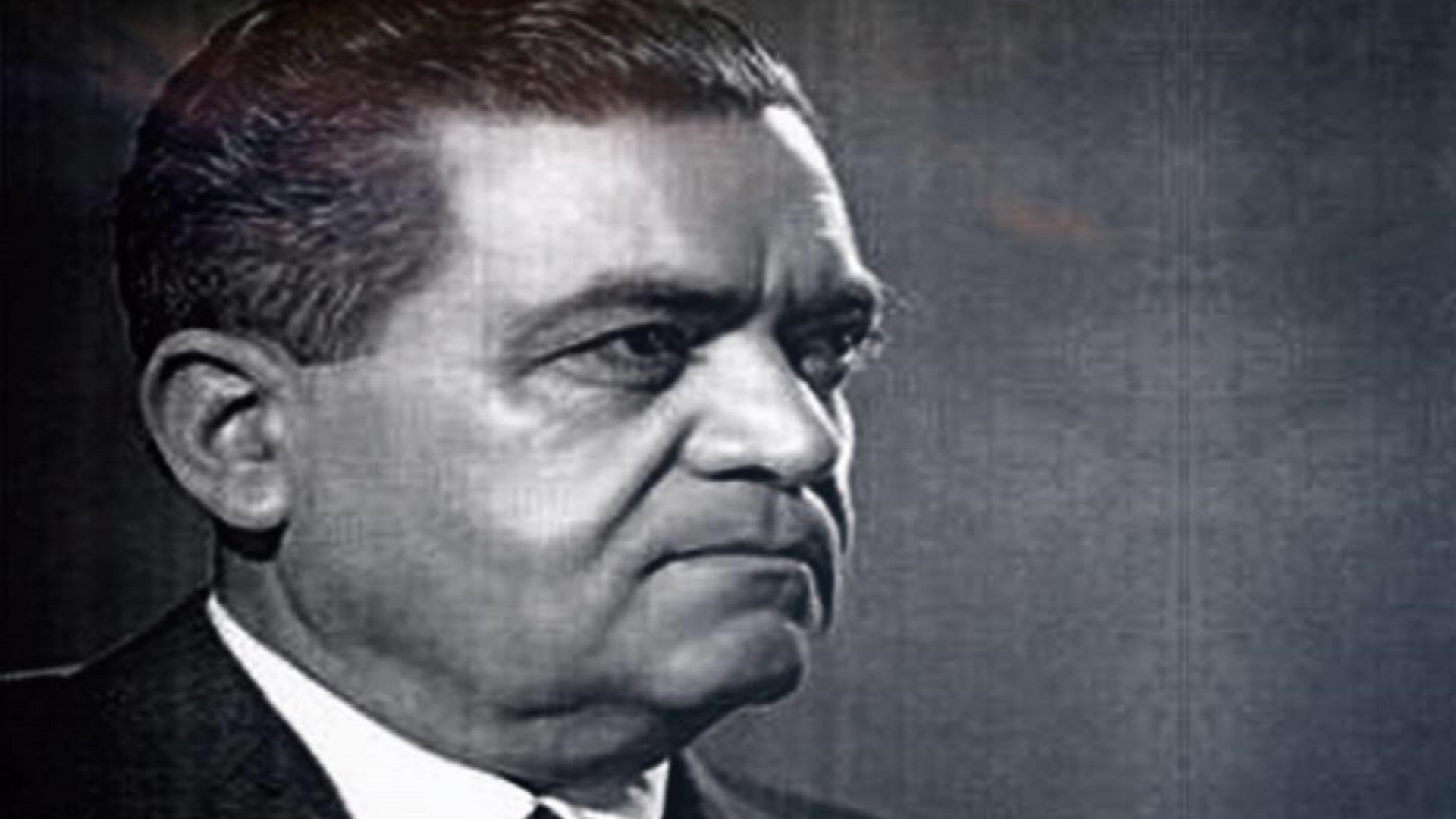
The Egyptian critic Anwar al-Maadawi wrote, “Said Takieddine is the greatest artist-writer in the diaspora. One thing I want to tell Arabic readers everywhere is to read the book ‘A Handful of Wind’.”
In the diaspora, as in his home country, Said Takieddine lived that greatness in its moral and human sense, paralleling its literary sense, as his biography enriched his career, allowing his fame to soar in Lebanon, the Arab world, and several countries of the diaspora, especially those he visited during his travels and years of emigration. Alongside his trade, business, and duties, he was a writer, poet, novelist, and short story teller, infusing his literary work with the flavor of theater to give his literature a different character and a distinct artistic style. This earned him artistic and creative individuality during the latter part of the Renaissance era and the beginnings of modernity. He approached life from a perspective of nobility and a system of values, crossing from bank to bank in the river of life, into which he united to become part of it. As he says in the play “The Outcast,” placing these words on the character Rafiq's lips: “Yes, a treasure. I found a treasure. I found myself. I was a drop in waters that do not quench, evaporating, and of no consequence when I was alone. I leaped into the river, and I was no longer a particle of water. I am some of this river. I am the river. The deep, raging, clear-aimed river, sweeping away what stands in its way, announcing with its roar and thunder its existence, its wealth, its giving, and the sea toward which it heads.”
With these words, Said Takieddine reveals his vision of the world and his longing to change it with his language, his writing tools, and his thoughts and principles, which carried a renaissance project liberated from narrow borders. He drew a path to reconcile literary fame through word, thought, and literature with political and social fame as a businessman and successful trader, and a politician who believed in a cause and fought for it. In both directions, Takieddine was distinguished by his passion for his town of Baakline, a great love for his mother, and a devotion to his homeland, Lebanon, and his second home, the Philippines, where he spent a period of his life. Drawing from his life experience and testing it, he used to say: “Every citizen is a guard.” “A citizen cannot be good unless three conditions are met in him: high morals, broad culture, and high specialization.” “It is not important to slay the dragon; the important thing is to wrestle it.” “In Lebanon, there are three political paths: the government's path, the opposition's path, and the straight path.” After the passing of decades since those statements scattered in Takieddine’s literature, the reality remains the same, and the paths of politics remain unchanged.
His Birth and Upbringing
On May 15, 1904, Said Takieddine was born in the town of Baakline in the Chouf district, into a family of knowledge belonging to the Druze community. He learned there and moved between several schools until he graduated from the American University of Beirut in 1925, then became president of the university’s alumni association, at a time when he had chaired the “Al-Urwa” political association two years before his graduation. After that, he emigrated to the Philippines and worked in trade until the mid-forties, when he founded and chaired the Syrian-Lebanese Association during that period. He was then appointed Consul of Lebanon in Manila in 1943.
Said Takieddine returned to Lebanon, heading to his town of Baakline in 1948, to once again assume the presidency of the American University Alumni Association between 1948 and 1952. He held the position of Dean of Information and Foreign Affairs in the Syrian Social Nationalist Party for a short period. He also founded the “Every Citizen a Guard” association and is considered one of the founders of the “Ahl al-Qalam” (People of the Pen) association, which includes major writers, intellectuals, and thinkers, in addition to editing the English College Magazine for years, and the “Sada Lubnan” newspaper for a few months. After that, he traveled to Mexico, then moved from there to Colombia in 1958, where he died following a severe heart attack.
25 Books
Said Takieddine has 25 books to his credit. 13 of them were completed in his lifetime, and 12 were published by researcher Jean Dayeh, in addition to a new book titled “Pseudonyms.” It is noted that his texts were signed with the names Hammad, Bashar, Shamdas, and Abu Diana. There is also a book in English, in addition to many “articles and letters.”
Among his works are also plays and dozens of short stories, including “If Not for the Lawyer,” “A Handful of Wind,” “The Enemy's Toast,” “The Outcast,” and other books, as his plays were known for depicting various political, social, and philosophical themes.
Baakline, the Capital of the World
Takieddine was a product of his environment par excellence, describing Baakline as the capital of the world, and he often romanticized it. He loved his mother dearly, and some attribute his return from the diaspora solely to her. In one of his books from the Philippines, he wrote a dedication to her: “To a part of God from which I split off and still remain a part of... to my mother, to the one who brought barren land to life on the slope overlooking our village, planting it at the age of seventy with oak trees that she will not see, nor will I see their branches, to my mother these pages.” He was also passionate about his daughter, Diana, and would say to her: “I don’t want them to say this is Said Takieddine’s daughter, but rather I want them to say this is Diana’s father.”
Said Takieddine passed away in Colombia on February 10, 1960.