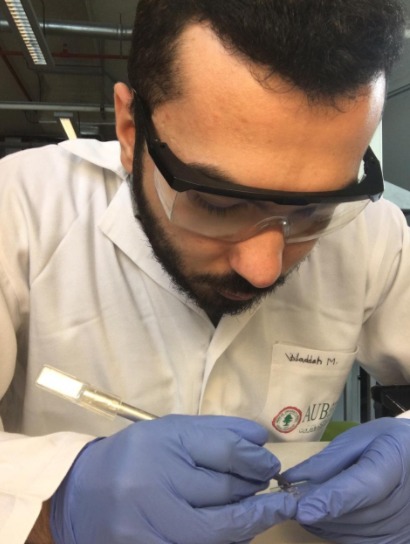

He soared to international success before the age of thirty. Wadah Malaeb, the best innovator in the Arab world and a beacon of hope for Lebanon and the Lebanese people during difficult times.
A native of the town of Baisour in the Aley district, he founded DLOC Biosystems in 2017, a biotechnology startup that develops biological chips capable of forming cell tissues that closely resemble those found in the human body. This allows companies to test drugs and accurately predict their effectiveness before human trials. This technology is expected to make clinical trials cheaper and safer. The new technology also aims to become an alternative to animal testing in the future. Wadah has 5 years of research experience in tissue engineering and biomedical engineering. He also invented the first DLOC chip concept in 2017 during his master's thesis at the American University of Beirut.
Forbes Middle East selected Wadah Malaeb as one of six Lebanese on its annual 30Under30 list.
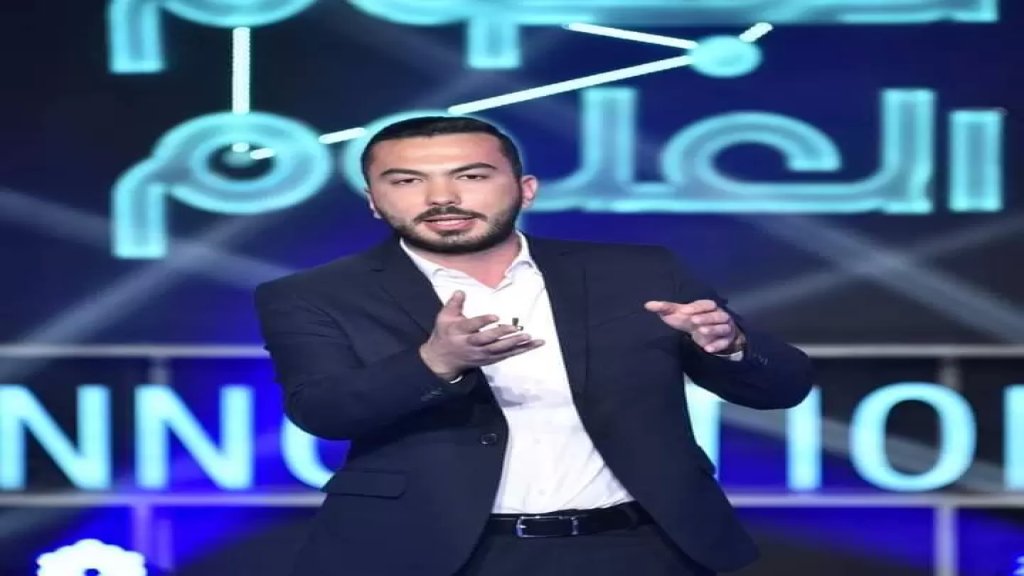
Stars of Science
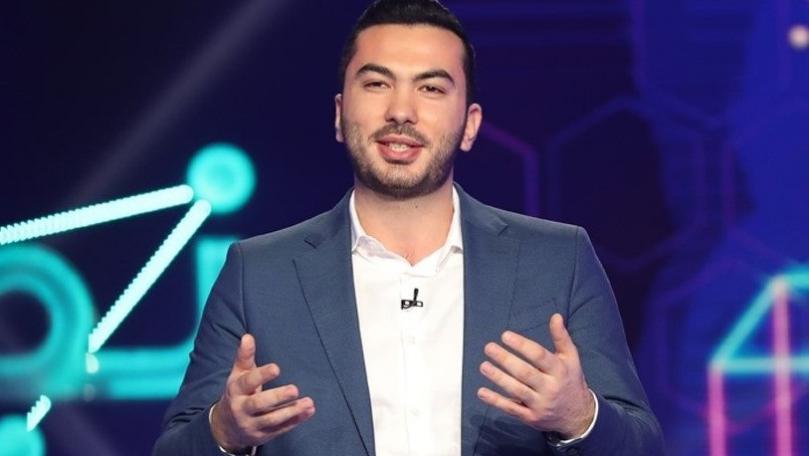
This is the name that shone in the "Stars of Science" program, bringing pride to every Lebanese home during a difficult period when many Lebanese youth had lost hope. "Stars of Science," the edutainment reality TV show, crowned Malaeb as the best innovator in the Arab world for its twelfth season, after a season full of challenges due to the COVID-19 pandemic. The 26-year-old Lebanese engineer impressed the jury and the audience with his perseverance, talent, and personality.
Before the final episode aired, followers of the Arab world's leading edutainment TV show voted online for their favorite finalist. The audience vote, along with the jury's vote, determined the ranking of the finalists and, ultimately, the winner, who was Wadah Malaeb.
Malaeb's project provides a suitable environment that simulates real human conditions, allowing for critical drug tests to be conducted efficiently and cost-effectively. Wadah said at the time: "I cannot but express my humility and gratitude for being crowned the best innovator in the Arab world for this year. My experience on the Stars of Science program has been amazing, especially working alongside a wonderful group of mentors and contestants under these exceptional circumstances. The audience and jury's recognition of the medical need for such an innovation and their belief in my invention has changed my life."
Awards and Inventions
His repertoire includes several awards, such as first prize at the LIRA Forum 2017, second prize at the 2018 Darwazah Contest, third prize at the MITEF 2019 competition for entrepreneurs, and more than one patent. His scientific journey is rich; he changed his university major several times, ultimately finishing his studies in mechanical engineering with two minors in mathematics and biomedical engineering in five and a half years. In an interview, Malaeb pointed out that mechanical engineering was not the end of the road for him, but rather he considers this specialization as a "toolbox" that gave him knowledge in mechanics, design, materials science, fluid dynamics, thermodynamics, electronics, and robotics—everything he needs to turn any idea and theory into physical reality. Building on this, Malaeb added: "I approached my field from a mechanical engineering perspective, which enabled me to invent this chip where various human cells can grow in 3D. This means a lot to me in my career, in addition to the broader goals I can achieve. I do not believe in dreams, but in goals, and therefore I keep my focus to reach my goal through effort and perseverance."