
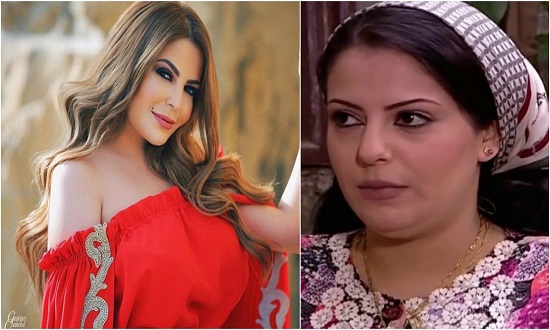
Lilia Al-Atrash is an artist who belongs to an established artistic family that produced artists Farid Al-Atrash and Asmahan from As-Suwayda Governorate. She began her artistic career at a young age in the "Maraya" series alongside veteran actor Yasser Al-Azma. She stood out in several roles, such as the series "Ashwak Na'ima" and "Bab Al-Hara."
Artist Lilia Al-Atrash was born on August 18, 1977, in the Syrian governorate of As-Suwayda, and she has only one sister, Lana Al-Atrash. Lilia was known for her gentleness and love for family, and she began her career at an early age. She shone in many Syrian dramatic productions; her first artistic work was in 1995 when she co-starred in the series “Maraya,” succeeding in portraying the traditional Damascene woman due to her passion for and excellence in the role.
Al-Atrash participated in more than 70 television works, including the series "Eilet Akaber" in 1998, and gained widespread fame after appearing in the series "Nisaa Saghirat" broadcast in 1999. She worked with most prominent Syrian directors, such as Bassam Al-Mulla, Basel Al-Khatib, Hatem Ali, Adnan Ibrahim, Aref Al-Taweel, among others.
Prominent Roles
Al-Atrash had a long-running role in the series "Bab Al-Hara" across its seven seasons, portraying the character “Latifa,” which won widespread acclaim from audiences. She also co-starred in the historical series “Al-Sultan Wal-Shah” alongside Egyptian actor Mohamed Riad, portraying the wife of Shah Ismail, who was played by Mohamed Riad.
In addition to the above, artist Lilia Al-Atrash participated in numerous television and film productions in Syrian drama, including: Hayy Al-Mazar – Hakaya – Layl Al-Musafeereen – Sho Hakaina – Al-Daya – Asr Al-Junoon – Ashwak Na'ima – Otr Al-Sham – Buq'at Daw in seasons 5, 7, and 8 – Rajaha – Kasr Al-Khawater – Seerat Al-Hob – Wajh Al-Adala – Al-Dabbour – Al-Khubz Al-Haram – Zaman Al-Barghout – Sabaya in seasons 5 and 6 – Otr Al-Sham…
Furthermore, artist Lilia Al-Atrash appeared in several cinematic films, including: the short film “Raqsat Al-Ghurab” in 2008, and the films “Al-Ghurabaa” and “Yawm Sodour Al-Hukm” in 2009.