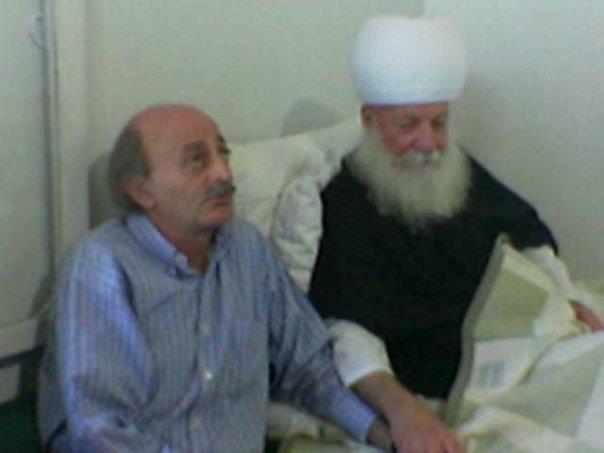

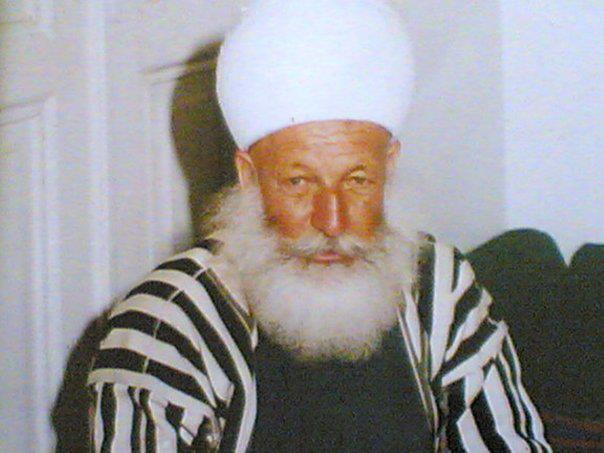
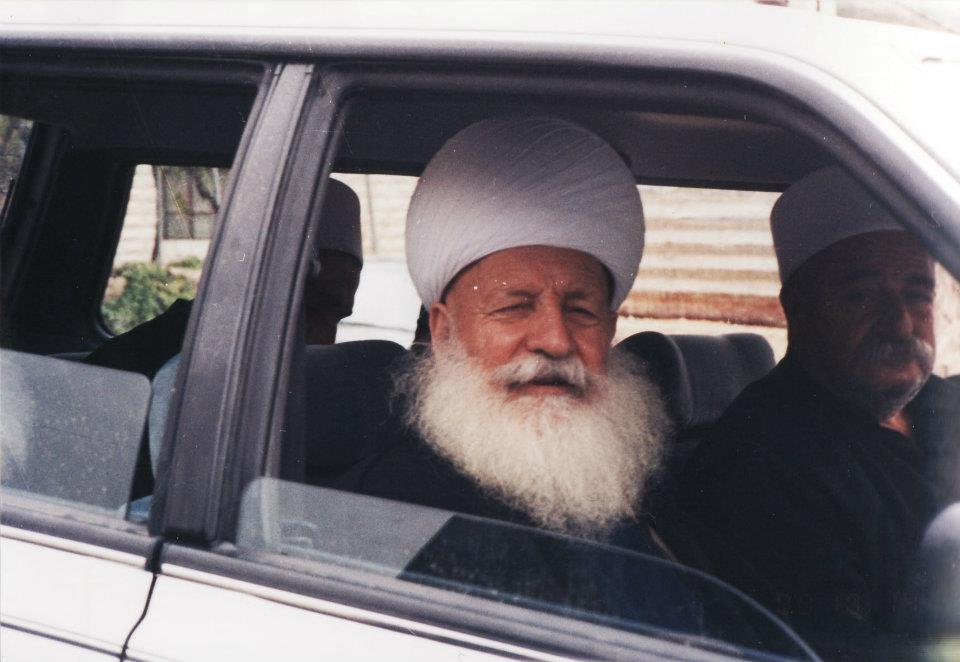
He is the prominent sheikh, Abu Muhammad Jawad Wali al-Din, who once stood up against those encroaching upon the land of the Mountain, shouting at the tyrant who came with his arrogance and tyranny to say that the Unitarian Druze must surrender their weapons. Our venerable sheikh, knowing the strife and traps being plotted against the Mountain, replied: “We will not surrender our weapons, nor do we ask about our houses, but we ask about our dignity. We are content to have tattered clothes, but not to have our dignity compromised. So demolish the houses if you can, though you will not be able to, and we have God as our Protector and Supporter.” This confrontation had the impact of thunder in the skies of the Mountain and Lebanon, causing the lands of Arabism and Monotheism to tremble, to water the land of dignity and purity. The Sheikh of the Unitarians, known as the Lion of the Mountain, said: “We are a people raised in our humble hermitages on obedience, piety, and never to be humiliated except before God Almighty, and we raise our children on honor and manhood, so that they may be proud and free, loving among themselves, and fierce against the aggressors.”
The Ascetic Mujahid
Sheikh Abu Muhammad Jawad was a man of sound judgment, firm in religion and faith, knowing God and worshiping Him. He did not care for difficulties; he lived as an ascetic mujahid, tolerant and humble. He saw with the eye of the heart and heard with the voice of truth and justice. He was the best bearer of the trust of Monotheism and the mission of his patriotic Ma'ruf sect. He was a pillar for the spiritual and political leadership of the sect and a knight among its outstanding virtuous men. Compassionate, merciful, and loving to his brothers in the path of Monotheism, he was inhabited by wisdom, piety, and guidance. He established his leadership for decades, serving as a role model in knowledge, counsel, and sound opinion. He was a sheikh of eloquence if he spoke, and profound in depth if he contemplated, often reflecting on the kingdom of the earth and the heavens, aware of his own self, knowing those around him, and understanding their conditions. He was the Sheikh of the Sheikhs of the notables, a pillar of Monotheism, and an inspiration to believers walking the path of guidance and gnosis. Light radiated from his face, filling the place despite the dimness of the lamp in his humble room, where water would leak in the winter with acceptance and contentment, and where the sunlight would sneak in to intersect with the light of that glowing face in the summer.
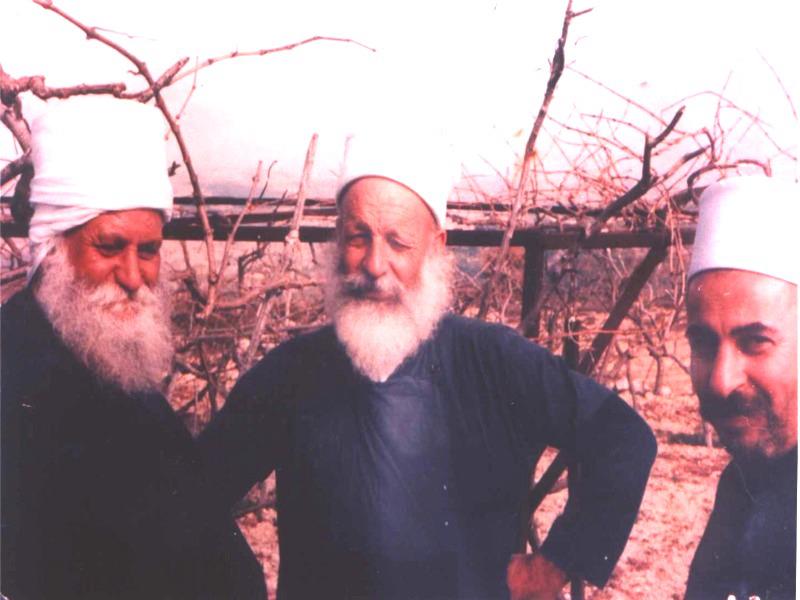
The Hermitage of Baakline
The venerable sheikh was born in Baakline in the Chouf district in 1916. He grew up under his father's tutelage, inheriting his character, honesty, and integrity. Agriculture captured his interest, so he dedicated himself to cultivating a piece of land far from his town. He cared for it and prepared it to suit the prosperity of that land, then built a stone hermitage there, which he took as a retreat to worship in solitude with his Lord, communing with Him in the silence of nature, following the ascension of truth and the certainty of knowledge. He also used to frequent the hermitages of Al-Bayada, staying there for consecutive months alongside his brothers who walk the path of Monotheism to reach the light of certainty, vision, and the path of worship.
The Turban of Authority
In March 1988, the senior sheikhs of the Unitarian Druze sect gathered and decided to crown Sheikh Abu Muhammad Jawad Wali al-Din with the knotted turban (the 'Mukawwalsa'), which was bestowed upon him by the venerable sheikh and spiritual authority Abu Hassan Aref Halawi, so that he might be a model for the pious and one of the great spiritual leaders of his sect.
The Sheikh of the Peninsula and the Lion of the Chouf, as he was titled, passed away at the age of 96 in 2012. He was laid to rest in a massive official and popular funeral, where tens of thousands gathered to bid farewell to the head of the Higher Spiritual Authority of the Unitarian Druze sect.
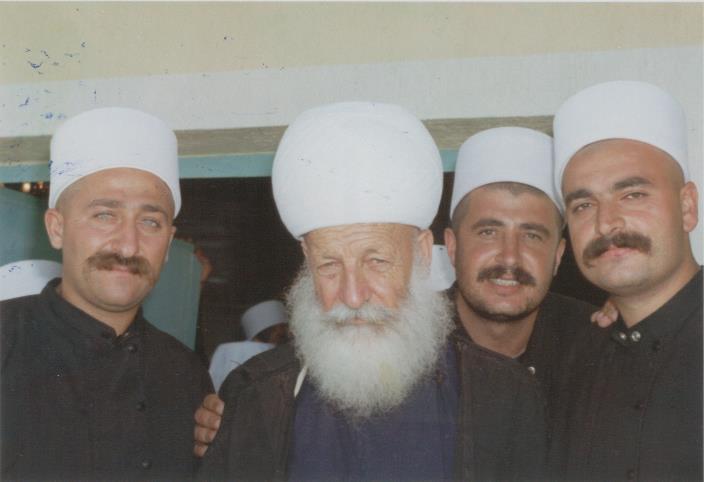
Victory in the Mountain
In addition to his prominent spiritual value, the late sheikh played a significant role regarding two events that Lebanon went through during the seventies and eighties: the Lebanese Civil War and the Israeli occupation of Lebanon. During the Lebanese Civil War, the late sheikh called for the religious and political Druze institutions to stand united, forbidding the members of the sect from stirring up what is known as friction and divisive positions. Furthermore, the late sheikh issued a prohibition against members of the Unitarian sect dealing with the Israeli occupation. These two positions had a direct role in enabling the Unitarian community to stand united and achieve victory in the Mountain War.
Sheikh Aql of the Unitarian Druze sect, Sami Abi Al-Muna, said of him: "His name was recorded in the history of Monotheism as one of a constellation of knowledgeable Unitarian figures and trusted, virtuous sheikhs, whom we follow and emulate. He was distinguished among them by a number of achievements, perhaps the first of which was his embracing of the 'Irfan' institution, the exemplary Unitarian institution, and his urging of those in charge of it to pay attention to religious education. In his precious message to the institution, he considered that no matter how much one advances in other sciences, it is not enough if the focus is not on religious education. Second, his interest in the religious schools for Unitarian sisters in the villages, as he felt responsible toward them and a duty to urge and help them, just as the Unitarian brothers, to seek wisdom, preserve it, study it, understand its meanings, and act accordingly. Third, his poised relationship with the political leadership and cooperation with it to preserve the brothers and the Unitarian community, based on the principle of demanding what is right without confrontation, but rather emphasizing the strengthening of the leadership to safeguard public dignity and affirm the national presence of the sect. This was embodied by 'Irfan' in word and deed, and what we are working to embody from our position in the Sheikhdom of Aql and the Council of the Sect. How could it be otherwise, when he was the one who supported and cared for organizing the affairs of the sect and dealt with the proposed law at that time with realism, positivity, and responsibility."
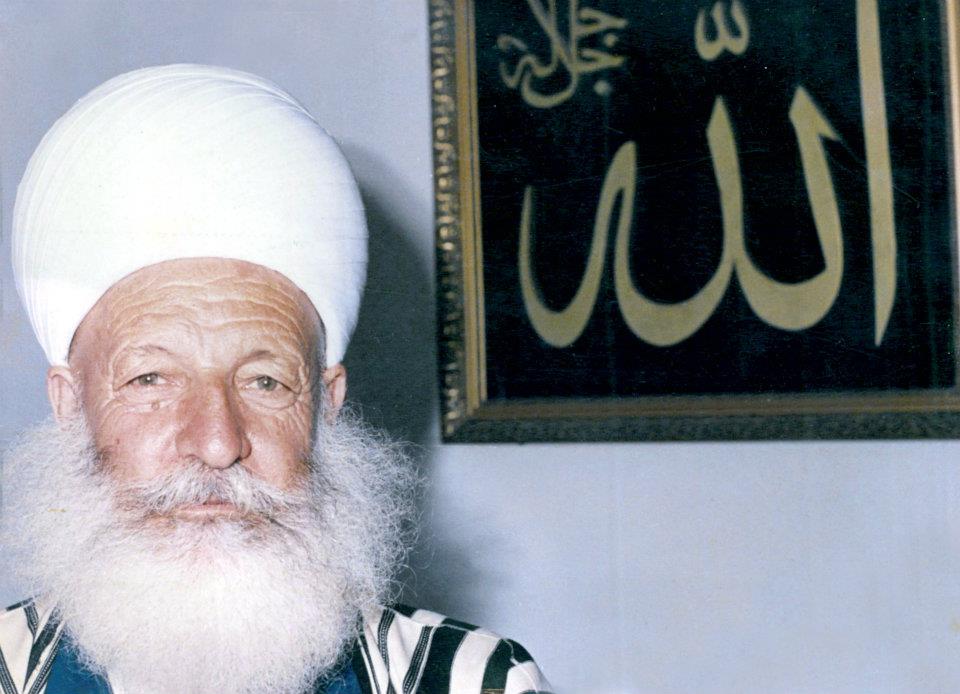
He also said about him:
My Sheikh, peace be upon you, oh Sheikh of Piety, oh you to whom the tender heart has clung.
Since youth, you shone as a resounding voice, and with the greying of hair, the hope in you was fulfilled.
From the light of your simple hermitage, the light of salvation is sought, and the meeting is cherished.
From the magic of your words and sermons, the sweetness of repentance is reaped; from your eyes, it is chosen.
And from the stances in difficulties, the will was derived from you, so it transformed into an army.
Rarely does time provide the likes of him in wisdom, piety, courage, and majesty. His presence was a spiritual treasure for the Unitarians, and his absence was a catastrophe for the believers. He is the ideal and the example, the one who renounced status and wealth. His asceticism was the asceticism of the free who left the world before they departed from it, so he shed his self, freed from its desires and passions; an asceticism of the loyal, the saints, and the pious; an asceticism from which sciences, wisdoms, and virtues erupted. As the Master Prince (peace be upon him) said: "Success for the scholars of the afterlife is that the path is blocked from reaching knowledge and stations of proximity except through asceticism and piety. Through the purity of piety and the perfection of asceticism, the servant becomes firm in knowledge."
He was the one who was patient with what he disliked and what he loved, and his patience was the patience of the close saints, patience in God, for God, and with God, where there is no complaint except to Him and no character except His, may He be exalted. Did God Almighty not reveal to the Prophet David (peace be upon him), saying: "Adopt My attributes, and it is among My attributes that I am the Patient?"