
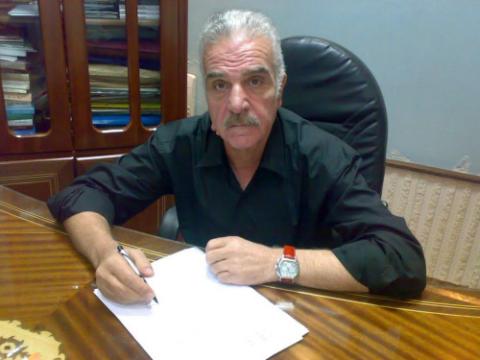
The artistic world always enjoys the capabilities of distinguished artists who leave their own marks on the art scene. Among these distinguished artists who have contributed significantly to singing, songwriting, drama writing, and the production of documentaries, we find the poet, composer, and drama writer Saadou Al-Deeb.
Beginnings of success
Saadou Al-Deeb was born in Jabal al-Arab, Syria, in 1954, and his life was full of challenges and difficulties. He grew up in a low-income family, yet he was instilled with strong human values by his family, including honesty, generosity, and gallantry.
He studied in his village schools and then in schools in the city of As-Suwayda, where his literary talent and poetic writing emerged in his early years. During his high school studies, he wrote literary articles that were published in the "Jaish al-Shaab" (Army of the People) magazine, where he began to pave his way in the world of literature.
Turning towards art
After finishing high school, he entered Damascus University and joined the Faculty of Arts, Department of Philosophy. After a while, he moved to the Arab Gulf states, where he worked in the field of culture for three years at the "Al-Yaum" newspaper. During that period, he wrote reflections and poetry. After that, he returned to Syria in 1986.
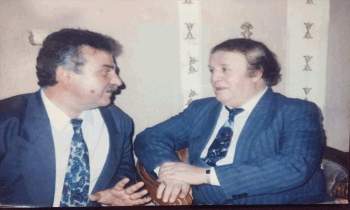
In Syria, his artistic career began to head towards success. He met the late artist Fahd Ballan, and this meeting was a turning point in his artistic life. He contributed to writing and composing many folk songs performed by Fahd Ballan, including "Aal-Bal Baad Ya Sahl Hauran" (Still on my mind, O Hauran plain) and "Yom Ala Yom" (Day after day), which achieved widespread fame and became part of the Syrian musical heritage.
The shift to drama writing
Saadou Al-Deeb did not limit himself to writing songs, but his talent extended to writing drama as well. He presented nine diverse dramatic works, starting from Bedouin series like "Al-Dakhila" to comedic works like "Juha 2003" and documentaries like "Ala Al-Raseef Al-Akhar" (On the Other Sidewalk) and "Sheikh Al-Fannanin" (The Master of Artists). His works were distinguished by their diverse themes and narrative strength.
Cultural Heritage
Through his artistic works, Al-Deeb always sought to preserve the cultural and artistic heritage of Syria. He participated in poetry and cultural evenings and was a member of juries for artistic festivals. He was honored by many institutions and artistic entities for his contributions to preserving intangible heritage.
Multifaceted talent
- Writer of poetry and folk songs: It seems that poetry and writing poetry were among Saadou Al-Deeb's first interests. By writing classical and colloquial poetry and folk poems, he reached the hearts of many. He connected with people through his words and verses that express their feelings and address their issues.
- Composer: Al-Deeb's role was not limited to writing songs, but extended to composing them as well. He composed many songs performed by well-known artists, thus contributing to embodying the songs and making them more attractive.
- Drama writer: He also excelled in the field of drama writing, where he presented several successful dramatic works. He wrote Bedouin, comedic, and documentary series, and through his stories and plots, he was able to attract the audience and achieve success in the world of drama.
- Documentary production: On another side of his talent, he produced successful documentaries covering various topics that tell the history and culture of Syria. His films were characterized by beautiful cinematography and a distinctive narrative that attracts viewers.
- Participation in evenings and festivals: Saadou Al-Deeb had significant participation in cultural and poetic evenings, where he participated in reading poems and poetry in a number of festivals and cultural events. This shows the diversity of his talent and his readiness to participate in a variety of artistic activities.
- Role in preserving cultural heritage: Despite his diverse talents, Al-Deeb made preserving Syrian cultural heritage a primary goal. He worked on documenting cultural and literary heritage through his work in poetry, songs, drama, and documentaries.
Death took the writer, poet, composer, and artist Saadou Al-Deeb on the evening of January 28, 2018, at the age of 64, leaving behind a timeless artistic and cultural legacy full of creativity and brilliance. His influence on folk art and Syrian culture will not be forgotten, and his artistic legacy will remain alive and sustainable.