
Between Abdullah al-Najjar the politician and diplomat who played a prominent role in the events of Jabal al-Druze and left political and diplomatic imprints in many of the positions he held, and Abdullah al-Najjar the writer and historian of a historical era that is arguably one of the most important contemporary historical eras, politics and diplomacy converge with history in an exceptional figure who played a pivotal role in creating the event and documenting it so that it remains visible to future generations. Thus, Abdullah al-Najjar had many stances and moments that history recorded and kept alive within its pages.
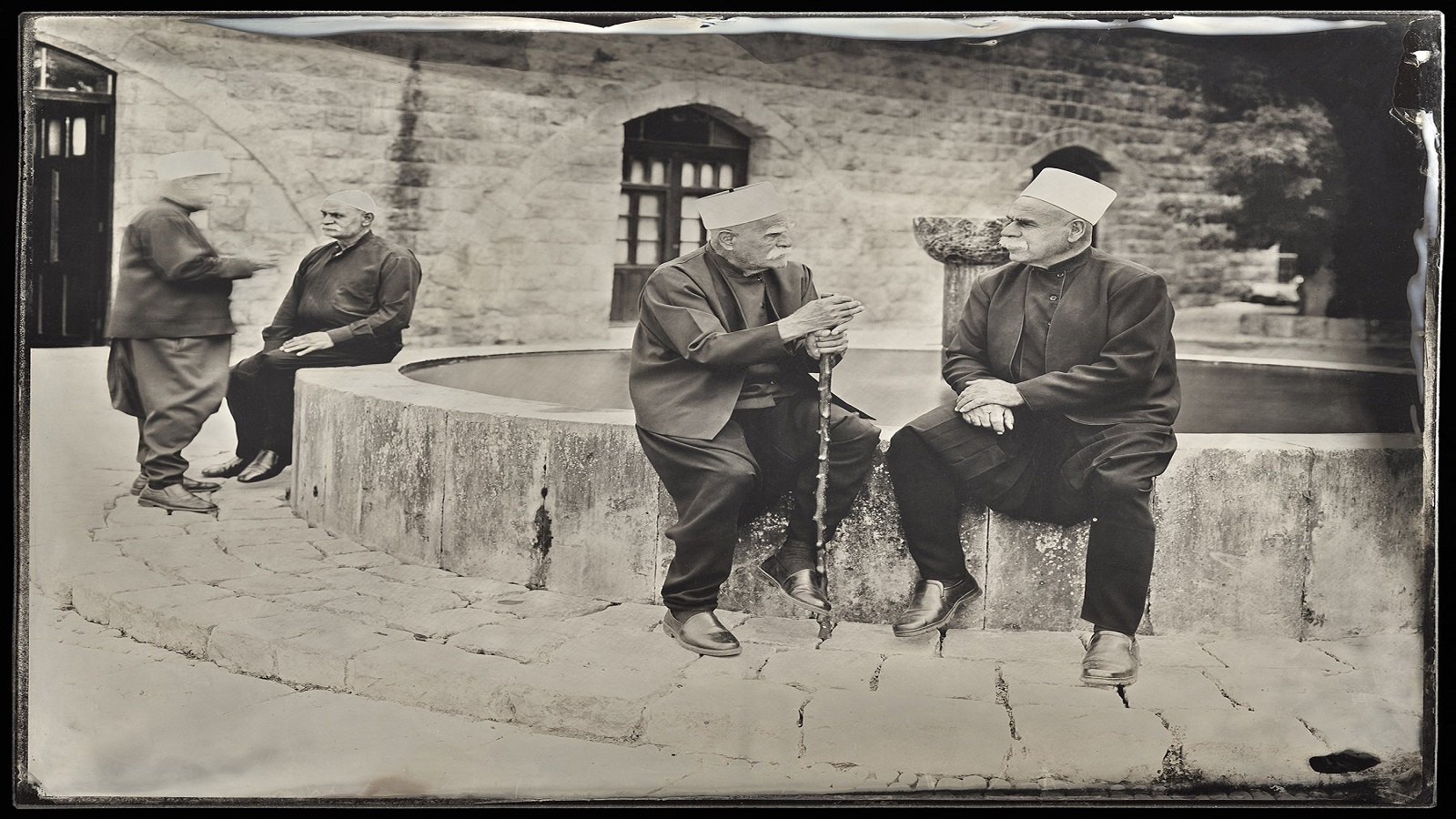
Abdullah Mansour al-Najjar was one of those who entered the arena of politics and diplomacy through its wide gate during a period when political work was delicate to practice and extremely dangerous due to its connection to military and combat operations, whether during the Ottoman rule or the French Mandate period. In addition to being a Lebanese journalist and writer with a status and position in the media and literary social circles of that era, he was able to balance the struggle of politics and diplomacy while enriching the cultural library and extending the history of the Druze with works that had a significant impact on preserving their cultural, religious, and faith heritage, and the path of Tawhid. These works also serve as valuable references for understanding the doctrine of the Druze monotheists, in addition to his other works, translations, and poetic writings.
Director of Education
Abdullah al-Najjar was born in 1898 in Beit Mery in Mount Lebanon. He studied at his town's school, then at the Brummana High School, then the Frères, and from there he moved to the American University of Beirut. He had mastered Arabic in addition to his knowledge of English and French. He left the university after studying medicine for two years, then went to Syria and was appointed head of the translation office, then worked as Director of Education in Jabal al-Druze in 1923.
Al-Najjar emigrated to Australia to practice writing in its most prominent English newspapers from 1928 to 1936. After that, the government of Iraq appointed him in 1940 as Director of Propaganda and Publication, then he joined the Lebanese diplomatic corps from 1944 until 1962. He was assassinated with his wife, Nabiha, in their home on July 21, 1976. He has books, research, articles, and a collection of poems.
Prominent Role
Abdullah al-Najjar played a prominent role in bridging the gap and settling the disputes that occurred between the Druze of the Mountain and the French. During the Druze Revolt, he was delegated for a number of difficult tasks and was an active and influential member of the Conciliation Committee, which included him along with Hamad Barbour, Ali Ubaid, and Yusuf al-Shidyaq. He caused great controversy among the French, who were always wary of him and had conflicting opinions about him. Some of them placed their trust in him and delegated him for tasks, while others issued warrants for his arrest. When his name settled on the blacklist, he fled to Cairo and from there to Australia, where he engaged in trade.
He joined the Lebanese diplomatic corps in 1944 and was appointed consul in Amman in the Hashemite Kingdom of Jordan, then advisor to the Lebanese Legation in Argentina, then Minister Plenipotentiary at the Lebanese Embassy in Ottawa and then in Moscow. He remained in the service of the Lebanese government until he retired in 1962, at which point he devoted himself to writing and authorship. He headed several cultural associations, including the Cultural Council of Northern Metn. While in his diplomatic position, he continued his university studies and obtained a degree from Al-Alkara Islamic University, which is equivalent to a State Doctorate rank.
Work in Journalism
He worked in journalism, establishing the magazine "Al-Qalam" (The Pen) in Damascus in 1919 in partnership with Ajaj Nuwayhed, and the magazine "Al-Majalla" in partnership with Hani Abi Musleh. He wrote in a large number of newspapers and magazines, and most of his articles revolved around national affairs related to Syria, Lebanon, and Middle Eastern countries.
On July 21, 1976, he was assassinated with his wife, Nabiha, in their home in Beit Mery due to an emergency family issue.
Among his most prominent printed works are: Bani Maarouf in Jabal Hauran, 1924; Atrocities in the Holy Land (in English); The Doctrine of the Druze Monotheists, or the Doctrine of the Druze and Tawhid, 1967; Secrets of the Zionist Conspiracy (in English); The Decline of Contemporary Judaism (in English); Zionism Between Two Histories, 1972; Centenary of My School, 1975; The Imamate of Reason among the Druze Monotheists, 1974; The Druze (in English), 1969.
He also had unpublished manuscripts: a poetry collection, and Arab Nationalism and the Doctrines of Reason.