
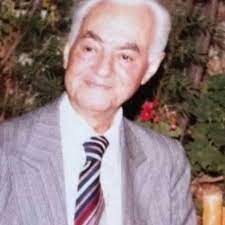
His decision to enter the political arena had the most significant impact on the life of the Lebanese judge and administrator, Bachir Mahmoud Al-Aawar, who had held several judicial positions in the Ministry of Justice before running for parliamentary elections and winning his seat until his death in 1989. In addition to being appointed as a minister in several ministries, he was one of the most prominent parliamentary figures who left his mark on the drafting of dozens of laws approved by the Parliament and chaired several parliamentary committees. Furthermore, he left significant humanitarian contributions by helping the local population, securing development and service projects, and standing by the poor—a commitment that continued after his death through the establishment of the Bachir Al-Aawar Social Foundation in his hometown of Qrayeh.
Bachir Al-Aawar worked hard to establish good relations among the components of the villages in the Baabda district. He fostered a spirit of coexistence and bridged gaps between the various sects in the region. The social occasions that were held had the greatest impact in building bridges of communication and strengthening channels of convergence and cooperation with other deputies of the region to initiate projects that served the residents during a period often characterized by tensions, though the region maintained the best relationships among its components.
Judiciary, Parliament, and Ministry
Bachir Mahmoud Al-Aawar was born in 1909 in the town of Qrayeh in the Baabda district. He studied at the National University in Aley before moving to the Lycée in Beirut, where he began working in police departments alongside his university studies. Upon receiving his law degree from Saint Joseph University, he moved to the Ministry of Justice, where he held several judicial positions. However, he turned to political work, being elected as a deputy for the Baabda district in 1950, then in 1953, 1957, 1960, and 1972. He remained a deputy until his death due to the renewal of the parliamentary terms. During this period, he chaired several parliamentary committees and contributed to drafting dozens of laws approved by the Parliament.
He served as Minister of Public Works and Transport on April 30, 1953; Minister of Justice and Posts and Telegraphs on August 16, 1953; Minister of Justice on March 14, 1958; Minister of Justice again on May 27, 1958; and Minister of Interior on April 25, 1964, in the government of Amin al-Hafez.
In 1964, he ran for parliamentary elections but did not win, after which he was appointed Governor of the North. Bachir Al-Aawar was a permanent member of the Druze Confessional Council and is considered one of the most prominent statesmen, having been awarded several Lebanese and international decorations.
In 1958, Bachir Al-Aawar was elected Grand Master of the Syrian-Lebanese National Grand Lodge, working to merge it with the Grand Orient of Lebanon, before stepping down from the presidency in 1960 in favor of Master Salim al-Turk.
The Bachir Al-Aawar Foundation
He passed away on July 10, 1989, and was buried in Qrayeh in a formal and well-attended funeral. In 1999, an association named the "Bachir Al-Aawar Social Foundation" was established, taking his hometown of Qrayeh as its headquarters. It continues to work actively to provide social, educational, and health services to this day under the supervision of his family, concerning itself with many life and development affairs.
Bachir Al-Aawar was married to Iqbal Abu Raslan. Muhammad Sabra Al-Aawar, a member of the Administrative Council of Mount Lebanon, was his maternal grandfather. Bachir Al-Aawar assumed the leadership of the Al-Aawar household, which he inherited from his uncle, Muhammad Beyk Sabra, a member of the Mount Lebanon Administrative Council. His brother, Aref Al-Aawar, tried to continue after him, but the conflict within the family did not allow the Al-Aawar family to play the role that the leader of the Al-Aawar house had played for many years, as he was the greatest ally of President Camille Chamoun, with the exception of the 1958 revolution period. He also tried to get closer to the Syrian leadership to maintain the continuity of the Al-Aawar leadership in the Metn.
Bachir Al-Aawar did not live to see the end of the Lebanese Civil War, as he died on July 10, 1989. Later, the name of his nephew, Ghaleb Al-Aawar, emerged, who entered into a conflict with his uncle, Aref Al-Aawar. The latter realized that protecting the leadership of the Al-Aawar house would only be secured through a parliamentary seat, so he ran in the parliamentary elections of 1996, 2000, and 2005 but lost, after Ayman Choucair had been appointed as deputy for the Druze seat in the Baabda district in the 1991 appointments.