
In 1949, Bahij Takieddine was appointed Minister of Agriculture in Lebanon. When his brother, the writer and journalist Said Takieddine, learned of this, he wrote him the following letter: “Greetings, my brother Bahij. I have learned that you have become a minister, and this is a great honor for our family and our region, but I would like to remind you that when we were young, we used to race to sleep in our father’s bed—may his soul rest in peace—and I remember that our father used to smell our hands to make sure they were clean and that we had washed them after eating, so that he would allow us to sleep with him. Now our father lies under the soil, and there is no doubt that we will lie with him after a time, so take care, my brother, that your hands are clean so that you may lie with him in peace.”
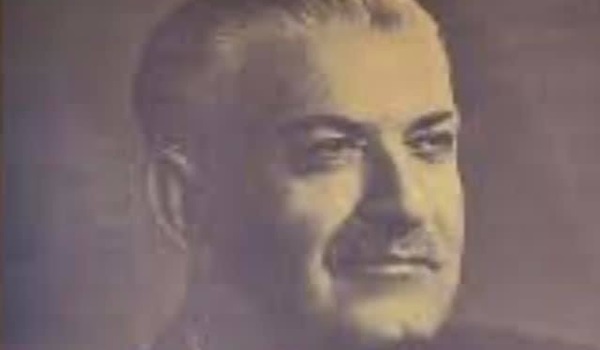
Here lies Bahij Takieddine, the son of the town of Baakline, who was born in 1909, resting in peace and tranquility. He held several parliamentary and ministerial positions and was the best at upholding the legacy of his father, the dignitary who held a prominent status in the Chouf and the mountains, served as a governor in several regions, and was the Director of Education at the time, Mahmoud Takieddine, and his mother, the political and social activist Zahia Abdel Malak.
Political Career
Bahij Takieddine practiced politics with passion, achieving brilliant victories in several parliamentary terms. He was close to the people and their concerns, following up on their issues and visiting their villages to stay informed of their affairs and needs. He focused on strengthening the relationship between the components of the mountain, specifically Druze-Christian and Muslim-Christian relations in general. It was reported that he objected to the term "coexistence" (ta'ayush) and focused on the term "living together" (aysh mushtarak), because the verb "to interact" (tafa'ul) implies participation between separated or conflicting, distant parties, while the Lebanese are one family with deep bonds and intertwined elements.
Bahij Takieddine came from an educated and prestigious family passionate about knowledge. His brothers included the eldest, the writer, author, and diplomat Said Takieddine; the writer Khalil Takieddine; Mounir Takieddine, Director General of the Ministry of Defense; the university professor Badie Takieddine, who is considered one of the founders of the Faculty of Sciences at the Lebanese University; and the lawyer Nadim Takieddine. He spent his early school years on the paths of Baakline before moving to the French Lycée in Beirut, from which he graduated from secondary school. In 1931, he obtained a law degree from Saint Joseph University. He worked as a lawyer, initially practicing this profession in the law firm of Habib Abi Chahla until 1949, before splitting off to open his own office, where his fame grew to make him one of the most prominent criminal lawyers in Lebanon.
His Political Life
His passion for political work and his love for being by the people's side drove him to run in the 1947 parliamentary elections independently, competing against strong lists—one headed by Camille Chamoun, another by Émile Eddé, and a third by Salim el-Khoury. He won those elections. He also won the 1960 elections, receiving 18,044 votes; the 1964 elections, receiving 18,724 votes; the 1968 elections, receiving 22,929 votes; and the 1972 elections, receiving 26,163 votes. He remained a member of parliament until his death.
He ran in the 1951 elections on the National Front list alongside Kamal Jumblatt, Camille Chamoun, and Emir Majid Arslan, when Aley and the Chouf were a single district; he won, receiving 11,682 votes. This prompted the losing candidate, Sheikh Fadlallah Talhouk, to file an appeal against Takieddine's membership, but the appeals committee did not accept the appeal.
Bahij Takieddine lost in the elections held in the 1953 and 1957 cycles, a period when the rivalry between President Camille Chamoun and Kamal Jumblatt was at its peak, and victory went to Qahtan Hamadeh, who was supported by Camille Chamoun at the time.
Ministerial Work
At the ministerial level, Bahij Takieddine held several positions. He was appointed Minister of Agriculture in the government of Prime Minister Riad el-Solh, serving from October 1, 1949, to February 14, 1951. He was also appointed Minister of Health, Public Assistance, and Social Affairs in the government of Prime Minister Abdullah al-Yafi on June 7, 1951, but resigned the same day. He was appointed Minister of National Economy in the government of Prime Minister Hussein al-Oweini, serving from November 18, 1964, to July 25, 1965. He was also appointed Minister of Information in the government of Prime Minister Rashid Karami, serving from January 15, 1969, to November 25, 1969, and was appointed Minister of Interior in the government of Prime Minister Takieddine el-Solh, serving from July 8, 1973, to October 31, 1974. In the government of Prime Minister Selim Hoss, he was appointed Minister of Interior and Tourism, serving from July 16, 1979, until February 9, 1980, when he submitted his resignation.
When the thinker Antoun Saadeh was executed, he wrote: “In the eyes of his detractors, Antoun Saadeh’s crime was that he opened eyes on the day we were all oblivious to what colonialism was plotting for us, and on the day the Jews in Moscow, Paris, Washington, and London were bargaining over our land and souls. His greatest crime was that he realized the Zionist danger looming over us.”
In 1962, he stated: “Lebanon was, still is, and must remain a refuge for the oppressed and a sanctuary for those buffeted by certain political currents. It must remain with its heart open and its doors wide for everyone who has been oppressed in their country, or pressured because of their belief, political principle, or inclination, regardless of its nature.”
When he was Minister of Interior in 1974, An-Nahar newspaper editor-in-chief Michel Abu Joudeh was kidnapped. He met with the publisher and owner of An-Nahar, Ghassan Tueni, and Fatah security official Abu Hassan Salameh, accusing the latter of holding Michel Abu Joudeh hostage on behalf of Abu Ammar (Yasser Arafat). A verbal altercation ensued between them over this accusation, and matters nearly escalated if not for the intervention of Ghassan Tueni and Kamal Jumblatt, who contacted Minister Takieddine and asked him to look in another direction regarding the kidnapping and not limit it to the Palestinian Fatah movement. It was later revealed that the kidnappers were the pro-Syrian Palestinian organization, As-Sa'iqa.
Bahij Takieddine passed away on February 9, 1980, and was buried in his town of Baakline in a massive official and popular funeral.