
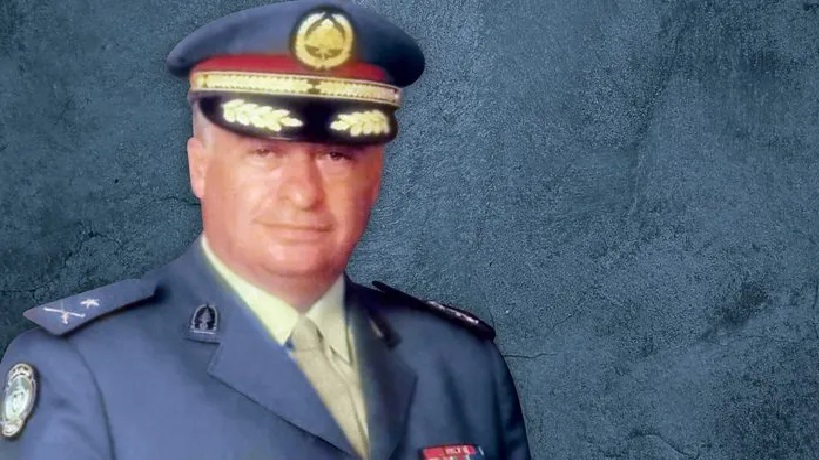
Brigadier General Issam Abu Zaki amazes and exhausts his reader at the same time as he pursues events at the scene, making the reader of his memoirs feel the past moment with its heat, intensity, anxiety, fear, dread, courage, shock, and its frequent breaking of taboos and often difficult barriers.
Brigadier General Abu Zaki's memoirs do not resemble memoirs of theorizing and historical narration, as much as they resemble the personality of the Brigadier General himself as he presents vivid testimonies and realistic, lived observations about a bitter era that occupied the mind of the writer, the Brigadier, and the security, military, political, and diplomatic figure who knew how to document the moment as if it were a daughter of the present and a protégé of the coming future, due to the lessons and morals it carries.
That time period is the stage before the civil war that broke out in Lebanon. Issam Abu Zaki revealed the threads of the conspiracy that was being woven against Lebanon, its people, and its state, and the repercussions and dimensions of that conspiracy through vivid images and signs that began to take shape since the 1967 war. It is as if he was prophesying as he narrated his memoirs and his follow-ups from his military and security position at that stage; he was predicting that the expanding conflict would inevitably lead to a Lebanese-Lebanese war and a war with the Palestinians, which intersects fictionally—albeit with a different vision and events—with the late Lebanese writer Tawfiq Yusuf Awwad in his novel "The Mills of Beirut."
Biography of a Nation
When a narrator recounts his memoirs, going beyond the limits of an autobiography to fly into the orbit of the biography of a nation in a time of conspiracy, the vision becomes clearer and more in touch with the truth. This is what pushed Issam Abu Zaki to tell his memoirs himself, placing them at the service of Lebanon and its contemporary history and revealing what is absent from the memory of the war—not to poke at wounds and remind of its nightmares, but so that current and future generations may have an honest memory, learn from that era, take lessons for the future, and understand the truth of the "game of nations" and who the states used as tools in that game for which Lebanon paid dearly. He wrote these memoirs without hesitation or fear, challenging all obstacles and dangers. He recounted his experience in the military positions he held, especially in the presidency of the Judicial Police, and before that, his experiences in Baalbek and in the North in general, and Tripoli in particular, which show his wisdom, shrewdness, experience, and proficiency, and his use of dialogue and flexibility to reach the truth before using firmness when the situation required decisive and firm decisions, armed with national commitment and social responsibility toward his community, people, fellow countrymen, and clan.
The Assassination of Kamal Jumblatt
Issam Abu Zaki was driven toward social work, believing in people's issues and concerns. Therefore, one can understand his relationship with Dar Al-Mukhtara and the Jumblatt leadership, which exceeds the relationship of loyalty and commitment to turn into a phenomenon where fate intervened at more than one station since the assassination of the martyred teacher Kamal Jumblatt, as fate sent him to be the first to arrive at the site of that major crime, witnessing Kamal Jumblatt soaked in his blood. He then took charge of all the procedures and investigations that led to the discovery of the perpetrators, the planners, and the secrets of that crime. He was also the first to arrive at the American University of Beirut Hospital following the assassination attempt on the leader of the Progressive Socialist Party, Walid Jumblatt, in 1983.
Security Achievements
He also provided many achievements at the security and military levels, including his positions during the military and economic siege imposed by colonialism on the city of Beirut in 1982, his uncovering of spy networks, and many other exceptional milestones.
Brigadier General Issam Abu Zaki was born on June 22, 1941, in Ainbal in the Chouf District. His father was Colonel Anis Abu Zaki, who spent years of his service with President Fouad Chehab and was the director of the Intelligence Branch in Mount Lebanon. His mother was Najla Hassan. Abu Zaki studied at the Marist Fathers' School in Furn El Chebbak and later moved to the Aintoura School and then to the "Aley School." He was greatly influenced by his father, so he joined the Military Academy in 1961 and graduated in 1964.
He was married to May Fouad Al-Gharib, and they had two sons: Anis, an engineer holding a master's degree in environmental engineering working in London, and Bassem, a lawyer and graduate of La Sagesse University.
Difficult Missions
Brigadier General Abu Zaki was distinguished by his sacrifice and vigilance to complete his missions, so he was entrusted with difficult tasks, from maintaining security in the Zgharta area and arresting the most dangerous wanted persons, among them "Al-Dankoura," who was from the Frangieh family and also known as the "Sheikh of the Mountain," whose name was later linked to the Chekka massacre at the beginning of the Lebanese war, along with others who terrified the region and its people. Thus, Brigadier General Issam Abu Zaki became the object of everyone's admiration.
He held several positions, managing the first police operations room, "Division 16," in 1965, and then moved to the Beirut Traffic Detachment, the Baalbek Platoon, and then to Roumieh Prison (Sijn Al-Raml). He was also the commander of the Casino du Liban group and the Jounieh Platoon.
He succeeded in ending the Tripoli rebellion when a person named Ahmed Al-Qaddour appeared and installed himself as the head of the "wanted state," declaring disobedience to the state. Brigadier General Abu Zaki was the head of the group that stormed the inner markets in Tripoli, and within 18 days, he managed to arrest Al-Qaddour and his group.
He also fought the insurgency of Farouk Al-Muqaddam, one of the local leaders in the North who declared his revolution against the state in 1974, expanding his control over the city and firing at patrols, which led to the martyrdom of security personnel. However, he managed to arrest him and was granted a promotion.
He also arrested a spy who entered Lebanon with a German passport and participated in assassination operations of several figures. Brigadier General Issam Abu Zaki spoke about that period, saying: "We managed in a short period to control security in Tripoli, and I built distinctive relationships with the people. I enjoyed fame and a good reputation, especially for my ability to maintain balance in that stage that prepared for the emergence of the civil war."
He took over the General Investigations Department in 1975 in Beirut, and the assassination of the leader Kamal Jumblatt was a pivotal turning point in the Lebanese crisis, so he participated in the investigation and managed to identify the perpetrators within a week.
In 1984, he took command of the Judicial Police and remained in his position for nine years, during which he dealt with Interpol and central anti-narcotics offices in light of the chaos that prevailed, confronting the most dangerous gangs that brought drugs from Bogota, Chile, Peru, Brazil, and Bolivia.
Medals and Certificates
He received several medals and certificates of appreciation and left the military service in 1993 when the de facto powers at the time could no longer tolerate him.
Trust in Brigadier General Issam Abu Zaki's experience became global, so he participated in many international investigations and training courses, for which he received medals and letters of thanks, including:
– The Lebanese Order of Merit, Third Class, in 1971.
– The Lebanese Order of Merit, Third Class, in 1974.
– The Lebanese Order of Merit, Second Class, in 1981.
– The National Order of the Cedar, rank of Commander, in 1998.
– The National Unity Medal in 1994.
– A War Medal as Commander of the Judicial Police in 1992.
– A certificate of appreciation from the French Ministry of the Interior for his contribution with Middle Eastern countries in combating drugs.
– A certificate of cooperation with the South Korean police in a drug smuggling operation.
– A certificate from the Drug Enforcement Administration in the United States of America.
– A certificate from the Venezuelan Police Academy.
– A certificate of appreciation from Chile, Canada, Germany, Iran, Britain, and the Commonwealth countries.
– A certificate from the British Customs Office and the Scotland Yard office.
In his final years of retirement before his death, Abu Zaki was preoccupied with writing articles, memoirs, and works related to organizing the affairs of the Druze community. He was responsible for the Druze file and a member of the Friends of the Al-Irfan Foundation committee.
On February 25, 2018, Brigadier General Issam Abu Zaki dismounted his horse after a struggle with cancer. Leader Walid Jumblatt and Prince Talal Arslan mourned him, and the President of the Republic at the time, Michel Aoun, awarded him the National Order of the Cedar, rank of Grand Officer.