
Music possesses a special power that can capture people's hearts and transport them on a journey through time. Among the artists who have been able to achieve this feat with complete brilliance and authenticity is the artist Louay Al-Oqabani. His name is closely linked to Syrian traditional songs, and he has succeeded in establishing his position as one of the most prominent artistic voices that have preserved Syrian culture and heritage.
His Artistic Beginnings
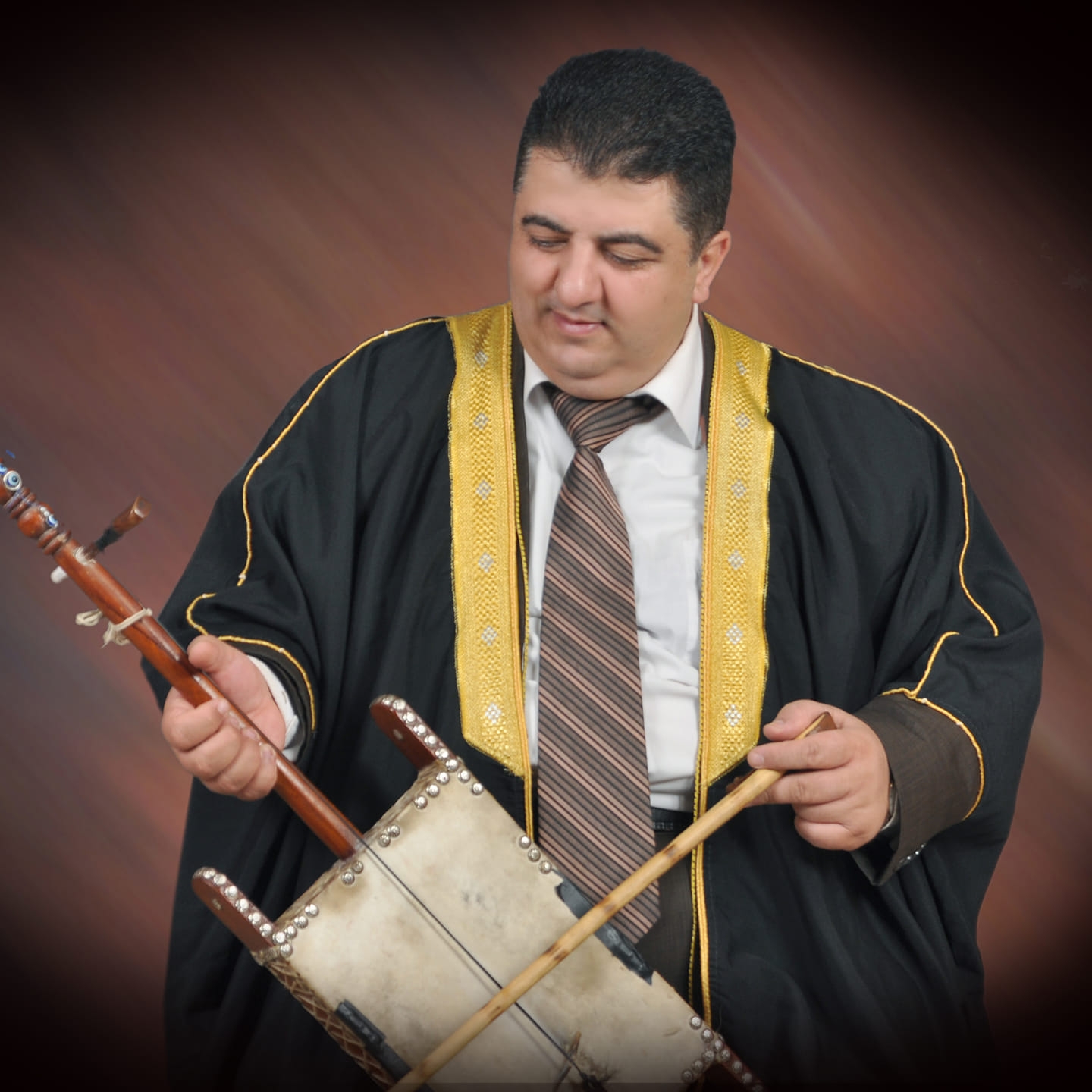
Louay Al-Oqabani was born in 1971 and began his artistic career about thirty years ago. He was raised in the village of Umm al-Rumman in As-Suwayda Governorate, a region with a deep-rooted history of struggle. The values of patriotism and original social principles were reflected in his character and his art. Louay Al-Oqabani began playing the rababa in 1989 while he was in high school. That simple decision led him to the world of traditional songs, where he became attached to the rich folk heritage of Jabal al-Arab and enriched it greatly with his melodious voice.
Preserving Syrian Heritage
Louay Al-Oqabani took it upon himself to protect and preserve Syrian traditional songs from extinction. He played a major role in collecting and reviving these songs, which carry within them many of the meanings and the national and moral values that characterize this lofty mountain.
A Journey of Creativity and Achievement
Louay Al-Oqabani did not stop at playing the rababa; he also sang, with his powerful voice saturated with authenticity, more than three hundred folk and traditional songs from the folklore of Jabal al-Arab. These songs achieved great popularity in Syria, to the point that no national or folk celebration, wedding, or event is complete without them being performed.
Among the most prominent songs performed by Louay Al-Oqabani is "Mahboub Qalbak," which achieved wide fame, in addition to "Jowiyat Hanna Yawm Lafayna," "Jowiyat Ma Badlak Bi-Mal Al-Kawn Souria," "Fatantini," "Aber Sabil," "Rabouba," "Nasoum Al-Habayeb," "Ya Zeid," "Ya Al-Ghali," "Min Yawm Lah," "Fayaqtini Ya Hilm," "Shadeet Hajan," "Bi-Nazrat Oyoun Mekahali," "Naseem Al-Suwayda," "Khayef Wa Ma Kunt Bi-Zamani Khayef," "Al-Azwa," "Ya Jabal Matayab Mayatak," "Zaffat Al-Ursan," "Waradat Ala Al-Yanboua," "Mareet A-Diyarhom," "Al-Dam'a Yarda Silikan," "Ya Mahla Shatat Al-Ghara," and many other songs.
Participation Inside and Outside Syria
Louay Al-Oqabani has participated in many festivals and artistic events within Syria, including his participation in the seventh and eighth Music Festivals of the Teachers' Syndicate in Damascus and Aleppo in 1996 and 1997, where he won first place in playing the rababa. He also participated in the Damascus International Fairs and the first As-Suwayda Festival for Folk Poetry and Rababa in 2014.
Outside of Syria, he participated in the Azraq International Festival in Jordan and performed concerts for the people of the Golan in Jordan as well. He also performed the New Year's Eve concert in the Emirate of Al Ain in the UAE and played his famous rababa.
Artistic Legacy
Al-Oqabani is not just an artist; he is a guardian of Syrian heritage. His sweet voice and distinctive performance made him one of the artists who were able to convey their heritage with depth and beauty. Louay Al-Oqabani left a firm artistic mark in the world of traditional music and enriched the Syrian artistic scene with his immortal works. His legacy will not stop here; it will remain alive in the hearts of lovers of traditional music.
Al-Oqabani, the loyal guardian of Syrian traditional songs, has been able to carry the banner of authenticity and heritage with pride. He left a brilliant mark in the world of music through his songs and wonderful performance. His uniqueness and passion for art and culture have made him one of the most important artistic faces in Syria and the Arab world. His songs remain immortal and will continue to accompany us through coming generations, preserving an important part of our cultural heritage.
You can watch a special video that combines the wonderful melodies of artists Louay Al-Oqabani and Hajar, as they perform songs that express the beauty and culture of the As-Suwayda region, located in the heart of Jabal al-Arab. The songs "Mareet A-Diyarhom" and "Ta'sa Ya Qalbi Ta'sa" reflect the deep soul and unique beauty of the traditional music of this stunning Syrian region. The performance of Louay Al-Oqabani and Hajar captures the heart and makes the songs pulse with life, embodying the authenticity and cultural identity of Jabal al-Arab.