
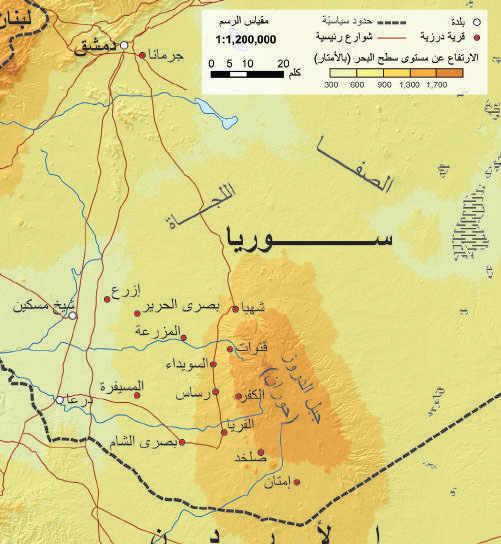
Within the expanse of Syria, a country that has witnessed a rich cultural and religious diversity, approximately one million Druze live today. They constitute nearly five percent (5%) of the total population of this ancient country. The majority of the Druze inhabit the Hauran Mountain, known as "Jabal al-Druze" or "Jabal al-Arab," located about 100 kilometers east of the Golan Heights. These inhabitants are gathered in the mountain, where they are distributed across hundreds of towns, representing about 90% of the population in this region.
The Druze also live in the "Jabal al-A'la" or "Jabal al-Sumaq" region, which is located near the city of Aleppo. In this region, there are fourteen Druze villages, and there are other Druze in four villages in the Ghouta region of Damascus.
Syrian Druze consider themselves an inseparable part of the Syrian homeland and Syrian nationalism. They have played a decisive role in the country's history, having demonstrated their distinction in courage and strength throughout the ages. They have fiercely defended their land and continued to stand against any threat facing their nation. Starting from the battles they fought against the Ottoman officer Ibrahim Pasha and his army in the nineteenth century, to the revolution led by Sultan Pasha al-Atrash against the French mandate at the beginning of the twentieth century.
Historical and Cultural Heritage
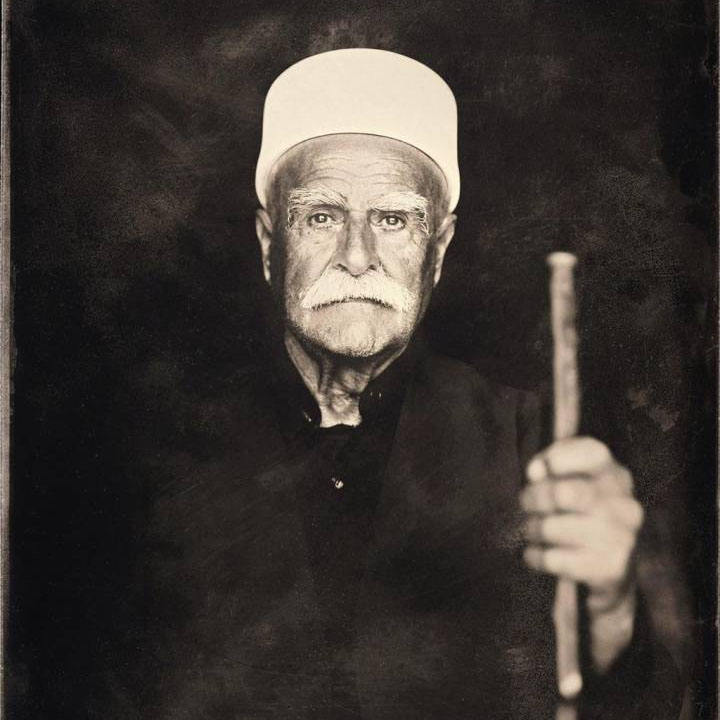
Druze communities are known for their rich heritage and long history. In Syria, the Unitarian Druze represent the preservers of this heritage and culture. This group possesses a unique cultural system that includes folklore, customs, and traditions that blend in a distinctive style. This includes holidays and celebrations that reflect the identity of the Unitarian Druze and their distinction in the region.
The contributions of the Unitarian Druze are not limited to culture only. At many critical historical moments, they formed an important force in resisting occupation and injustice. During the French period in Syria, the Unitarian Druze fought bravely against the occupation and played a prominent role in the Great Syrian Revolt of 1925. They had a significant influence on the path to Syria's liberation from colonialism.
The Unitarian Druze are characterized by loyalty to the homeland in which they live. Throughout the ages, they have shown their devotion to Syria and cooperated with various governments to serve the country. They did not aspire to secede or establish an independent state, despite the presence of opportunities to do so. This loyalty to the homeland is part of their values and customs.
Contribution to Economic and Social Life
The Unitarian Druze constitute an important part of the social and economic fabric of Syria. They own businesses and companies and participate in various economic sectors. Additionally, they contribute to social life through their involvement in cultural and social activities, which enriches the cultural diversity in Syria.
The shared social and cultural relations between the Unitarian Druze and the rest of the communities in Syria are among the factors that enhance peaceful coexistence in the country. Despite differences in religions and cultures, they live side by side in peace and mutual respect.
In conclusion, it can be said that the Unitarian Druze in Syria constitute an important part of the social, cultural, and historical structure of the country. Their positive contributions in multiple fields and their loyalty to their state make them a distinct component of Syrian society.
Preserving Traditions
The Unitarian Druze are keen to preserve ancient traditions and customs, whether in religious or social occasions. This demonstrates their deep connection to the past and their respect for their history and identity.
The legacy of the Unitarian Druze in Syria forms part of the diverse and rich culture of the country, and they contribute to enriching the cultural heritage of the region.