
Sheikh Al-Fadil Muhammad Abu Hilal is a prominent religious figure in the history of the Druze community. He was considered the second religious figure after Al-Amir Al-Sayyid from the establishment of the Call of Monotheism until today. Sheikh Al-Fadil led a life full of achievements and dedication in serving the Druze community. He attained great fame and respect among Druze individuals worldwide.
Sheikh Al-Fadil was born in the village of Kawkaba in the Rashaya Al-Wadi region in the year 989 AH, corresponding to 1577 AD, and lived until the year 1050 AH / 1640 AD. He was 63 years old at the time of his death.
Sheikh Al-Fadil lived during the reign of the Druze Prince Fakhr al-Din al-Ma'ni II (1590 – 1635 AD), and he witnessed and lived through his era within the context of the Druze community. Thanks to his religious and social efforts, Sheikh Al-Fadil succeeded in establishing his position as a prominent religious figure, and after his death, no other Sheikh reached his rank in the history of the Druze community.
His Upbringing
Sheikh Al-Fadil grew up as an orphan, inheriting from his father some livestock which was his source of living with his mother.
Since there was no guide in his village to teach him the basics of writing, he fashioned a tablet for himself that he would carry while wandering with his flock, asking those he met among the people of knowledge and learning to write the letters for him and teach him something of writing. He mastered calligraphy and learned to read with remarkable intuition, which indicated intelligence and a passion for learning since he was a child.
After his early childhood in Kawkaba, Sheikh Al-Fadil moved to the town of Rashaya Al-Wadi to work with his mother in sericulture and farming under the care of Sheikh Abu Abadi Muhammad of the Zaki family. The young Muhammad immersed himself in his new work, was loyal to his master, and mastered everything required of him. Prosperity increased with his presence, and whenever the season ended, he would dedicate himself to religious books. Sheikh Abu Abada would debate religious matters with him, discovering in him great abilities that made him love this youth, respect him, and offer him manuscripts to read and memorize.
The youth delved deep into religious sciences. When the night reached its midpoint, he would leave the house and go to a rock where he would worship, recite the obligations, and pray for the improvement of conditions, returning home near dawn to start work.
After a period, Sheikh Abu Abada called him and said: "If we call you 'Muhammad', we see that as too little for you, and if we call you 'Sheikh Muhammad', we see that as too much for you; so we will call you 'Abu Hilal'." Sheikh Abu Abada began to respect him, and they became like brothers and companions, reviewing religious contents, worshiping, and performing all obligations. But this blessing did not last, as Sheikh Abu Abada tried one day to cross the Litani River and drowned in the depths of the water. Abu Hilal grieved for the loss of a guide, a companion, and a spiritual father.
Abu Hilal returned to his village of Kawkaba, and this incident increased his faith, piety, and desire to study Tawhid (Monotheism) and memorize the noble knowledge, continuing his religious life dedicated to worship and work. Whenever he finished his daily work, he would return to a cave opposite his neighborhood in an area called Al-Shaqif for worship, far from the eyes of people and seeking seclusion with a soul contemplating the greatness of the Creator.
When some of the village youths learned about Sheikh Abu Hilal's matter, they were encouraged to follow his example in worship and flocked to him, spending time with him on that slope near the oak forest, of which only two ancient trees remain today next to a shrine built for him in that place.
God honored His ascetic and devout servant by providing for his sustenance a beehive that resided at the top of the cave's ceiling, dripping honey into a small stone trough inside. As soon as Sheikh Abu Hilal would enter the cave, the trough would fill with honey enough for him and those with him.
The people of the village considered that divine miracle a gift indicating the spiritual status of Sheikh Abu Hilal, and they flocked to the cave to witness God's power after the news spread among them.
His Journey to Damascus
After a period Sheikh Al-Fadil spent in his village of Kawkaba, he decided to go to Damascus to acquire religious knowledge as his predecessor Prince Al-Sayyid Abdullah Al-Tanukhi (may God be pleased with him) had done, whom the Sheikh considered a reference in explaining the matters of the doctrine of Tawhid and its path.
In Damascus, Sheikh Al-Fadil studied under a high-ranking Sheikh the principles of recitation, the Holy Quran, jurisprudence, grammar, and noble prophetic traditions. He reached a sufficient level in acquiring these sciences, surpassing his peers and making him an object of respect and appreciation from his teacher, the Sheikh. Due to his great admiration for his personality and intelligence, the teacher wanted his education not to be limited to religious sciences only, but to drink from knowledge in every matter.
A number of disciples followed him there in search of knowledge, and they too acquired sciences which they absorbed with greed and passion. He spent a period in Damascus, after which he returned to the village of Shwaya, to his cave, and to continue his life of asceticism, knowledge, and prayer.
His Return to His Village
Sheikh Al-Fadil settled for about a year or so in the town of Ain Ata. There, he became acquainted with Sheikh Abu Jaber Nasir al-Din Kabul from the Syrian village of Arna, and with Sheikh Abu Safi Muhammad from the Abu Turabi family from the village of Ain Hirsha adjacent to his place of residence. They began to worship together with a group of Sheikhs desiring to delve into the knowledge of the Tawhid path and benefit from the sciences of Sheikh Al-Fadil and his breadth of knowledge. He became their reference for behavior and knowledge. The path of Sheikh Al-Fadil became famous among the people and he became a destination for all the monotheists. They would consult him in their affairs and religious matters, seeking his advice, asking him for guidance and instruction so that they might be on the right path. He stood among them as a guide, leading them with his knowledge and issuing his rulings, without the meeting of people and their affairs occupying him from his accustomed habit of solitude on mountain tops and in the bottoms of valleys, resorting to caves in search of seclusion and solitude with a soul yearning for reverence for God the Almighty.
The student of Sheikh Al-Fadil (may God be pleased with him), Sheikh Abdul Malik, mentioned that the Sheikh went and visited the four lands, and the intention here of the four lands is: Damascus, Palestine, Al-Shouf, and Wadi al-Taym. His eminence had visited the village of Ain Qani in Al-Shouf and met with its people, and visited the village of Kafr Sumei after hearing about its seven worshipers and stayed there for a period of time. After that, he visited the village of Arna on the way to Damascus and then visited the city of Damascus itself. The Sheikh returned to the village of Ain Ata and continued his life there, and the number of people coming to him increased. A delegation of the Halabia Sheikhs from the Upper Mountain visited him, and correspondence took place between them afterwards.
Sheikh Al-Aql Muhammad Abu Hilal
When Sheikh Badr al-Din Hassan al-Andari al-Tanukhi (1562 – 1611) passed away, who was in the position of Sheikh Al-Aql of the community and was given the title of Sheikh of Sheikhs of the era, and was the maternal uncle of Prince Fakhr al-Din al-Ma'ni II and close to him, the religious Sheikhs and notables of the country gathered to consult and elect a new Sheikh Al-Aql. Opinion settled on electing Sheikh Muhammad Abu Hilal for this position due to the high rank, lofty status, and great trust he had reached. A number of Sheikhs approached him in the name of the rest of the clergy and asked him to take over the affairs of the Sheikhdom of Al-Aql because he was the best to manage its affairs. He refused outright, preferring to dedicate his time to worship and prayer and not wanting to be occupied with worldly matters. The Sheikhs returned discouraged, and informed the rest of the Sheikhs of what happened, but everyone insisted that they wanted the Sheikh for this task and asked the delegation to return once again to the Sheikh's cave and try to convince him. The Sheikhs returned to the cave, met with the Sheikh, and informed him that all the masses wanted him and that he could not disappoint their hopes. So the two parties reached a solution that satisfied everyone, which was that the Sheikh would meet with the Sheikhs once a year in the summer for several days in a village isolated from the rest of the villages in the region. There, the Sheikhs would present the difficult problems before him, and he would resolve them. When he finished that, he would return to his cave and hermitage for worship and asceticism. This is how things proceeded for twenty-five years, and the Sheikhs and brothers of the faith would wait for the visit at its appointed time every year with great longing, meeting his eminence the Sheikh and hearing his opinion on the problems they presented before him, so it became a custom followed by all monotheists. The meetings took place in the town of Shwaya under an oak tree that is still standing today.
His Position on the Ordeal
In the meantime, conditions changed and a great ordeal befell the country. Prince Fakhr al-Din al-Ma'ni was killed, and his protégé whom he had raised, Ahmad Kajak, rose up and pursued the monotheists, declaring that he wanted to detain Sheikh Al-Fadil (may God be pleased with him) so that the Druze would ransom him and pay huge sums of money. Therefore, the Sheikh announced before his disciples and brothers that in case Ahmad Kajak captured him and held him prisoner: "It is forbidden for anyone to lose a penny on me; as for the soul, it is unworthy, and as for the body, let him do with it what he wills, and my salvation is in that."
But the ruler desisted from that after understanding that the Sheikh was very precious to his followers and they could ransom him with the most expensive prices, but the Sheikh himself forbade that to them, and he would not gain anything from it.
With the passage of days, the Sheikh's health failed and he suffered from illness, and extreme fatigue caught up with him. He remained for about two years suffering from painful aches, but he remained patient, bearing the pain, all filled with faith and piety. His health deteriorated, and he had advised that he be buried after his death in a field that is plowed so that his grave would never be known at all (but his disciples refused that).
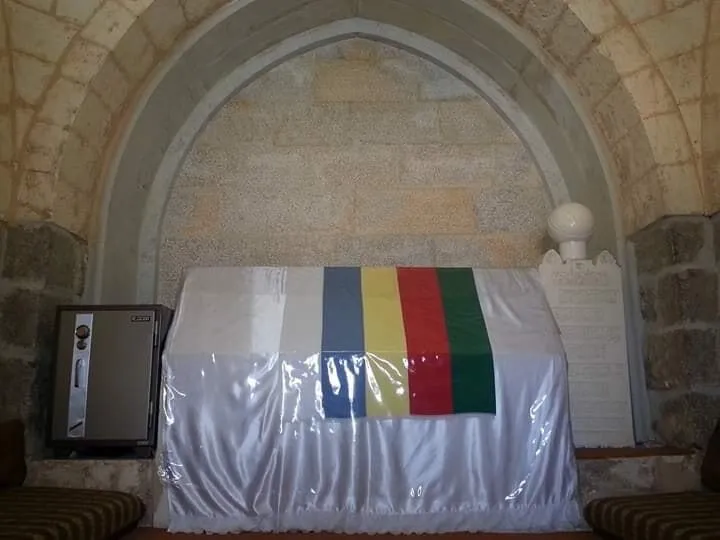
He passed away in the town of Shebaa, and his body was later transferred to Ain Ata, where he was buried in a shrine visited by the Druze monotheists to this day.
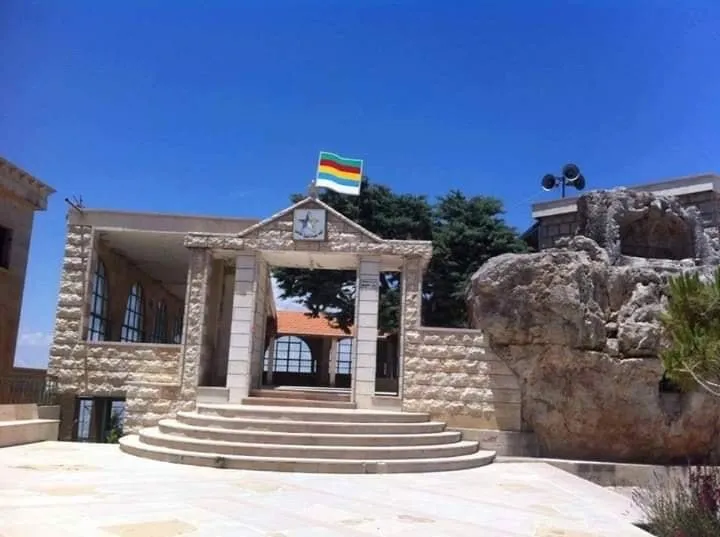
A shrine was built for him in his original village of Kawkaba, and another shrine in the village of Kafr Sumei.