
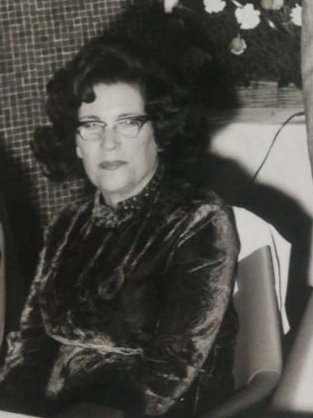
Salima Al-Qazzaz Dargham, the first woman in Lebanon to hold the position of mayor. Known for her boldness and strong personality, she crossed the bridge from a remote countryside pleading with authorities to address its needs and demands, to becoming a woman who did not fear knocking on the doors of those in power or storming the salons of honor. She became the voice for the voiceless, achieving accomplishments for her people and her town that men often failed to achieve. The words of Al-Mutanabbi ring true for her: "The feminine gender of the sun's name is no defect, nor is the masculine gender a pride for the crescent moon... If women were like those we have lost, women would be preferred over men."
Dargham was elected mayor of Bekifa during the last parliamentary elections in 1964, a mandate she held alongside a lady from the Eid family who was elected mayor of Mazraat El-Chouf. She continued to serve the people of her town until 1998, the first municipal elections held after the Civil War.
Born in 1918 in Ain Anoub, Aley District, Dargham began her journey with the Druze Women's Renaissance Association, which she always considered the primary social school of her life. It was the starting point for her entry into society and the catalyst for constructive, productive work.
Dargham was awarded the National Order of the Cedar with the rank of Knight by the late President Suleiman Frangieh at a ceremony held at the Park Hotel in Chtaura in 1974. She also received the National Order of the Cedar with the rank of Officer from President Elias Hrawi, as well as the Gold Lebanese Order of Merit. In her speech at her 1974 honoring ceremony, she said: "It is my responsibility to deserve this medal every day, and woe to the one who lets their medal fall from their chest."
She left behind many projects that stand as witnesses to her achievements, particularly those focused on creating job opportunities for rural residents, supporting farmers and keeping them on their land, as well as those aimed at spreading awareness, supporting women, and encouraging them to play their role in society.
Dargham was distinguished by great wisdom, shrewdness, and literary boldness in confronting any official, no matter how high their status. She rose above internal partisan, political, sectarian, and familial sensitivities and was known as a persistent woman who never stopped knocking on doors, considering it merely a part of her responsibility.
Mrs. Dargham recounts a funny story that happened when the late Kamal Jumblatt was Minister of Interior. She needed help to equip the only olive press in the Bekaa at the time. As he was about to travel to India, she followed him to the airport terminal and shouted from a distance before he boarded the plane, "Kamal Bey, where are you leaving me to go?" Everyone was astonished, and questions and suspicions arose. Jumblatt realized that he had promised to sign the aid, which he did, approving 20,000 Lebanese pounds at the time, which were used to equip the press.
She always cherished the stance of her late husband, Ali Dargham, who encouraged her move in an environment hemmed in by stifling traditions that imposed restrictions on women. She also valued the conscious stance of her townspeople. On one occasion, she said: "The awareness of the people of Bekifa and their harmony were fundamental factors in my success, even though an uproar occurred, and I used to hear some people among us and in the surroundings saying, 'Is there really no man left in this village?'"
She dedicated a significant part of her activities to encouraging and empowering women. She established the health center for the Women's Renaissance Association in Bekifa, which provided health services that were unavailable to the townspeople and the surrounding areas at the height of the Civil War. Her constant call was: "Let women work, move forward, and engage in the depths of life, not to outbid men, but for us to look at the issue from its human side, which treats this creature and that as equal. As long as the goal is to serve this society and this homeland, where is the flaw and where is the deficiency?"
She also encouraged farmers through agricultural exhibitions and worked to market their products. The first agricultural exhibition was held in 1966 under the patronage of President Charles Helou, before the establishment of the Agricultural Cooperative in Bekifa in 1972 and the creation of a craft cooperative for teaching sewing and handicrafts.
She built a development complex that includes a carpet factory where dozens of girls work, a sewing factory, a health center, a maternity ward, a consumer cooperative, an agricultural cooperative, and a hall for training the deaf and mute, in addition to two club halls that can accommodate two thousand people.
She was progressive in her view of public service, considering that "it is a mistake for anyone to believe that a mayor's responsibilities to their town end at the limits of paved roads, restored walls, built schools, or established clubs. The matter, without a doubt, extends to include various vital, health, educational, and social facilities, and constant supervision of everything that affects the village and its problems. A good mayor is responsible for establishing these things if they do not exist."