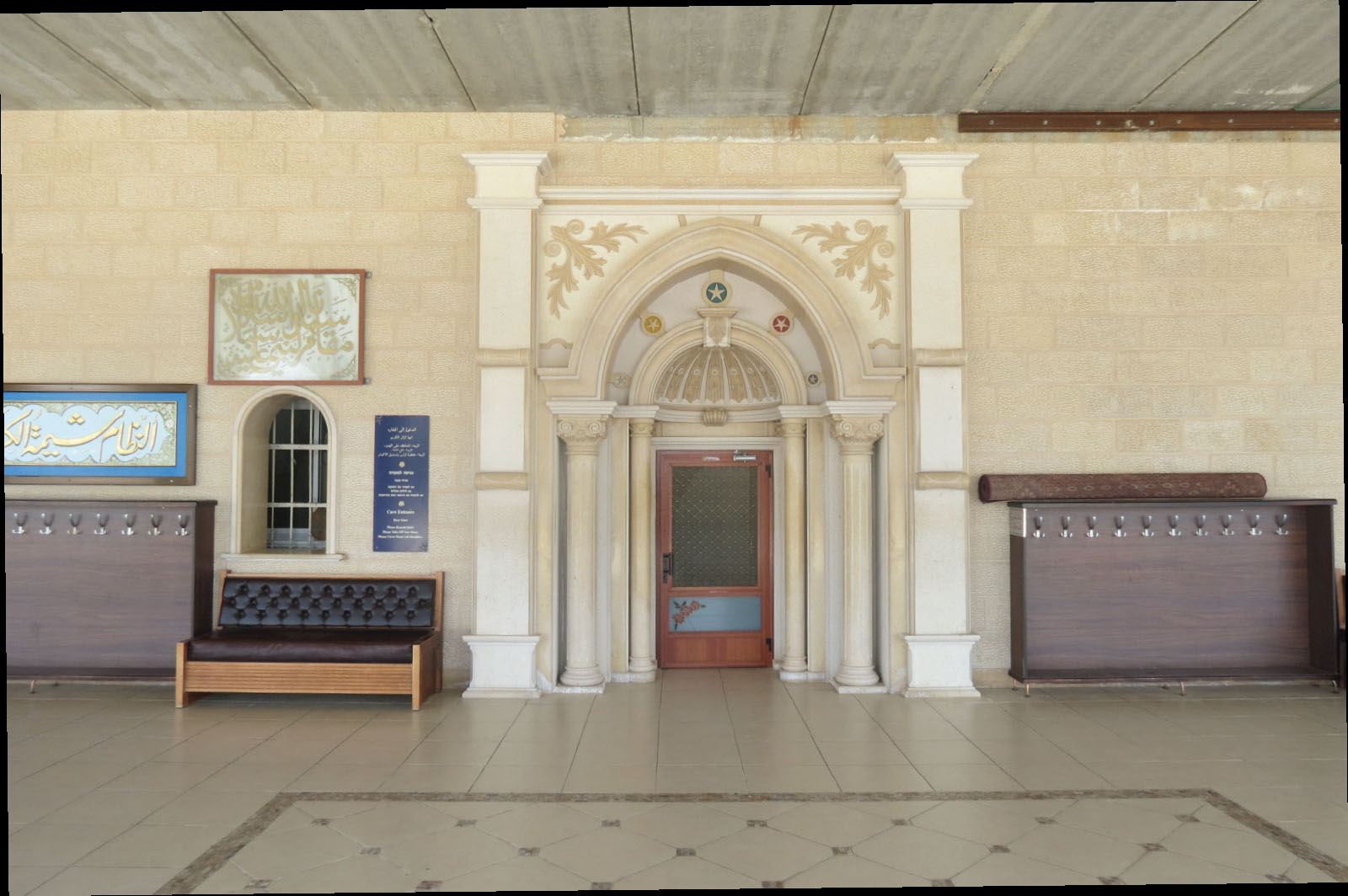

The Shrine of Prophet Sabalan (pbuh), located in the village of Hurfeish, is one of the important holy sites for the Druze in Palestine. Prophet Sabalan (pbuh) is considered a righteous man who lived an ascetic and austere life, spending most of his time, day and night, in the worship of the Creator—exalted be His name—loving Him, and calling people to believe in Him. Based on the insights of some pious sheikhs, our master Sabalan (pbuh) is regarded as one of the noble prophets. A shrine was erected on Mount Sabalan in the village of Hurfeish to commemorate his memory, known as the Shrine of Prophet Sabalan (pbuh).
The Narrative
According to tradition, a group of disbelievers who opposed the beliefs and way of life of Prophet Sabalan (pbuh) persecuted and pursued him, forcing him to flee to the summit of Mount Sabalan near the village of Hurfeish, where he found refuge in a small cave. According to the narrative, the enemies who were searching for him discovered his hiding place; however, in order to reach him, they had to cross Wadi al-Habis. While they were in the valley, God Almighty sent a large cloud from which torrential rain fell into the valley, causing its waters to flood and forcing those enemies to retreat.
Thus, Prophet Sabalan (pbuh) was saved from them and their harm. In reference to what occurred, this section of the valley, located south of Mount Sabalan, is called "Wadi al-Habis," as the root "h-b-s" in the Arabic language denotes confinement or detention. Furthermore, the meaning of "habis" in Arabic is a "solitary, reclusive monk," and this meaning also befits the character of Prophet Sabalan (pbuh).
Based on this tradition, Sabalan (pbuh) remained on the mountain for many years. Some claim that toward the end of his life, he decided to leave the area and move to the village of Baka in Jabal al-Druze in Syria, where he passed away and was buried. A shrine was established over the site of his burial place, which is named the Shrine of Prophet Sabalan (pbuh).
Description of the Shrine
The Shrine of Prophet Sabalan (pbuh) in the village of Hurfeish consists of several structures, detailed as follows: At the core of the building lies the cave of Prophet Sabalan (pbuh) and the room directly above it. It is said that in the past, local residents would bring individuals suspected of committing an infraction or crime to the cave of Sabalan (pbuh) to swear an oath there that they were innocent. According to traditional accounts, whoever swore falsely and deceitfully inside the cave would be struck with a speech impediment and unable to utter a single word from their mouth; in this way, the truthful were distinguished from the untruthful. The cave is small in size and naturally formed of rock. Above the entrance room, there are four domes. The compound also includes a khalwa (prayer room), several rooms, a kitchen, and storage facilities, in addition to a large courtyard offering a splendid view of the village of Hurfeish and its surroundings.
On the tenth of September each year, the Druze Unitarians celebrate the traditional annual pilgrimage (ziyara) to the Shrine of Prophet Sabalan (pbuh).