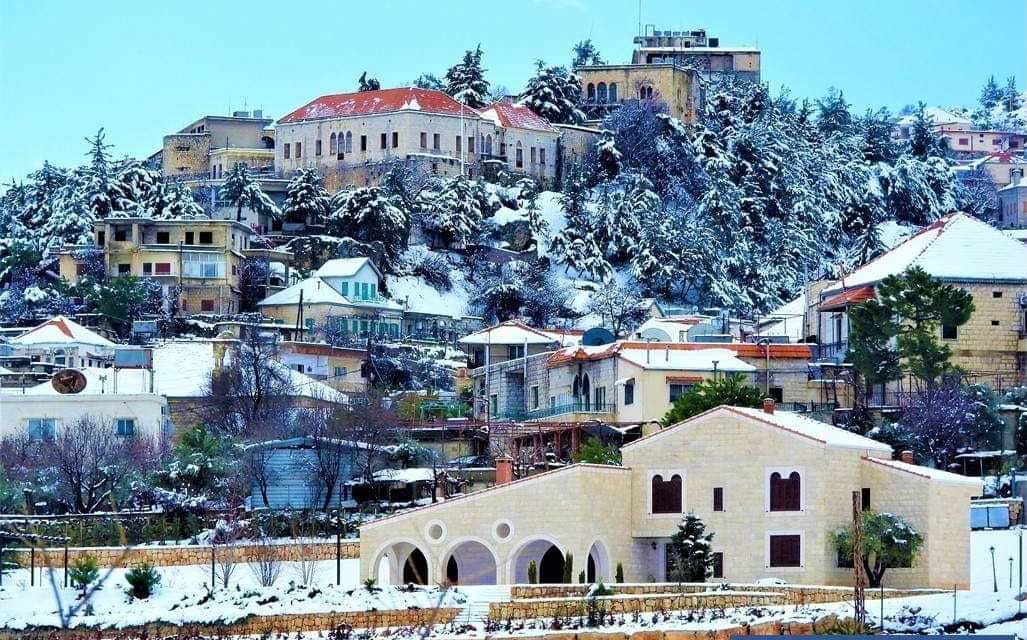

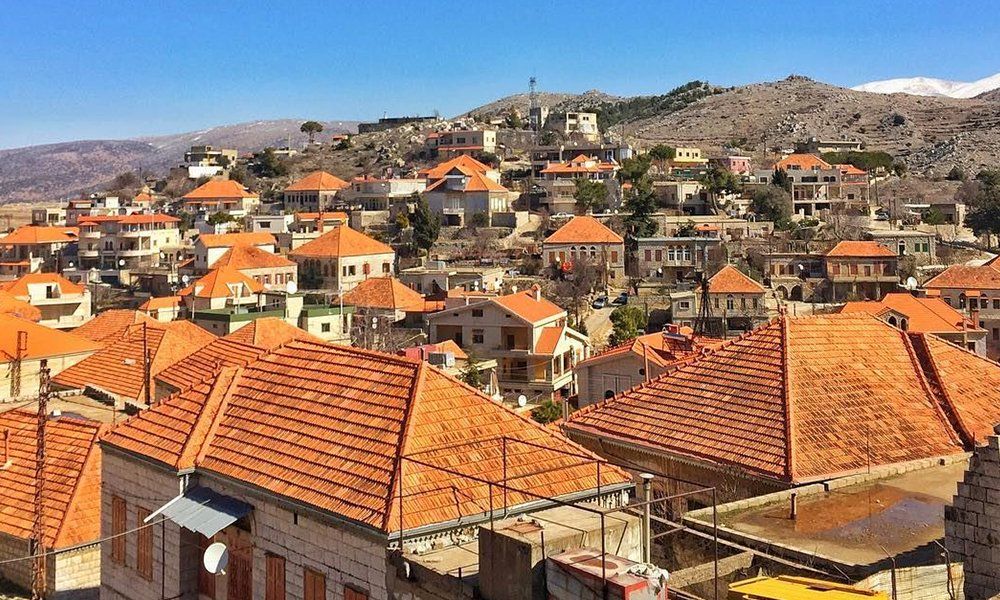
History dwells in the city of Rachaya and is dwelt by it; it is the town that embraced one of the oldest citadels in Lebanon, which transformed with the withdrawal of the French from Lebanon into the Citadel of Independence. Rachaya is considered one of the most beautiful villages not only in Lebanon but also in the Eastern Mediterranean, distinguished by its charming antique red tiles, old stone houses, and traditional heritage souk.
The town of Rachaya stands at the foothills of Mount Hermon in the Upper Wadi al-Taym region of the Beqaa Valley, an area that for decades formed a trade route between Palestine, Syria, and Lebanon. It was a station for caravans and a meeting place for travelers, where they could rest safely. Among its houses, news and cultures spread, as it was a hub for caravans and a scene for their encounters and conversations, historically forming a crossing point and a link between the governorates.
A Model Region
Rachaya is distinguished as a model region for its unique biodiversity in Lebanon. Its uniqueness is formed through its virgin forests, its purity, and the abundance of herbs—which number in the hundreds of varieties, especially towards the side of Mount Hermon. It is rich in agriculture, particularly grapes, olives, and various types of stone fruits, and it is a safe passage for all kinds of migratory birds, some of which stay temporarily due to the availability of sustenance and favorable climatic conditions.
Rachaya is one of the Lebanese villages richest in civilization and architecture. It is located in the Beqaa Governorate, 50 km from Zahle and 85 km from Beirut. Its resident population exceeds ten thousand, and its municipality dates back to 1860.
It was inhabited by the Romans and Crusaders and was a stronghold for the Shihab dynasty. It is famous for its citadel, where the men of Lebanon's independence were imprisoned. The population of Rachaya is about 6,000 to 8,500 people, most of whom are Druze, alongside a Christian minority.
The term "Rachaya" in Syriac means "morsel" or "head," which corresponds to its geographical location sloping over a high plateau. It was called "Rachaya al-Wadi" (Rachaya of the Valley) in reference to Wadi al-Taym, to distinguish it from its southern neighbor, Rachaya al-Fukhar. It is possible that the name is an Aramaic word composed of two parts, "Rash-Aya," meaning "Head of Aya," and Aya is the god of rain and storms for the Babylonians; this naming has a close connection to the history of Mount Hermon.
In ancient times, the Romans inhabited Rachaya, followed by the Crusaders, who left the Crusader tower in the Rachaya citadel. They were followed by a succession of rulers and kingdoms, most notably the rule of the Shihabi Emirs over the Wadi al-Taym region, who settled there since approximately 1183 AD. It was a stronghold for their rule during the Crusader and Mamluk eras, and Emir Bashir Shihab I was from Rachaya.
During the reign of Emir Fakhreddine II, Rachaya gained significant privileges, turning into one of the Emir's strongholds and a stopover for his travels and rest. During the reign of Emir Bashir II, after the Egyptian army entered Lebanon, the Wadi al-Taym region resisted the Egyptian army and inflicted heavy losses on it. During the era of the Qaimaqamates and the Mutasarrifate, the region mostly fell outside the boundaries of the Mountain and was attached to the Vilayet of Damascus, then returned to it after 1920 during the French Mandate and the subsequent outbreak of the Great Syrian Revolt in 1925, leading up to the era of independence.
The Citadel of Independence
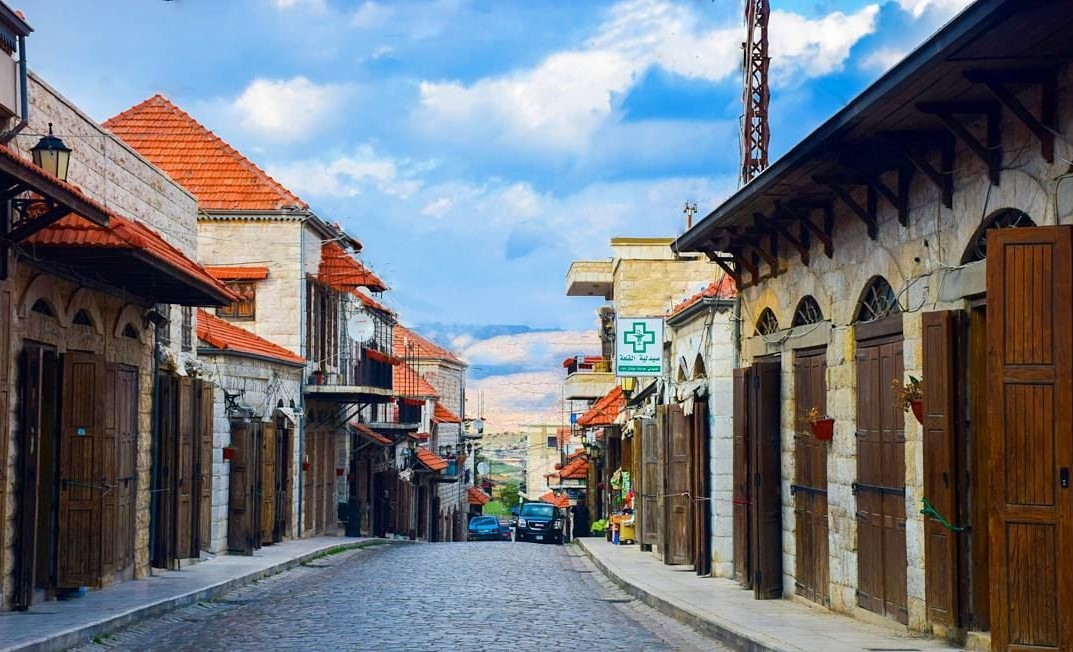
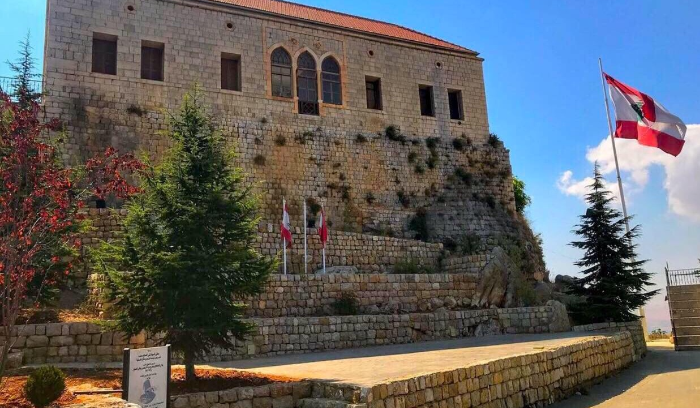
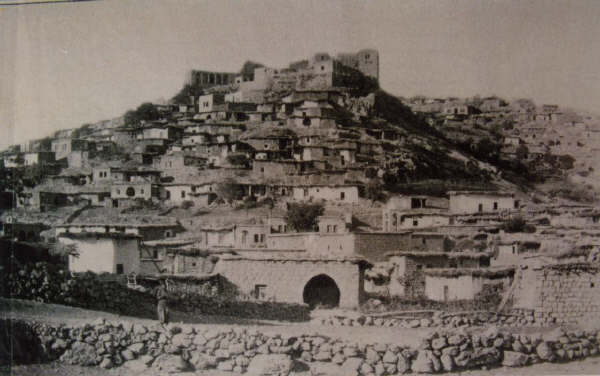
What distinguishes Rachaya al-Wadi is that historical citadel which later became known as the "Citadel of Independence." The construction of the citadel dates back to the eleventh century, and it is also distinguished by Shihabi buildings and ruins dating back to 1370 AD. Rachaya also features the ancient Rachaya Souk, located in the center of the town, surrounded by nearly 36 old buildings. Its floor is paved with stones in a precise geometric pattern, its length is 250 meters, and it dates back to the seventeenth century.
In Rachaya lies one of the oldest churches, the Church of Saint "Mar Musa al-Habashi" (Saint Moses the Ethiopian) of the Syriac Catholic sect. This church is distinguished by an architectural style that used the Gothic method, meaning the stones of the arch were used in its construction, resulting in a ship-like shape. It is an exact replica in terms of shape and plan of the historical Qalaat Jandal Church in Syria. The church preserves a rare icon of its patron saint, Saint Mar Musa al-Habashi, which dates back more than five hundred years.
Rachaya is considered one of the most important historical areas in Lebanon and the region, having been visited by various eras, the most important of which were: the Canaanites, Amorites, Arameans, Phoenicians, and Assyrians.
Researcher Dr. Mounir Mehanna points out that the existence of the citadel on the top of a hill and its geostrategic location allowed it to play important roles throughout history. The oldest dates back to the eleventh century when the Crusaders built a fortress there to secure the path of pilgrims heading towards Jerusalem and vice versa, knowing that Wadi al-Taym was historically the natural passage between the capitals of the region; thus, the function of the citadel and its fortress was to secure caravans of pilgrims and merchants.
He adds: "Going back to before the Crusaders, the tower located in the southwestern part of the citadel is considered its oldest part. It is likely that this tower was a temple to the god of weather and fresh, deep water, as evidenced by the existence of a group of four Roman wells inside it, each of which could hold more than five thousand jars of water. Today, one well is still in use, while the other wells were filled in by time and other factors. Beside the tower is the Qanater Palace, where Emir Abu Bakr Shihab lived."
During the Ottoman rule, the citadel was called the "Qishla," a Turkish word meaning a place for sheltering horses and livestock. But when the French came to Wadi al-Taym, General Henri Gouraud made the citadel a military base and a political headquarters to meet the ambitions of their presence at a close distance from Damascus, as Rachaya al-Wadi was one of the four districts belonging to Damascus. The French choice of Rachaya al-Wadi and its citadel was due to its strategic location."
The 1925 Revolt
The most prominent and largest event witnessed by the citadel was the attack of the revolutionaries on it, led by Zaid al-Atrash, brother of Sultan Pasha al-Atrash, in 1925, when 400 martyrs among the revolutionaries fell in the battle that lasted from October 20 to 24. The French left behind the names of those martyrs in addition to 22 photographs witnessing the destruction and burning of Rachaya al-Wadi. Even today, the Fourth Regiment of the foreign forces in the French army mentions the Battle of Rachaya Citadel in its anthem because the French suffered heavy losses in the battle.
Mehanna expresses his regret that "this battle was not mentioned in official history, and the history of Rachaya al-Wadi and its archaeological citadel fell into oblivion. However, a very important event highlighted the Rachaya Citadel, which remained under French authority until 1946 and later turned into a Serail (government house) for completing official transactions until 1964, when the Lebanese Army requested to be stationed there. This continues until today, specifically in the archaeological part of the citadel, which is allowed to be accessed on certain occasions, such as Independence Day, or after obtaining permission from the army itself.
When the French arrested the men of independence between November 11 and 22, 1943, they must have chosen the most fortified place, so the Rachaya Citadel recorded this event as part of its history."
Mehanna explains, "The ancient Rachaya Souk is located in the center of the town, housing 36 old buildings in its surroundings. It is a street paved with stones in a precise geometric pattern and is 250 meters long. It dates back to the seventeenth century and was paved in 1927 under the supervision of the French authorities by the master stonemason Shukri Abdel-Ahad. The Ministry of Tourism took interest in restoring and lighting it in 1997, and it is classified as one of the archaeological markets; it is the only heritage market in the Beqaa region, where several events are held, including the 'Debs' (grape molasses) Day, which brings together tens of thousands of Lebanese every year, the Barter Market, in addition to the goldsmiths' market being located there.
In Rachaya, there are four churches: the Saint Nicholas Church for the Greek Orthodox, the Lady's Church for the Greek Orthodox, and the Lady's Church for the Greek Catholic (1883 AD). As for the oldest church in Rachaya, it is the Saint 'Mar Musa al-Habashi' Church for the Syriac Catholic sect, and it is considered one of the oldest churches built in the region. It is historically significant as it dates back to the era when the members of the Syriac sect were present in Lebanon after arriving in the seventeenth century from the Jazira region in Syria, Iraq, Anatolia, Cilicia, Urfa, Marash, and Diyarbakir.
In addition to its historical and artistic value, this church possesses and preserves a rare icon of its patron saint, Saint Mar Musa al-Habashi, which dates back more than five hundred years; there is no equivalent to it except in the Convent of the Sisters of Mar Yaacoub and the Convent of Mar Girgis al-Harf. Mar Musa al-Habashi was one of the most famous preachers in Egypt, and his name is given only to this church in Rachaya, another church in northern Lebanon, and a third church in Latakia, Syria, which is small in size and adjacent to the Mar Nicola Church.
In addition to these archaeological and tourist landmarks, we find Roman archaeological sites scattered in the Faqaa area (Khirbet Abu Hadidi), Qasr al-Shamis, stone sarcophagi carved into the rocks, and the remains of water-powered mills, in addition to the remains of the Russian school.
Red-Tiled Houses
The architectural heritage in Rachaya al-Wadi is most visible in its old houses, built of stone and roofed with red tiles. The town still maintains its heritage form, and its red-tiled houses number more than three hundred, some of which have an additional attic called a "Tayyara" (plane), and their main facades feature distinctive geometric shapes with stone arches. As for the external shape of the tiled houses, they are generally square. The entrance to the house at its door is topped by a "large threshold" above which is a semi-circular arch surrounded by two circles on the right and left of the main door, which is also flanked by two windows on its right and left. The houses have hanging balconies of two types: the first is in the "Mandilion" style, meaning the base of the balcony is made of stone, and the second is hanging on a steel beam 20x30 cm thick. These balconies are decorated with protective iron railings in the shape of arrows, each ending with a lotus flower or an arch in the Kufic style.
As for the internal layout of the house, it is around a large salon called the "Liwan," from which four, six, or sometimes eight rooms branch off, and each room is called a "Murabba" (square). One of the features of these houses is their height, which reaches four and a half meters, and they are often surrounded by an adjacent garden."