

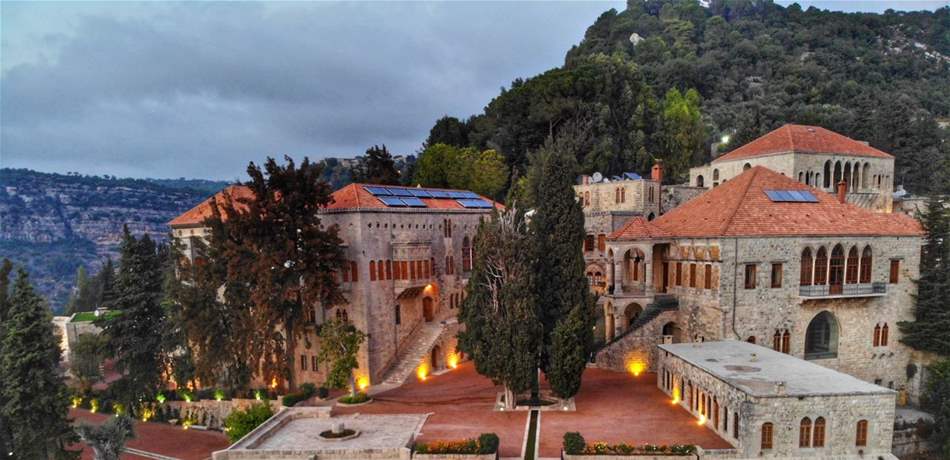
On the ruins of a Roman fortress in the Shouf town of Al-Mukhtara, Ali Jumblatt built the Mukhtara Palace in 1712, and since that date, the small Shouf town has transformed into one of the decision-making sites in the history of Lebanon.
For in an era when Sheikh Bashir Jumblatt was the second ruler of the Mountain after Prince Bashir Al-Shihabi, and remained during the days of the Ottoman Empire one of the makers of the Lebanese position, he showed courage and patriotism in confronting the attacks of Al-Jazzar's Janissaries. When he defeated them, he was given the title of "The Sole Leader." Then, titles began to follow him, from the title of Sheikh of Sheikhs to the Pillar of the Sky, to the Mazarin of his era—a reference to one of the prominent French politicians.
During his reign, Napoleon attacked the city of Acre and tried desperately to capture it. When he sought the help of the Jumblatti Sheikh, the latter refused to provide him with aid. When Admiral Smith, the commander of the English fleet, learned of the matter, he expressed a desire to meet the Jumblatti Sheikh.
Lady Stanhope was able to convince Admiral Smith to visit Mukhtara Palace out of respect for Sheikh Bashir's status on the one hand, and for the sect he represents on the other. This British noblewoman was fully aware of the power of the Jumblatt families and the extent of their influence on the policy of the Mountain, so she braved the hardships and accompanied the Admiral to Mukhtara Palace.
When a dispute occurred in the Mountain between Prince Bashir Al-Shihabi and Sheikh Bashir Jumblatt, one of the prominent Catholic clergymen volunteered to restore harmony between the two old friends. However, matters escalated into a fierce battle between the supporters of the two Bashirs, and Mukhtara Palace fell into the hands of the Shihabi Prince's followers, who confiscated its contents and then demolished it and the entire village. They also destroyed the mosque built by the Jumblatti Sheikh, and the Jumblatt palaces in Baadarane and Ain Qani were not spared from destruction.
When Lebanon was divided into two Qaimaqamates, Al-Mukhtara regained its position and the Jumblatt Palace was rebuilt. However, the return of leadership to the House of Jumblatt was delayed. It is recorded that the House of Jumblatt did not participate in the sectarian events of 1860, and that Said Jumblatt provided protection to Christians inside Mukhtara Palace and continued to call for harmony and peace.
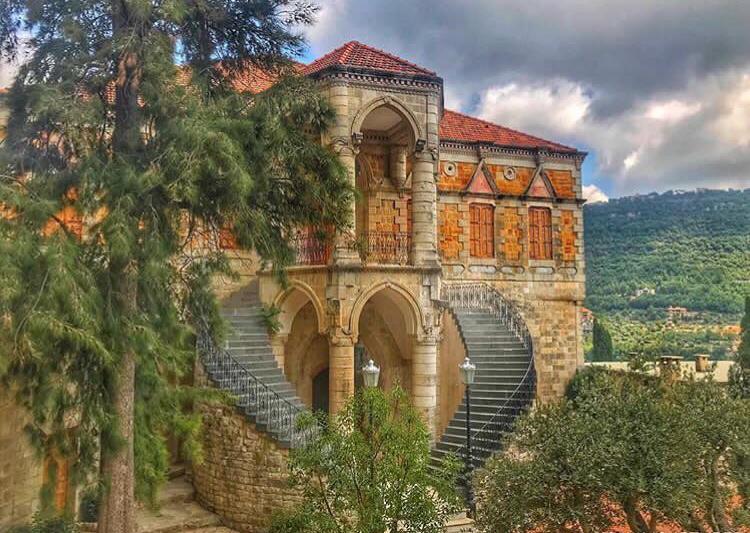
In a second phase, Sitt Nazira Jumblatt, mother of the martyr Kamal Jumblatt, made Mukhtara Palace her headquarters. She forced the French Mandate to recognize her leadership of the Jumblatt House following the assassination of her husband, and she would return to it whenever the French governor thought of making decisions concerning Mount Lebanon or the Druze sect .
The portrait of Sitt Nazira still hangs at the head of the palace's main salon in her traditional attire, and the room she used as a place for meetings remains a subject of care by her grandson.
Sitt Nazira remained the lady of Mukhtara Palace until Kamal Jumblatt took over the leadership, inheriting the palace and the glories of the Jumblatt House. Since that date, Mukhtara Palace has shone in the history of modern Lebanon. It is clear that the imprints of the martyr Kamal Jumblatt are dominant over everything in the palace and its surroundings; the photos that occupy the walls mostly date back to him, his travels, and his meetings with prominent local, Arab, and international politicians..
As for the rare antiques that adorn the rooms, they were all received by the martyr Jumblatt from his prominent friends.
The sword hanging at the entrance appears to still be one of the belongings of Sheikh Bashir.
In the private room where the martyr Jumblatt used to write or practice Indian yoga, his rocking chair remains, along with pictures of Indian sages, in addition to a huge archive of political and economic correspondence of the leaders of Mount Lebanon over three centuries. All of them are still preserved in their owners' handwriting after the Lebanese Directorate of Antiquities took pictures of them and kept them.
Although Mukhtara Palace was subjected to demolition more than once, its rebuilding always took into account its old architecture and respect for the architectural art upon which it was established. Its exterior appearance clearly indicates that successive men participated in its construction, as well as the building of its walls and towers, from the days of the first ancestor, Jumblatt, to the current leader, Walid Jumblatt.
However, the circumstances of the Lebanese war, the Israeli invasion, and the Mountain War prevented Walid Jumblatt from settling in the palace for long... He returned to it after carrying out restorations and repairs, as the appearance of the northern section of the palace indicates consistency in the construction and belonging to the present era... The care taken in the restoration is evident to the viewer. Mrs. May Arslan Jumblatt (daughter of Prince Shakib Arslan) oversaw the furnishing of the historic palace, and Walid Jumblatt had a wonderful architectural imprint in the recent restoration works that the palace witnessed.
Among the documents preserved in the palace is a letter from His Holiness Pope Clement XIII to Sheikh Ali Jumblatt, in which he invites him to resolve personal disputes between senior Christian clergymen and restore harmony among them.