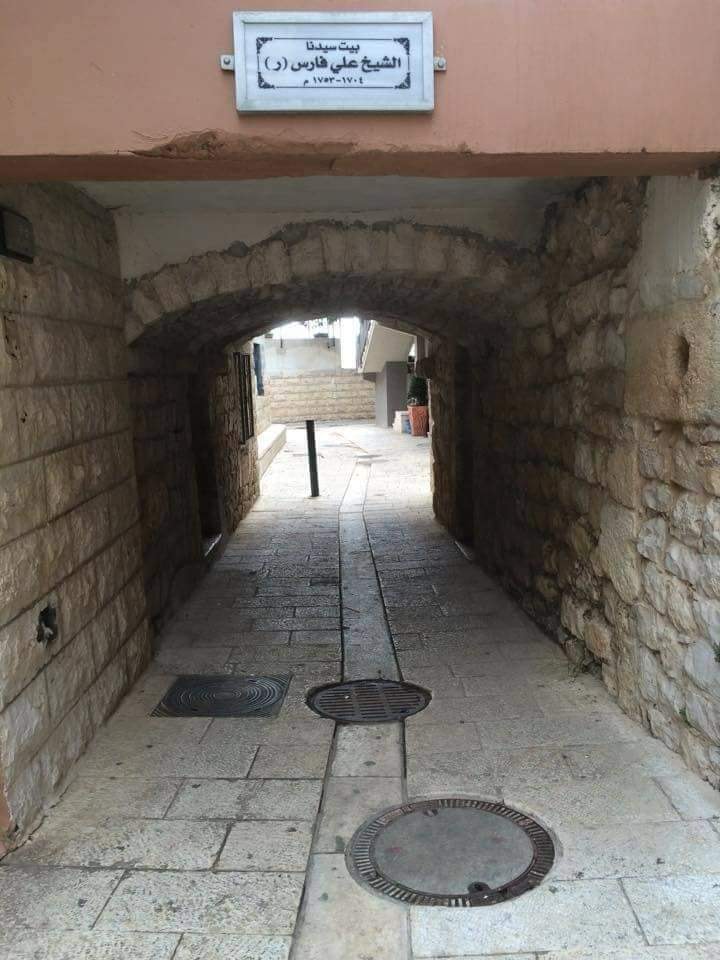

Our master, Sheikh Ali Fares, may God be pleased with him, was born in the Galilean village of Yarka in Palestine between the years 1703 and 1707. His parents were poor; his father was a soldier in Jiddin Castle, which belonged to the army of Zahir al-Umar, who was the governor of Safed district by order of Bashir Pasha, the governor of Damascus. As for his maternal uncle, he was the venerable Sheikh Abu Madi Hassan, may God have mercy on him, who was also a resident of the village of Yarka.
His Difficult Childhood
At a very young age, his mother passed away; he was less than a year old at the time. He had one older sister. After his mother's death, his father married a woman who did not treat them well, making their lives difficult and bitter. They did not find the support or care they needed, nor did they find peace in their lives due to that difficult relationship with their stepmother.
As time passed, his sister grew up and married, leaving Sheikh Ali alone without his sister. His stepmother continued her cruel treatment towards him. Despite his difficult childhood, Sheikh Ali possessed great love and patience, focusing on enduring with dignity and pride.
Some believe that the escalation of his stepmother's harsh treatment prompted him to leave his village for the neighboring village of Julis to turn a new page in his life. He lived with the Tarif family, who were known for their piety, devotion, and dedication to the service of God. From a young age, clear signs of religiosity, righteousness, and goodness began to manifest in Sheikh Ali, as he grew up in this religious and inspiring environment.
His Dedication to Knowledge and Education
Sheikh Ali immersed himself in the realms of knowledge and education, exerting great effort to learn the arts of reading and writing. His primary goal was to uncover the secrets of wisdom, the foundations of religion, and the principles of exegesis. Over time, his intellectual capabilities shone, and his faith in God and his piety increased.
When he faced difficulty in understanding and writing poetry, he traveled to the city of Damascus in Syria several times to study the principles of grammar and morphology to enable him to better understand and compose poetry. Thanks to this effort and diligence, he succeeded in composing a magnificent collection of poetry that reflects his poetic talent and linguistic knowledge.
His Affiliation with the Tarif Family
Our master, Sheikh Ali, would passionately visit the village of Julis, where the family of Sheikh Abu Saleh Salman Tarif, may God have mercy on him, lived—a family to whom he felt a sense of belonging. When he first visited them at about the age of ten, he did not yet know all the details of life and science. However, he remained committed to attending their honorable gatherings, listening intently to the recitation of the Holy Book and absorbing the sermons of the older sheikhs.
It is said that once, specifically on the night of Eid al-Adha, the "Majrawiyyah" was presented to him, which is a sermon authored by the late Sheikh Abu Saleh Salman Tarif. He was deeply affected by this sermon and began asking about the author and learning about him. He began to speak and discuss in a poetic style and recited a poem known today as "al-Nafsiyyah," which was based on the vernacular dialect since he was still at a young age.
Sheikh Ali regularly frequented the Tarif family in the village of Julis. During his journey there, he would stop to spend a little time near a rock that provided him with shade to take a break and perform his prayers. After his departure, this rock remained a sacred place revered by passersby of the faith and life, until it was moved from its original location.
Sheikh Ali Fares is considered the third most prominent religious figure after the Amir al-Sayyid and Sheikh al-Fadel since the closing of the door of the Da'wah until today. He enjoys widespread fame among the sheikhs of the Tawhid path due to his deep knowledge and his appreciation for piety, asceticism, and learning.
His Devotion in the Cave of Wadi al-Samak
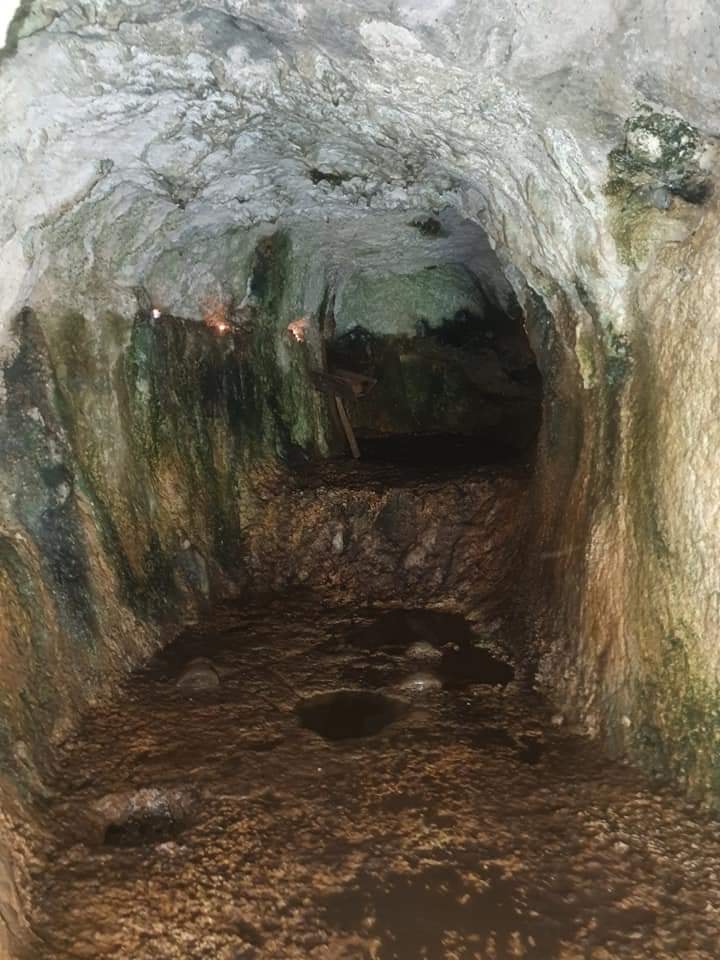
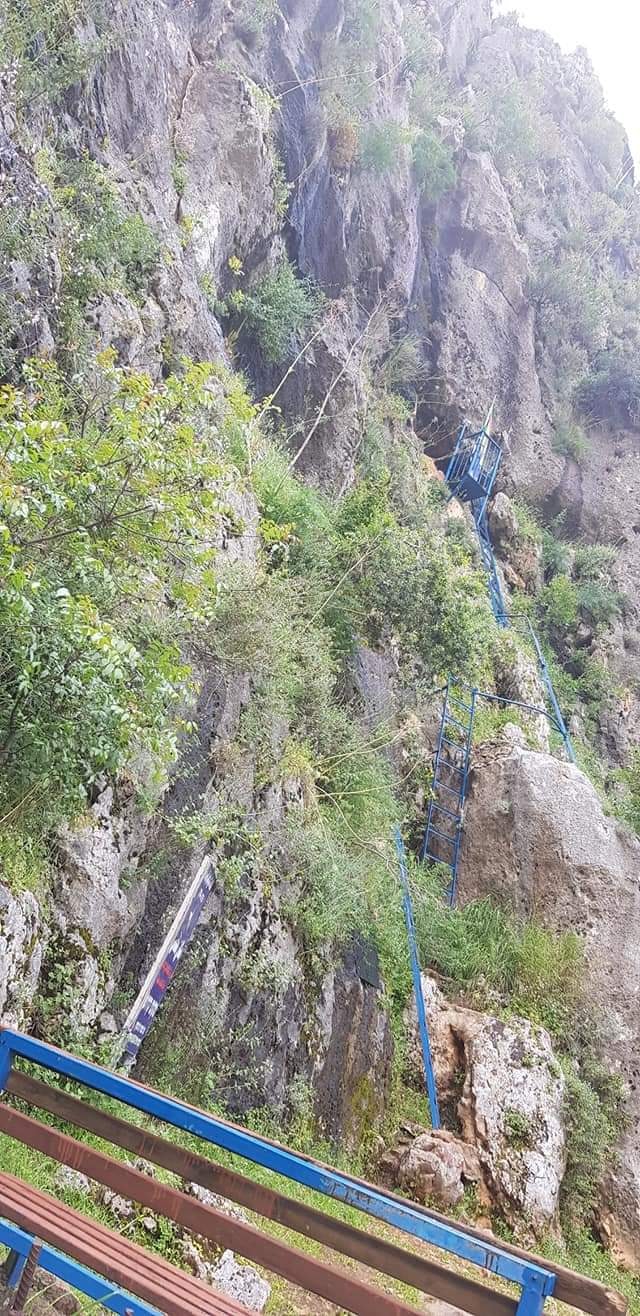
As soon as he left his father's house, Sheikh Ali Fares retired from the outside world and settled in a cave located on the vertical slope of Mount Wadi al-Samak. The cave is about four meters deep and has a narrow width that is not enough for someone to stretch their legs while lying down. Reaching this cave was a grueling challenge that required great patience and the ability to endure hardships.
In this simple place, Sheikh Ali felt a deep longing to be close to God Almighty. He engaged with complete dedication in prayer and worship, and here he found the tranquility and peace he was looking for.
Our master, Sheikh Ali, continued to worship in the famous cave, and the Tarif family, specifically Sheikh Muhammad, son of Sheikh Hassan Tarif, would come to visit him at his place of worship to provide him with water and provisions. After some time, Sheikh Ali realized that Sheikh Muhammad should not bear the burden of bringing water, which caused him fatigue and loss of time. Therefore, he swore to him that he would not accept any water provided after that.
The Miracle in the Cave: Water from the Womb of Trust in God
Sheikh Muhammad replied to this oath, saying: "Where will you drink while inside that cave?" Sheikh Ali replied, saying: "God Almighty bestows upon us the provision of water," and so it was. God Almighty responded to his prayer, and fresh water began to fall from the ceiling of the cave, allowing Sheikh Ali to drink and enjoy comfort and refreshment.
Sincere Worship: Sheikh Ali's Asceticism and Pursuit of Divine Satisfaction
For Sheikh Ali Fares, worship was not just a religious duty, but a longing act and a mandate he performed with complete sincerity. He renounced the world and gave up its pleasures for the sake of God Almighty, and he did not seek personal comfort. Rather, his primary concern was to develop religious gatherings and activities with his guidance and examples of worship.
Sheikh Ali corrected and reconciled broken relationships between people and the paths of goodness and worship. To achieve this goal, he invented many ways to stay awake at night for worship. One of these was hanging a "hook" in the ceiling of his house, with a thin rope reaching the ground. When he felt sleepy, he would tie this rope around his neck; if he leaned to the right, left, or backward, the rope would pull him, and he would wake up again.
Sheikh Ali expressed his state in many poems, including his saying, as if he were describing himself:
“A people content with little of their clothing
And their sustenance, the world does not cross their minds
Their hearts are free from their whispers
Their secrets are pure, with no impurity in them
They abandoned homes, the world, and its ornaments
And tore apart the garment of its flowers and delight
They did not desire its splendor, nor its beauty
Nor were they swayed by ornaments or finery
They wore the garments of piety, oh how beautiful their attire
And they continued the remembrance aloud in their sitting
They were absent from the universe, and even from themselves
For their Beloved manifested to them, and they were stunned”
His Return to Julis
Sheikh Hassan Tarif and his sons, Muhammad, Salman, and Tarif, urged Sheikh Ali Fares to visit their home in Julis, after they headed to the cave to seek his approval for their return to Julis and living in their house. Sheikh Ali informed them that he had decided to stay in the cave for forty-six days, directing this decision towards the Ababil birds in the cave. After the Sheikh accepted this proposal, he moved to Julis.
After spending three days in Julis, they accompanied him to his home in the village of Yarka, and from there, the relationship began to grow and strengthen between the Tarif family and our master Sheikh Ali Fares.
Sheikh Ali Fares' father held the position of a soldier in Jiddin Castle, where he served under the command of Officer Omar al-Zaydani, and he used to speak with pride about his son's piety and asceticism and the miracles he achieved. This talk about the son significantly influenced the admiration of the soldiers and the officer in charge, and aroused the latter's curiosity to meet Sheikh Ali and get to know him better.
On one occasion, the officer decided to visit the home of Sheikh Hassan Tarif accompanied by Sheikh Ali's father with the aim of meeting him. For this purpose, a messenger was sent to invite Sheikh Ali to meet the officer and Sheikh Hassan Tarif's father. The messenger reached outside the town to find Sheikh Ali, as he was not at home at that time.
But when the messenger reached him and presented the invitation to meet the officer and Sheikh Hassan Tarif's father, Sheikh Ali refused with tact and respect, saying: "Apologize on my behalf to them," and he refused the meeting. Instead, Sheikh Ali preferred to live in isolation and closeness to God Almighty, far from rulers and worldly affairs.
An Extensive Overview of His Writings and Poetry
Sheikh Ali Fares produced many literary and poetic works that reflect his unique vision and profound thoughts. Among these works:
- The Majrawiyyah "al-Nafsiyyah": Sheikh Ali Fares wrote this poem in a language that leans more towards the vernacular than the classical. This poem is considered distinctive as it deals with the subject of the self and inner contemplation. The poem consists of one hundred and twenty-nine verses.
- Influence of Ibn Arabi: Sheikh Ali Fares' style reflects the influence of the works of the Sufi poet and philosopher Ibn Arabi. He may have had knowledge of his works and profound thought, whether through his personal readings or through the education and knowledge he acquired in Damascus.
- Asceticism: Sheikh Ali Fares wrote many poems on the subject of asceticism, which is the orientation towards cherishing austerity and being content with little. In these poems, he focuses on humility and shyness before God.
- The Perfect Human: Sheikh Ali Fares was inspired by a poem titled "The Perfect Human" or "The First Intellect." This poem deals with the concept of the distinguished and complete human being through his unique vision of the world.
- The Light Intellect: Sheikh Ali Fares presented a poem that blends classical and vernacular language, dealing with the subject of the light intellect that was embodied in the person of the Prophet Muhammad, may God bless him and grant him peace.
Sheikh Ali Fares' writings demonstrate his uniqueness and his philosophical and Sufi spirit in expressing his thoughts and feelings.
His Death, May God Be Pleased With Him
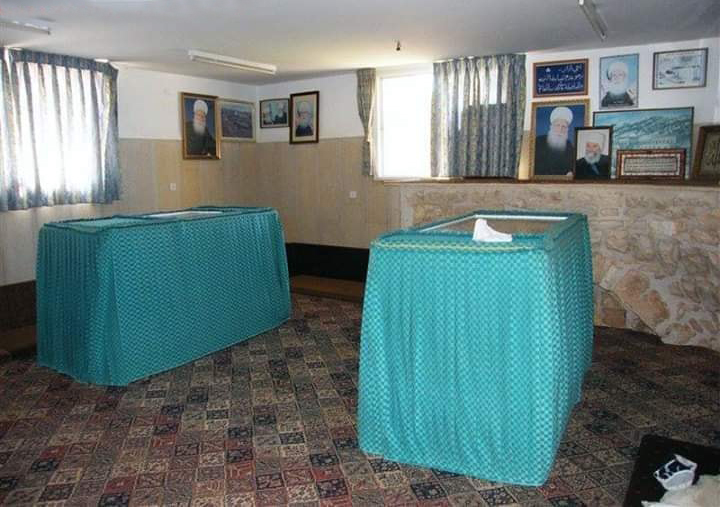
On the night of Friday, the fourteenth of Ramadan in the year 1167 AH, Sheikh Ali Fares, may God be pleased with him, passed away while performing prayer with a crowd of worshippers from his brothers in the secluded prayer house (khalwa) of the town where he lived. God took his soul while he was prostrating to his Lord. The death of the venerable Sheikh had a painful impact on the people and the Tarif family, and delegations flocked to attend his funeral and bid farewell to his pure body. The sheikhs eulogized him with the best elegies, in prose and verse. His body was buried in the village of Julis, near the dome where he used to worship, which is now a shrine visited by the Unitarians seeking blessings.