

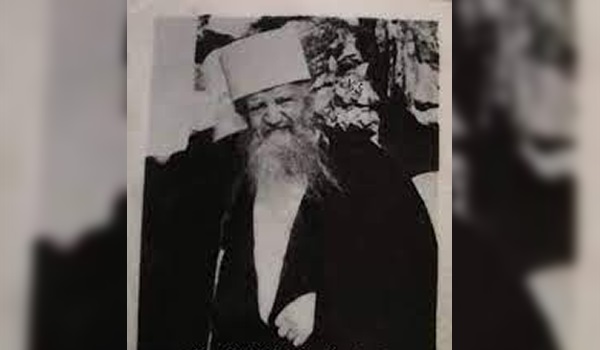
Sheikh Abu Ali Youssef Hassan Abu Ibrahim, who descended from an ancient Druze family, possessed qualities and virtues that placed him in a position of religious leadership for the Druze Unitarian Community in Rashaya al-Wadi, its district villages, and many towns and villages inhabited by the Druze, whether in Lebanon or neighboring countries. The venerable sheikh, who served for decades as a righteous religious authority, was a man of sound counsel and advice thanks to his wisdom, knowledge, prudence, piety, devoutness, and humility.
The venerable sheikh was born in Rashaya al-Wadi. Like other devout and pure men of religion, he worked in agriculture and lived his life naturally, bonding with the land, farming, and tilling the soil. At the same time, he tended to people's affairs and concerns, stood by their side, and resolved their disputes, bridging divides, reconciling opposites, and settling conflicts among all who sought him without any need for litigation. He consistently ruled with justice and offered his counsel to serve as a binding law among them, speaking the truth and armed with confidence, certainty, piety, and persuasion. History remembers the venerable sheikh, along with Sheikh Abu Ali Hussein al-Qadamani and Sheikh Abu Saleh Hassan Kaseb, when they embarked on a mission to the town of Kfar Qouq to resolve a severe dispute that had erupted between two families. Upon arriving in Kfar Qouq and beginning consultations with the disputants, they reached a dead end, were unable to resolve it, and turned back. However, one of them stopped the others, saying: "We did not succeed because my intention was biased toward one of the disputants; let us return and resolve the issue." Their wish was fulfilled, and they settled the dispute between the two families as soon as they turned back halfway.
It was also related that he once fell ill and his body grew frail, leaving him in urgent need of surgery. However, his body could not tolerate anesthesia, so the operation was performed without anesthesia and ended successfully. A local resident recounted that the surgeon who performed the operation was Dr. Bechara Daham. Having sensed the venerable sheikh's piety and overflowing faith, the doctor told him that he had been married for 12 years without having children and asked for his prayers to be blessed with a child. The sheikh replied, “God willing, all will be well.” Shortly thereafter, he was blessed with a child, and the doctor went to thank the sheikh for his prayer, which God had answered.
The collective memory of Rashaya preserves traditional stories about Sheikh Abu Ali Youssef Abu Ibrahim, which are often associated with chivalry, courage, wisdom, influence, generosity, and humility.
The life of the venerable sheikh was characterized by asceticism, humility, and doing good deeds in silence and reverence. He possessed deep religious knowledge, pursuing a pious and honorable path in faith and devotion.