
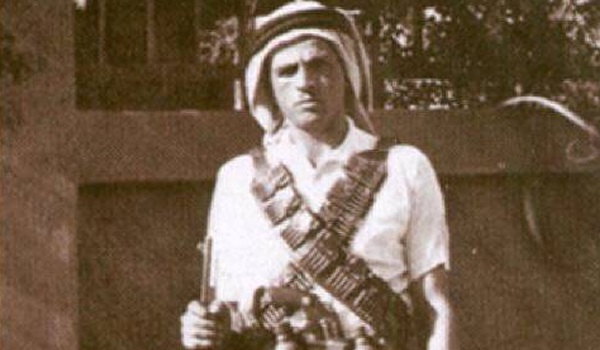
He sacrificed his life for the independence of his country, resisting the soldiers of the French Mandate. On November 16, 1943, when he attempted to prevent them from reaching the government headquarters in the town of Bchamoun, he emerged from behind a barricade and threw a hand grenade at a French armored vehicle. He was immediately met with a hail of bullets and fell, drenched in his own blood... He is Said Fakhr al-Din, the only martyr of Lebanon’s independence.
A Battle and a Martyr
Regarding the battle that took place that day, the then-Minister of National Defense, Prince Majid Arslan, explained in Communiqué No. 1 issued on 11/7/1943: "Armed French forces attacked the seat of the legitimate government in Bchamoun on the evening of Monday, November 15, 1943, but were repelled by the National Guard units without loss of life. On the morning of the second day, the French forces launched a violent attack on the mentioned center and were repelled four successive times until three in the afternoon. Some Senegalese soldiers were killed or wounded, and we lost one martyr named Said Fakhr al-Din."
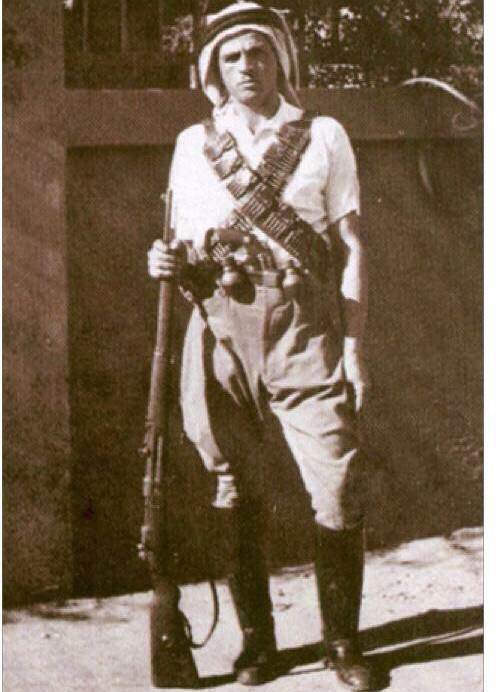
The Resistance Farmer
A native of Ain Anoub (born in 1903), he worked as a farmer and later acquired a "cart" which he used to transport vegetables to Beirut. He married Mrs. Nabiha al-Shaar, with whom he had three sons: Amin, Rashid, and Wajih. Although the Syrian Social Nationalist Party affirms that Fakhr al-Din joined their local branch in 1941, serving as a treasurer on the day of his martyrdom, his cousin Karam insisted in an interview with "An-Nahar" that "the martyr sacrificed his blood for his homeland, not for any party; that is why Lebanon and his village take pride in him before his family." His neighbor, Abu Faisal Ammar, said, "According to what I heard from my father, Fakhr al-Din joined the Lebanese resistance that opposed the Mandate. He fought valiantly to secure his country's independence. 70 years after his martyrdom, his heroism was immortalized with a monument at the town’s roundabout, where we hold a commemoration every year, specifically on Independence Day."
For Lack of Discrimination
"He was awarded the Medal of National Jihad by the former Lebanese President Bechara El Khoury on November 20, 1945. Kamal Jumblatt said of him in Parliament in 1969: 'Why the boastfulness? His name is Said Fakhr al-Din and he is a Syrian Social Nationalist,'" according to the party's Dean of Media, Maan Hamieh, before calling for "honoring Fakhr al-Din as one of the essential figures of independence, as he offered his blood for his country's independence." He added, "Despite this, official honors are limited to sending a representative of the President, without the martyr's name appearing in the independence celebration program like others. We also call for honoring all figures of independence who offered their blood, including Hassan Abdel Sater, the Social Nationalist who lowered the French flag from the Parliament building before being hit by a bullet that pierced his helmet. He was taken to 'Hotel Dieu' hospital, where he died the following day on April 28, 1944, as a result of his wounds. These are the unknown soldiers who had the decisive word in confirming independence, for the will for independence is not limited to political will, but is a general national will."