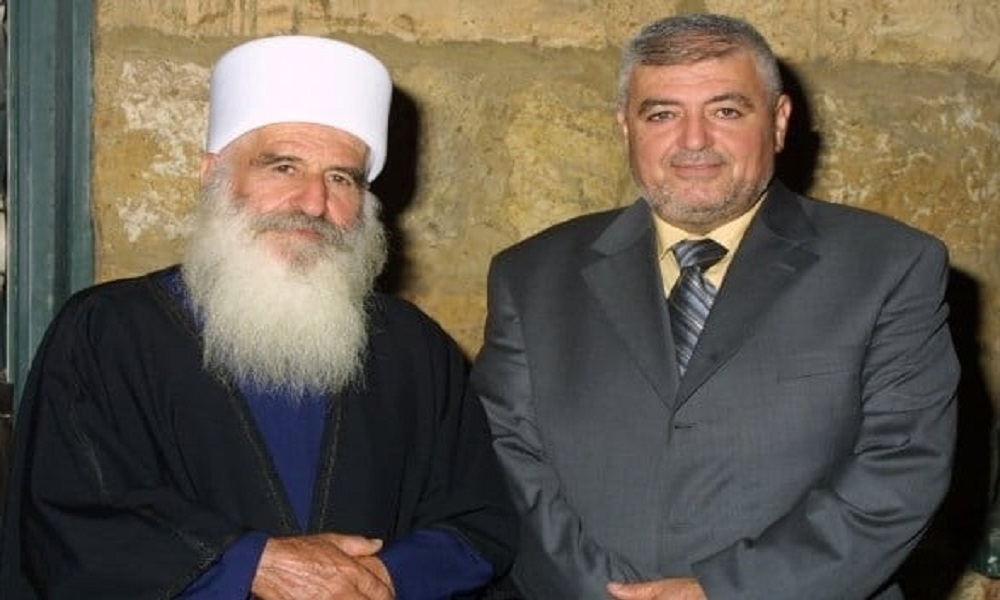
The martyr Saleh Al-Aridi, born in the town of Baysour on February 5, 1957, was a Lebanese politician and a prominent figure of the Unitarian Druze community. He was the son of the religious authority Sheikh Farhan Al-Aridi, one of the senior sheikhs of the Spiritual Council.
His career witnessed several political milestones, the last of which was in the Lebanese Democratic Party alongside its leader, Talal Arslan.
Al-Aridi was one of the most prominent pillars of the popular resistance since 1982 and was one of the most important advisors to the former leader of the Progressive Socialist Party, Walid Jumblatt, during the Civil War, before later becoming the closest person to Talal Arslan.
Al-Aridi helped resolve disputes within the Lebanese Druze community during the events of May 7, 2008, in Lebanon, and played a major role during that phase.
The Assassination
On September 10, 2008, Al-Aridi was assassinated in a car bomb explosion near his home in his village of Baysour, which led to his martyrdom and left 6 people wounded. His father, Sheikh Abu Saleh Farhan Al-Aridi, took a historic stance, stating at the moment of the crime: "If our adversary came to us at this moment and said, 'I am the one who killed Saleh,' I would forgive him and would not allow anyone to touch him."
A massive funeral was held for Al-Aridi on September 12, 2008, attended by all Lebanese parties across their various affiliations, as well as all Druze leaders. Lebanese President Michel Suleiman named him the "Martyr of National Unity." The martyr was laid to rest in the town's cemetery.