
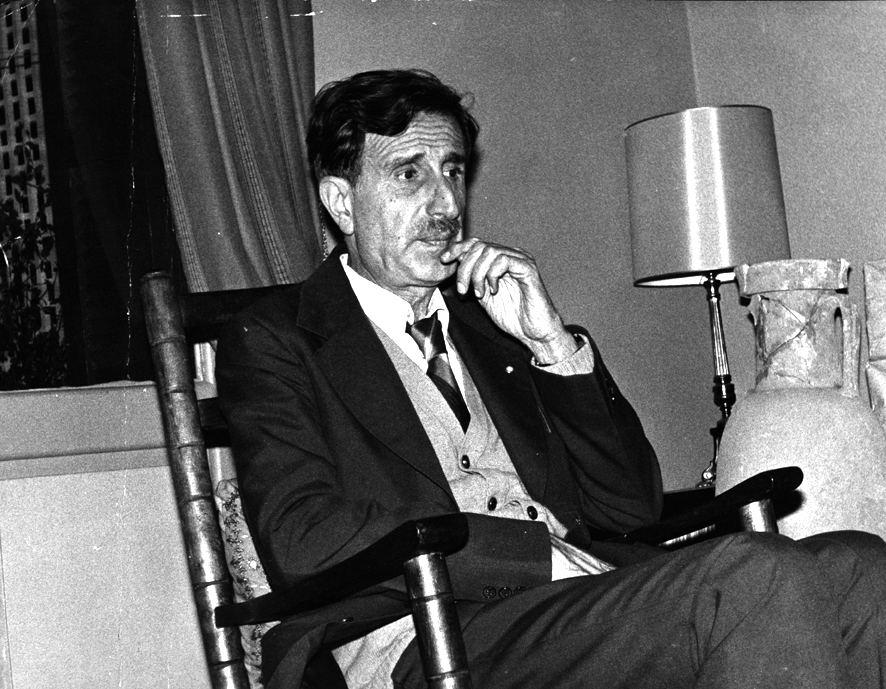
Here is a selection of the most prominent things said by presidents and leaders about Kamal Jumblatt:
The late President of the French Republic François Mitterrand:
I learned from Kamal Jumblatt the first lesson in the geopolitics of the Middle East.
The Parisian newspaper Le Monde:
Kamal Jumblatt was one of those figures who command respect through the loftiness of their vision, the nobility of their character, and the value they earned as an example of service to the people and their cause.
Secretary General of the French Socialist Party Lionel Jospin:
Kamal Jumblatt the human is gone, and we bow before the giant, the struggler, and the spiritual man; his ideas will remain alive.
Secretary General of the French Communist Party Georges Marchais:
Kamal Jumblatt dedicated his efforts to searching for a just and honorable solution to the Lebanese crisis, the Palestinian cause, and the rest of the Middle East.
French Orientalist Jacques Berque:
Kamal Jumblatt was creative and authentic, which is what led me to take an interest in him and consider him a laboratory for the future world. Kamal Jumblatt was great—greater than his country, and perhaps greater than the Arabs.
Bishop Hilarion Capucci:
I knew him to be loyal to his Lord and his conscience, upright in his faith, a believer in his Arab identity, and devoted to his cause. Kamal Jumblatt spent his life in the service of his homeland and his nation.
King Abdullah bin Abdulaziz Al Saud:
Kamal Jumblatt gave his intellect, his soul, and every moment of his life for his people, his homeland, and his ideals, leaving behind a methodology, a philosophy, and a vision for serving others.
King Fahd bin Abdulaziz Al Saud:
Kamal Jumblatt died while struggling to consolidate security in his country, and he sacrificed everything he could until he fell as a victim, paying for it with his precious life.
Lebanese leader Raymond Eddé:
Kamal Jumblatt died like a man, because the leader that he was did not wish, despite the provocations and threats, to abandon his principles.
Lebanese leader Hamid Frangieh:
Kamal Jumblatt gave Lebanon much of his great love and his knowledge—more than any leader has ever given their country. We are confident that those who were loyal to him in his life will remain loyal to him after his death.
The late head of the Lebanese Kataeb Party Pierre Gemayel:
Kamal Jumblatt was one of the best men of Lebanon. He was truly and profoundly Lebanese. He believed that the country could only survive through understanding and dialogue.
Bishop Grégoire Haddad:
Kamal Jumblatt loved the Chouf, loved Lebanon, loved the Arab nation, and loved the world. These levels of love were in conflict within him. He wanted to synthesize them into one harmonious love, but is one lifetime enough for this synthesis and harmony? And is this synthesis and harmony possible in time, or must one wait for eternity?
The late President of the Arab Republic of Egypt Gamal Abdel Nasser:
Brother Kamal Jumblatt, with his intellect and knowledge, is capable of being among the great leaders in China or even India, but his fate was to be born in Lebanon, a small state that cannot bear his knowledge and philosophy of life.
The late Egyptian President Anwar Sadat:
With the death of Kamal Jumblatt, the Arab nation has lost a strong and unique leader. Egypt has lost a loyal and sincere friend who never wavered in his affection or turned his back on his principles, and a companion on the arduous path of struggle for a happier future for the coming generations of our children. His struggle will remain a shining page in the history of our Arab nation.
The late Yasser Arafat:
Kamal Jumblatt gave his life for the freedom, unity, and independence of Lebanon. And he gave his life so that the Palestinian revolution could continue its just struggle on the path to liberation.
Secretary General of the Organization of Communist Action Mohsen Ibrahim:
Kamal Jumblatt was a blend of limitless ambition and an independence that bordered on stubbornness in the pursuit of sovereignty. He possessed a belief in democracy that was embodied in his readiness to offer martyrdom for the sake of freedom.
Lebanese émigré poet Elia Abu Madi:
Celebrating Kamal Jumblatt in the United States is not because he was a deputy in the Lebanese parliament, nor because he was a descendant of a prestigious family, nor because he was a man of literature and science. Rather, he is celebrated and honored because he is a symbol of a noble reformist idea, and because he sacrificed much of his comfort, wealth, and time for the sake of this idea. Those who rebel against feudalism are not few in our lands, but Kamal Jumblatt alone is the true rebel.