

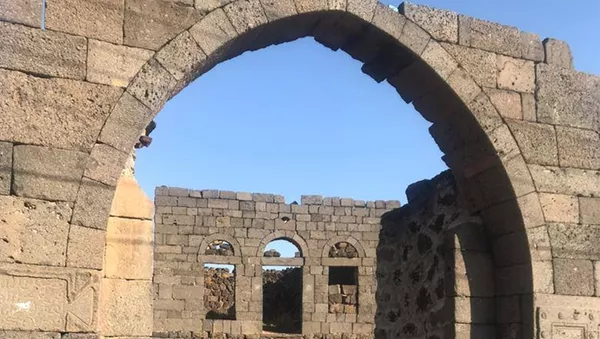
In the far south of Syria, where the peaks of Jabal al-Arab sit, lies this heritage town, a historical oasis that tells the stories of the ages. The town of Najran is famous for its deep heritage and unique archaeological landmarks, in addition to its distinctive cultivation of olives and grapes, which are used in the production of high-quality molasses and raisins.
Historical Origins
The roots of this region date back to ancient times, and it was a major hub for many successive civilizations. Regarding its name, there are several accounts, including its relation to Najran in Yemen, and others linking its name to a king named Zuran who survived an assassination attempt.
Prominent Landmarks
This town boasts archaeological sites that bear witness to its long history, including the Great Arch of Hauran, the Qara Minaret, and the ruins of the ancient monastery, which embody the succession of Romans, Arabs, and other civilizations.
Earth's Riches and Culture
This region relies heavily on agriculture, especially the local olives and grapes, which are considered premium varieties and are processed using traditional methods that preserve the authentic flavor. Handicrafts and ancient traditions in food preparation play an important role in preserving the cultural heritage.
Social and Cultural Traditions
The town of Najran is characterized by its cultural and social richness. The residents maintain their customs and traditions, with the "Madhaf" (guest houses) being an integral part of the social fabric, serving educational, judicial, and community functions.
At the end of this journey into this historical space, the great importance of this unique town becomes evident. This oasis is considered one of the treasures that embody the authenticity of history and culture in the region, providing a rare window into the history of Jabal al-Arab and its heritage.
Watch the "Seven by Seven" program video about the town of Najran