
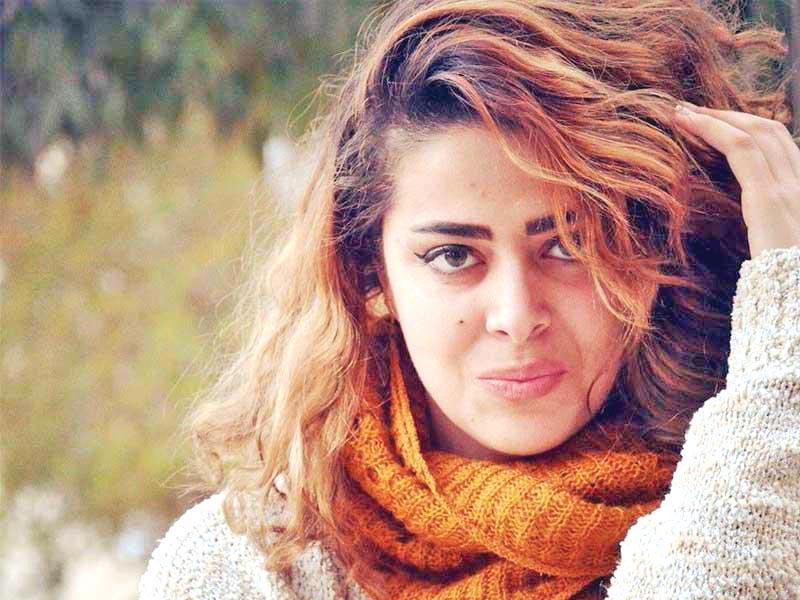
Marwa Al-Atrash is a Syrian actress, graduate, and lecturer at the Higher Institute of Dramatic Arts in Damascus, and the daughter of writer and actor Mamdouh Al-Atrash.
Born in the city of As-Suwayda, Marwa is the youngest daughter of writer and actor Mamdouh Al-Atrash and her mother, Muna Al-Abdullah, an employee at Syrian Arab Airlines. Her sister is media figure Muzna Al-Atrash, her cousin is actress Lilia Al-Atrash, and she is a granddaughter of the artists Farid Al-Atrash and Asmahan.
Career
She began her artistic career at the age of ten in the film "The Black Flour" with director Ghassan Shmeit, playing the role of an orphaned girl defending her classmates from a tyrannical traditional school teacher. She then appeared in director Ghassan Shmeit's film "The Identity," which focused on the occupied Syrian Golan; she portrayed a young girl who loved her maternal uncle more than her parents and served as a link between her uncle and his sweetheart, who later became his fiancée. Her first leading role came in the drama series "Night and Men" (2008), where she played a girl striving to keep her family from falling apart. Her most famous role, however, was playing "Flodia" in the series "Al-Khirba" (2011).
Singing
Gifted with a singing talent, she participated with the Nahawand musical ensemble and performed at the Damascus Opera House. She studied music at the Ornina Institute and the Al-Assad Youth Institute, specializing in percussion and solfège, and studied choral singing under Maestro Hussam El-Din Brimo.
Theatre
She starred in the play "Rituals of Signs and Transformations" directed by Fayez Qazaq, played the lead in "The Mirage Epic" directed by Ajaj Salim, and starred in "Bridges," an adaptation of Marousha Belalouta's play "Breaking Noses" directed by Tamer Al-Arbeed. Her theatre credits also include playing Lady Macbeth in Shakespeare's "Macbeth" directed by Bassam Kousa, Regan in "King Lear" directed by Ali Satouf, and "Repetition," adapted from Molière's "The Pretentious Ladies," directed by Bassam Kousa.