
Nawal Nasr wrote in the Lebanese newspaper Nidaa Al-Watan:1.
In an era of futile political wrangling and vapid Zajal in Lebanon, we almost forget that the country lived through a time of prosperity with a different kind of spoken Zajal that was the pride of the nation, recognized on the World Heritage list, and about which Gibran Khalil Gibran said: A bouquet of basil near a pile of firewood. Talih Hamdan, the Prince of Poets and poet of the two podiums, one of the greatest Zajal poets in Lebanon – one of the seven arts in Arabic literature – remains a witness to the beautiful days of Lebanon's many futile ones. We ask him about his favorite title, and he replies: Talih Hamdan. We ask him about the 'raddat' (responses), rhymes, 'Ataba', 'Dalouna', 'Mijana', 'Qarradi', about the tears of a word or poem, and about Zaghloul Al-Damour, Zein Shuaib, Jeries Al-Bustani, Edward Harb, Rashid Nakhleh, and the 'Nawbat' (lamentations), and he answers with a 'radda': I am the poet of spring, flowers, and the breeze, and no one made the world weep (in his lamentation poems) more than Talih. So what does the poet of the poem and the authentic Zajal man, Talih Hamdan, who has never regretted anything in his life except praising political Zajal poets, have to say?
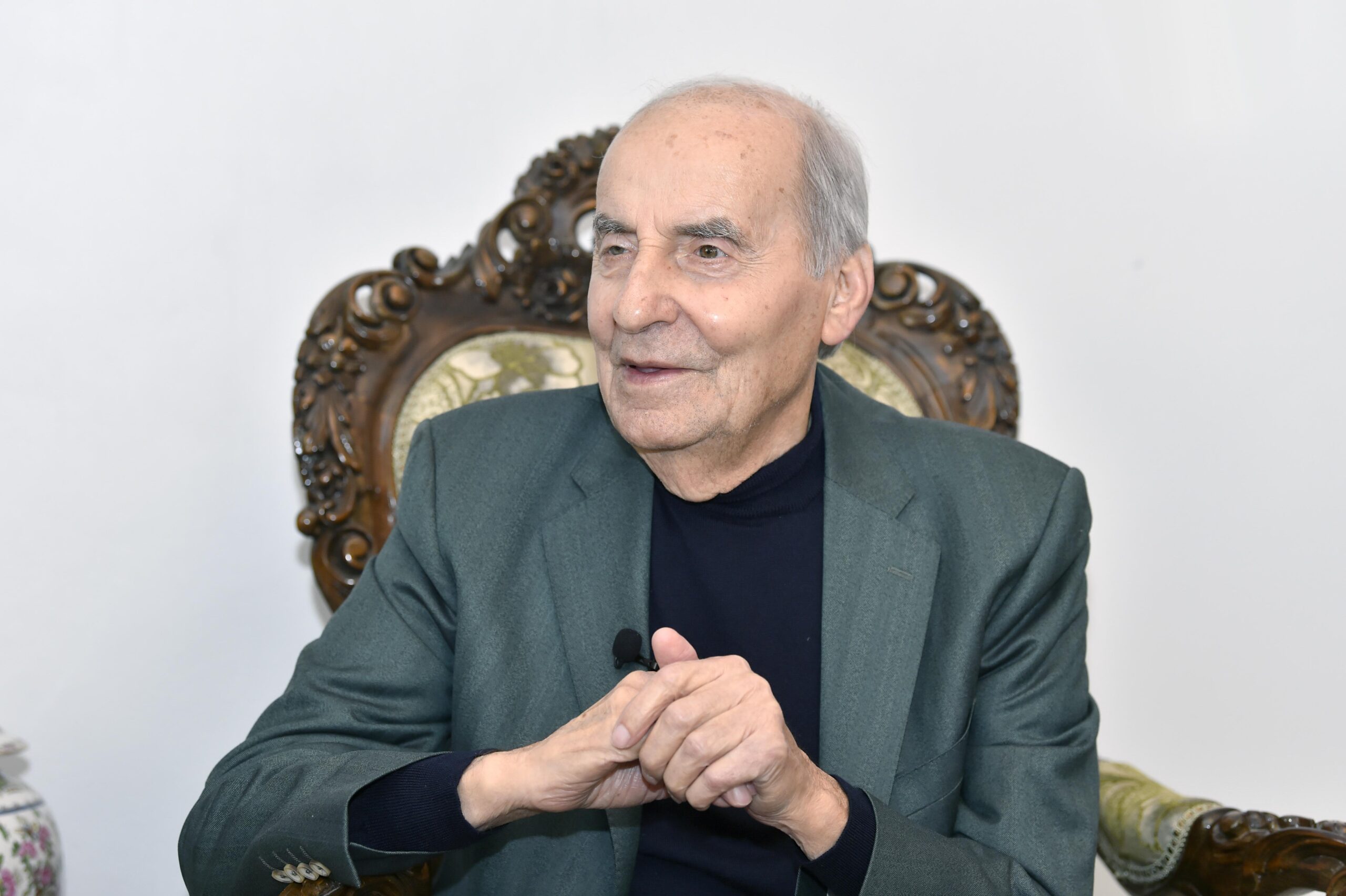
He lives in Ain Aanoub. In his living room, a large portrait of him hangs, fit for a prince. We say to him: Welcome, Prince, and he replies: May God protect you and you are very welcome. With elegant attire and choice words, he receives us. He insists repeatedly on saying: "I love everyone and don't like to upset anyone." We understand him, for he is a poet who rarely shows anger on the podium and is full of affection, kindness, and politeness. He recounts: "Our house was in the village. We were eleven children, six boys and five girls, and I was the fifth among the boys. I was born in 1944 (he is eighty years old). Lamentation was common in my day, but unfortunately, we have lost this tradition. My father was a farmer who participated in lamentation gatherings. He was present during the days of Zaghloul (Joseph Al-Hashim) and Zein Shuaib, but I was young. My father did not initially approve of me mixing with those older than me and used to say something about me that makes many laugh today (he laughs himself): This boy will either turn out to be crazy or a genius. There is no middle ground. Do you think I turned out to be one of the two? (he asks and laughs again)."
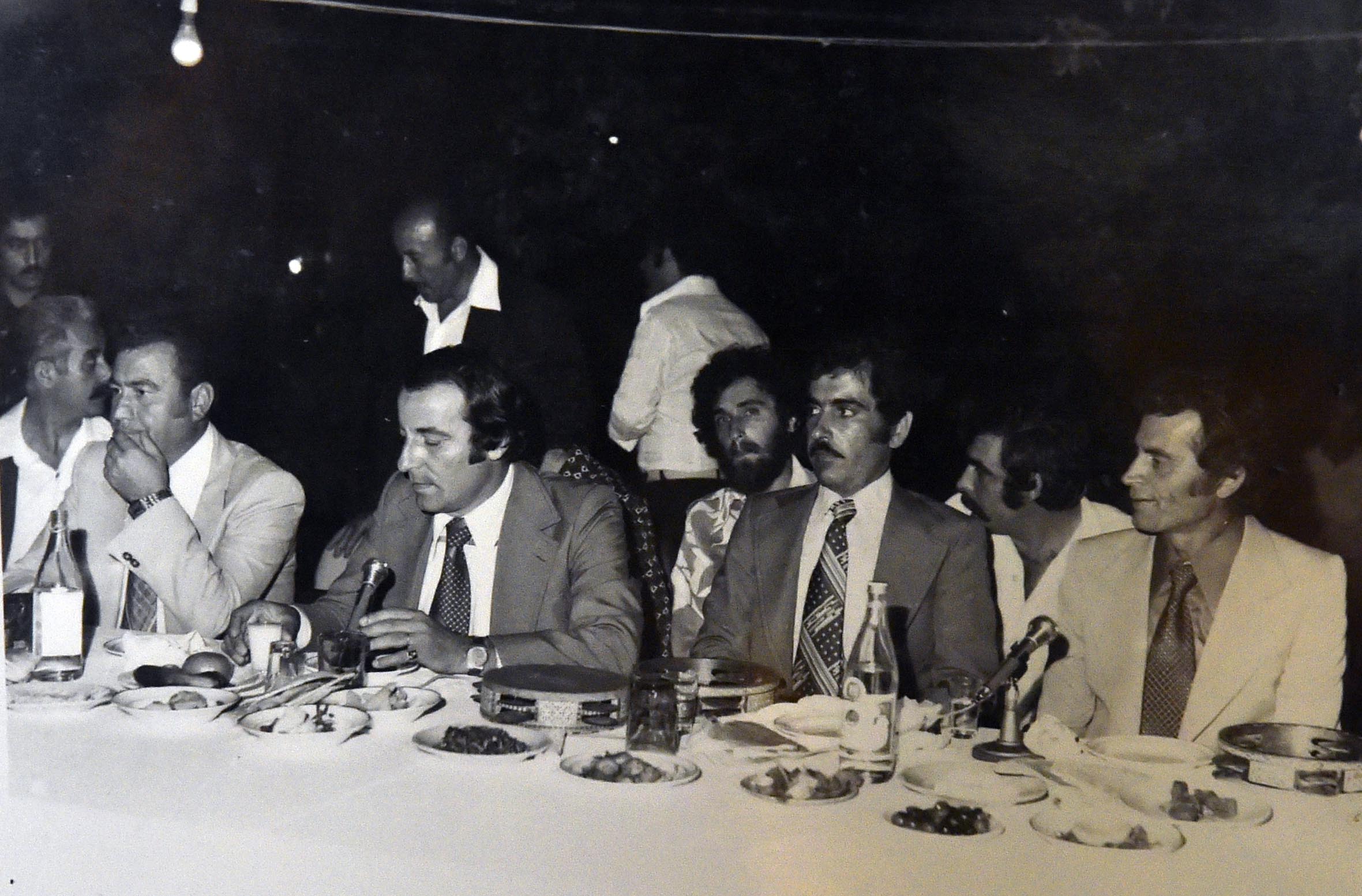
But why did his father say that about him? He replies: "He feared any mistake I might make among people," and continues: "One day Zein Shuaib visited us in Bshamoun, so I approached him and asked: Uncle Zein, would you allow me to say a 'radda' or two with you? He replied: Certainly, my heart, with pleasure. I accompanied him with 'raddat' that contained childish poetry. A delegation from Ain Aanoub arrived, including my father, who said to my older brother: Go get your brother Talih so he doesn't embarrass me in front of Zein." The man who later became my wife's uncle, Abu Hilal (Najib Eid), said to him: Let Talih say whatever he wants. May God bless those days. The 'Shahroura' (Asaad Al-Foghali) died, and they brought Emil Rizkallah. I used to walk to Ali Al-Hajj's house from Ain Aanoub to Qammatiyeh just to say a 'radda' to him, and he would repeat: Good, good, my son Talih. I remember I was a groom the day Zein asked me: When shall we have dinner at your house in Shamlan? They asked me to invite Ali Al-Hajj (Abu Hussein). I invited him. He said to me: My son Talih, I cannot say no to you, nor can I say yes. His son Hussein had just passed away. I told him: Join us and don't sing. He came to my small house, and during dinner, Al-Hajj said to me: Oh Talih, because I know you are a son and a friend/ Your heart is wide enough for whenever your home feels small/ It is no wonder if your guests are many/ Bees only hover over the nectar. I replied: Oh poet, whose soul is created from darkness/ Dwells in a sea of vintage wine/ If spring did not unite on your grey hair/ The lily would not have worn white clothes. He replied: When Hussein's absence made my tears flow/ And I threw the outfit of rhymes in the grave/ The burden of the podium slept with me/ Unless Talih puts his shoulder under it. I replied: Whatever the shock of death does to your psyche, your genius prayer beads are not scattered/ Your brow is, in my creed, the map of all Zajal/ I wish I were a pen stroke on that map. He said to me: As long as you are this way, I will take off my crown for you to wear. I told him: If I wear your crown, Uncle Abu Hussein/ There is no kingdom in this universe that can contain me. He replied: Don't play with Uncle Abu Hussein's mind/ And strip his thoughts with such an interesting sentence/ You equip it or wear it on both sides/ The earth, when it was created, became narrow." Talih ends with a comment: "Damn Abu Hussein, how beautiful he was. May God have mercy on him."
Are we to understand from this Zajal that Talih Hamdan continued the path of Abu Hussein? He answers: "I remember when I started singing and taking the stage with Zaghloul, Abu Hussein would tell me: Oh Talih, my dream for you is to become like this. Continue."
Zein and the Zaghloul
How did Talih Hamdan join Zaghloul's troupe (Talih is 19 years younger)? He says: "One time we were invited to a wedding in Aley, Zein and I. Zein was a poet of anger; he would improvise on stage even if ten poets were in front of him. That day, I improvised beautiful 'raddat' with him, so he said: Oh Talih, you will be part of our troupe. I told him: God will make it easy. And one day (Talih hesitates to speak but continues at our insistence), Zein and Asaad Saeed had a disagreement. That happens with everyone. I met with Zein and Zaghloul, and they said to me: Oh Talih, we came to ask you to join our troupe. Asaad Saeed and Jean Raad had left the troupe. And so, Edward Harb and I became with Zein and Zaghloul. I spent ten years with Zaghloul."
Zein Shuaib was quick to anger; did they not have disagreements? He replies: "True, his temper was present, but as much as he was angry on the podiums, a child lived in his heart. He loved me very much, and I loved him very, very much. In the end of his life, he lost his memory. He suffered strokes and survived them, but he lost his memory. He would ask me repeatedly: What is your name? And he would call me when he regained some of it, crying and saying: Oh Talih, you are the loyal one to Zein Shuaib. He told me once: I forgot myself. I forgot that I used to sing, oh Talih: Oh, what a pity for Abu Ali."
Talih Hamdan later founded the Spring Troupe. But how was his relationship with Zaghloul? He answers: "May God have mercy on you, oh Zaghloul Al-Damour. I lived with him for ten years. He was like a father to me. Beautiful morals and a gentle poet. We were two beautiful voices together. Oh my. Once, we were at a funeral in the Chouf, and they brought the Maten troupe, so we started saying 'raddat' together. Someone climbed the podium and said: You must bring Zaghloul and Talih to have a [real] troupe." He also lamented with Zaghloul, so what did he say? He puts his hand on his temple and remembers: "I said: Talih, who fell in love with flowers, has come/ To take poetry from them for his companion/ Like one who takes orange blossom water from flowers/ And returns to water the flowers with his saliva." Oh God, how beautiful what he said is.
How does a Zajal poet prepare to take the podium? Does he really improvise, or are his poems prepared – by agreement between two poets and two troupes – in advance? More than fifty years have passed since the appearance of the poet Talih Hamdan, and the poet is experienced like all others in what he presents. He says: "We would agree on a topic to sing about and take the podium, and how many parties were there where people asked for specific topics while we were on the podium, especially when Zein and I were together. He continues: When a poet becomes experienced in standing on the podium, improvisation becomes easy. Oh for those days. Oh. Improvisation has more spontaneity than writing and is more beautiful because it is the result of emotion."
Zein the Antithesis
The Zajal poet Talih loved his confrontation on the podium with Zein Shuaib the most: "When we sang together, the audience would rise from their chairs. Zein was excitement, and I was softness, beautiful images, and voice. Together, we formed two different types on the podium."
But what attracts the audience more, gentleness or anger and excitement? He replies: "I would counter Zein Shuaib's sword with a flower, and I would get my share of people's applause, and he would also get his share. I would counter him with flowers, the river, children, women, beauty, and spring." But you are also a politicized poet, so does gentleness fit with politics? He thinks as if performing self-criticism and says: "There was a time if we didn't sing about the atmosphere we live in, the audience would not accept our poetry." Was I forced then to keep up with the atmosphere? Did I regret it? He replies: "True, I never regretted anything in my life except singing for a politician. This is not my color. This is not Talih's color." But did no politician deserve Talih's singing? He replies: "I sang for Kamal Jumblatt and I am proud of that. And I sang for Walid (Jumblatt), may God prolong his life. I once told the leader: Your body is not the handful that came from the earth/ The earth came from your thought, a handful." Did he also sing for Camille Chamoun? He replies: "I sang, of course, for him; he is a genius," and continues: "We did not differentiate between a Christian and a non-Christian. A Christian woman used to wear a Druze headscarf. And my father told me that in the days of the Turks, Christians were persecuted, so the Druze would come and write on their house doors: Muslims. Turkey left, France came, and Christians began writing on the doors of the Druze: Christians."
How was the Prince of Poets' relationship with the King (Moussa Zgheib)?
He says: "The most beautiful match I sang was with Moussa. It had glory: Peace be upon you, oh night of epiphany/ You who wear a white shadow like my shadow/ In the darkness, your light companion began to descend/ As if the full moon were descending in an umbrella/ He heard a hill saying to him: Go ahead/ And a valley saying to him: Come for a visit/ Tie a belt around the waist that has been pampered/ And settle between a valley and a hill. We were singing in two troupes; I was in the Spring Troupe which I founded, and he was Abu Rabih in the Citadel Troupe." Does he see him? Do they talk about the beautiful days of Zajal? "I visited him a while ago, and he calls me. We, he, I, and Jeries Al-Bustani are the last poets of the second generation of Zajal, and when we meet, we talk about memories," and he continues: "Jeries, Abu Eid, I love him very much. He is a loyal friend who never betrayed a companion."
Did the civil and sectarian war divide the authentic Zajal poets? He replies: "We maintained sectarian diversity in our troupes. Zajal swam against the sectarian wave. And Zajal poetry did not vanish, but it is no longer what it was," he continues: "We were in Canada when the events of Damour happened. Zaghloul and I sang, and there was a tear in my eye and a tear in his. I told him that day: In Lebanon, there are shells going and shells coming, and you cannot carry my concern, nor can I carry yours. We cried together that day. Morals and love brought us together."
The Syndicate and Sectarianism
Since we are talking about sectarianism, what about the Zajal Poets Syndicate, which was founded more than 25 years ago? And why did Talih Hamdan refuse to become the head of the syndicate? He replies: "We met 25 years ago in Khalil Shahrour's restaurant, and they named, without elections, Khalil Shahrour as the head. We said to them 'Okay', Khalil Shahrour is the head, and he stayed in the syndicate for eleven years. After that, he said to me: Oh Talih, today is George Bou Antoun from Houmal's turn. He is our friend, our beloved, and a good person. Bou Antoun became the head and stayed in his position for fifteen years. George died, and Khalil died, and we wanted to elect Adel Khadaj, my brother, my friend, and my beloved, as head, but the young guys (he says names and wishes not to mention them) did not accept him and played a sectarian game. They played sectarianly in the Zajal Poets Syndicate. Can you imagine? Meanwhile (months ago), a young man named Najib Bayraq, who worked in the syndicate and is today an advisor to the Minister of Culture Abbas Mortada, called me and said: Abu Shadi (Talih's eldest son is named Shadi), the Minister wants to see you. I met him, and he said to me: You, Talih, are the ambassador of flowers to the state of poetry, and no one will solve the problem of the head except you. I answered him: Sir, 'this is not my job', I only want to sing on the podium."
Was there no other reason for his refusal? He answers: "No, everyone wants me. We met once at our brother Abu Rabih (Moussa Zgheib)'s house after everyone confirmed they wanted me to be head. We went and saw that they had chosen the members of the syndicate exactly as they wanted, while I looked like a mere picture. I withdrew. The poets, Christians, Muslims, and Druze, returned and asked me to do it." We understand from this that the matter is not sectarian; is it a conflict between Hamdan and Zgheib? He answers decisively: "No, in any case, Bassam Harb, who is the son of my companion Edward, came, so good health to his heart." We feel that he gently does not want to go into more details, so we respect his wish, but we return to ask him about the Minister of Culture: Does his position as Minister of Culture entitle him to determine who the head of the Zajal poets is? He replies: "The Minister sat here, where you are sitting, and said to me: Oh Talih, I came here to ask you to become the head. He wanted to be a do-gooder, he loves the syndicate, and his capacity is Minister of Culture."
Days ago, a statement was issued by the Zajal Poets Syndicate in Lebanon, signed by Bassam Harb, saying: We have noticed recently that some poets have adopted inappropriate or unrefined expressions or sexual hints and insinuations in their poetry... Is Zajal poetry in danger today? Has the time of the great Zajal poets who chose clean poems passed? He answers: "Even the insinuations didn't cross our minds.
Talih Hamdan did not continue his studies, he "got the certificate," but he is very, very proficient in Arabic and makes the rhymes rise in his singing. His wife Salwa listens to what he says. He dedicated a booklet to her of poems he crafted for her alone, but it was lost in the war. His daughters Sahar and Zeina just arrived. And he has two sons: Shadi and Khuzam. Everyone loves poetry, but none of them recites it on a podium. One heart gathers the family members, and the pulse in it is the prince of the house, Talih Hamdan, the gentle poet.
Said Akl and Talih
What about Abu Shadi and Said Akl, who, when asked about him, said: I don't know him? He laughs a lot at this question and says: "Said Akl was asked about me twice. The first time, they asked him about the first poet, and he said: Talih Hamdan. They asked him: And who is the second poet? He replied: Talih Hamdan. And who is the third poet? He replied: Talih Hamdan... And after a while, he was asked again about his opinion of Talih Hamdan, and he said: I don't know him." Talih Hamdan continues by saying: "There are those who got angry with him, so he retracted." Did you call him? He answers: "I composed a poem for him in which I told him: You haven't heard of my name, the great one, whom the world witnessed more than it witnessed you/ And when the birds hear your poetry/ They become as dry as you."
Among the friends of the poet Talih is his companion, the poet Edward Harb: "I recited a poem for him on the day of unveiling a statue of him: I visited the river in the most beautiful month/ I found it praying the prayer for you/ It said to me: I am the river, my cross is flowers/ If the dew nails a nail in my cross/ The river is turning on the land of oppression/ And above the stones is a teacher/ I said the difference between us, oh river/ You marked the stones of Lebanon/ Edward Harb is a teacher in my heart."
The Melodious Voice
The Prince of Poetry rests with a sentimental poem he recited with great feeling. We listen to him as he colors the letters, defines the rhymes, and draws the images. He is the owner of a very beautiful, gentle voice who knew the secret of improvisation on the podium and insisted on enshrining peace in his heart, on his face, and in his performance. He is the last of three Zajal poets, from a golden generation, who are still pulsing.
What about his voice? How did he preserve it for all these decades? He answers: "I smoked a lot in my beginnings, but the doctor gave me two possibilities, no third: either your voice or the cigarette. I quit it, by God Almighty, miraculously. My voice is my life, and my life is my voice." And he told us that he used to hold between 35 to 40 parties annually.
What about the Prince of Zajal, Rashid Nakhleh? Did he influence him? He says: "Oh, for Rashid, oh my. He was wealth, beauty, a poet, and leadership. Everything is gone, and the poet in him remained." He continues: "In the last days of Rashid, they amputated his foot due to diabetes, and he loved a young girl who visited him. He was at the 'end of his life,' so she said to him: Oh Rashid, is this how you became? He answered her: Oh for my wound, and a thousand ohs for your wound/ And see the difference between your oh and my oh."
Talih Hamdan was known for his strong presence in lamentation ceremonies, "Lamentation is a poetic color in itself. Many became famous for it, from Zaghloul to Moussa Zgheib to Hanna Moussa, but no one made the world cry more than me." Does the impact of lamentation ceremonies remain the same for him as the days pass, or does it become a profession? He replies: "He who possesses emotion does not change," and says a paragraph from a lamentation poem for a child he said at the passing of his wife's father, who was pregnant: "Your flowers that are still in their buds/ On Nadine's crying, you are shaping/ A child cooing in his mother's lap/ And a child who is not yet cooing."
Did Zajal poets in Lebanon live a "dignified life"? Does Zajal provide bread? Talih says: "We all lived from it, I, Zaghloul, Moussa, Jeries, and Zein. We did not do other work and lived a dignified and beautiful life."
Diwans
He has six poetry collections: "Rose Buds," "Perfume Streams," "Night and Moon," "My Life is a Poem," "Wait for Me, I am Coming," and "Talih Hamdan's Opening Lines." And there are many, many poems he said that he did not collect in a book, so they were lost. And he is still writing daily: "I wake up at four in the morning. I drink Mate and write." He does not read and says: "If I read, I would not have become a poet. Intellectuals steal others' ideas from books and put them into rhymes, while creativity is a 'divine thing'." Were his ideas and poems stolen? He is peaceful, bites on the wound, but he does not deny that it happened and says: I wrote "The Night of Your Farewell," which George Wassouf sang and Najwa Karam sang. It was not written that it is one of Talih Hamdan's poems. And there is a poem I said in Kuwait that Wael Kfoury sang and later apologized. Wissam Al-Amir performed "Oh my love, wake up, what is making you sleep," and put it in his name, and it is one of my poems. We reproached him, and he called and apologized.
And what next? What is the favorite title in your heart from the titles given to you: Poet of the Two Podiums? Prince of Poets? He answers: "I don't like them, I don't like them. I competed with Jeries Al-Bustani, and I said: With my respect for Moussa's poetry and Zein's poetry/ And Zaghloul's poetry, the one whose name is high/ Days will come upon both parties/ And you will want to see me as the Prince of the Two Podiums. I said that, so I was nicknamed the Prince of the Two Podiums. But, the most beloved to my heart: Talih."
We bid farewell to Talih with a wonderful voice in our ears, a great feeling in our hearts, and in the rhymes, the secret of an irreplaceable poet.