
Mohamed Hejiri writes in “Al-Modon” newspaper: 1.
The Lebanese media figure, critic, and film activist based in Paris, Walid Chamit (82), has passed away. His wife, the poet Rafif Fattouh, mourned him on her Facebook account: “Goodbye, my heart's beloved, my life, and all my memories. Life has an expiration date, but love does not end, does not die, and does not go far. How can he who dwells in the heart die? How ugly is death, how difficult is parting, goodbye Walid.” His friend Kamal Tarabieh wrote, “How you saddened me with your departure, Walid... my companion for life on the path of searching for a stolen homeland and absent justice. You crowned your cultural career by revising and publishing the book 'Palestine in Cinema,' and you were a pioneer and master of film criticism. Our paths intertwined when you were my boss at the Arab Press Club in Paris, and then we were enthusiastic about the October 17 revolution and founded, with a group of comrades, the Lebanese Gathering in France to restore the state and achieve justice. Less than two weeks ago, we talked at length about Gaza, which is being slaughtered under the eyes of the civilized world!”
Walid Chamit, a native of Aley, was haunted by cinema. He was one of the pioneers of film criticism in the Arab world and one of those who contributed to defining and fostering a love for the art of cinema for readers first, and then for viewers on small screens through his television program in Lebanon, not to mention his work at Radio Orient in Paris in the “The Bulletin Continues” segment. He was known for his theories on alternative and engaged cinema against consumerism, and he published precise, and sometimes selective, writings on the cinema of the Egyptian director Youssef Chahine and the history of Palestinian, Lebanese, and Arab cinema. In his media interviews regarding his relationship with cinema, he mentioned that he was an expatriate in Brazil, where he discovered cinema, and he was also given the opportunity to work in one of the theaters in São Paulo. When he returned to Lebanon, he found himself a critic and filmmaker, and some of his filmmaker friends chose him to be an actor in films such as “Progressive Master” by Nabil El-Maleh, “The Fashion Model” by the Tunisian Sadok Ben Aïcha, and “The Head” by the Iraqi Faisal Al-Yassiri.
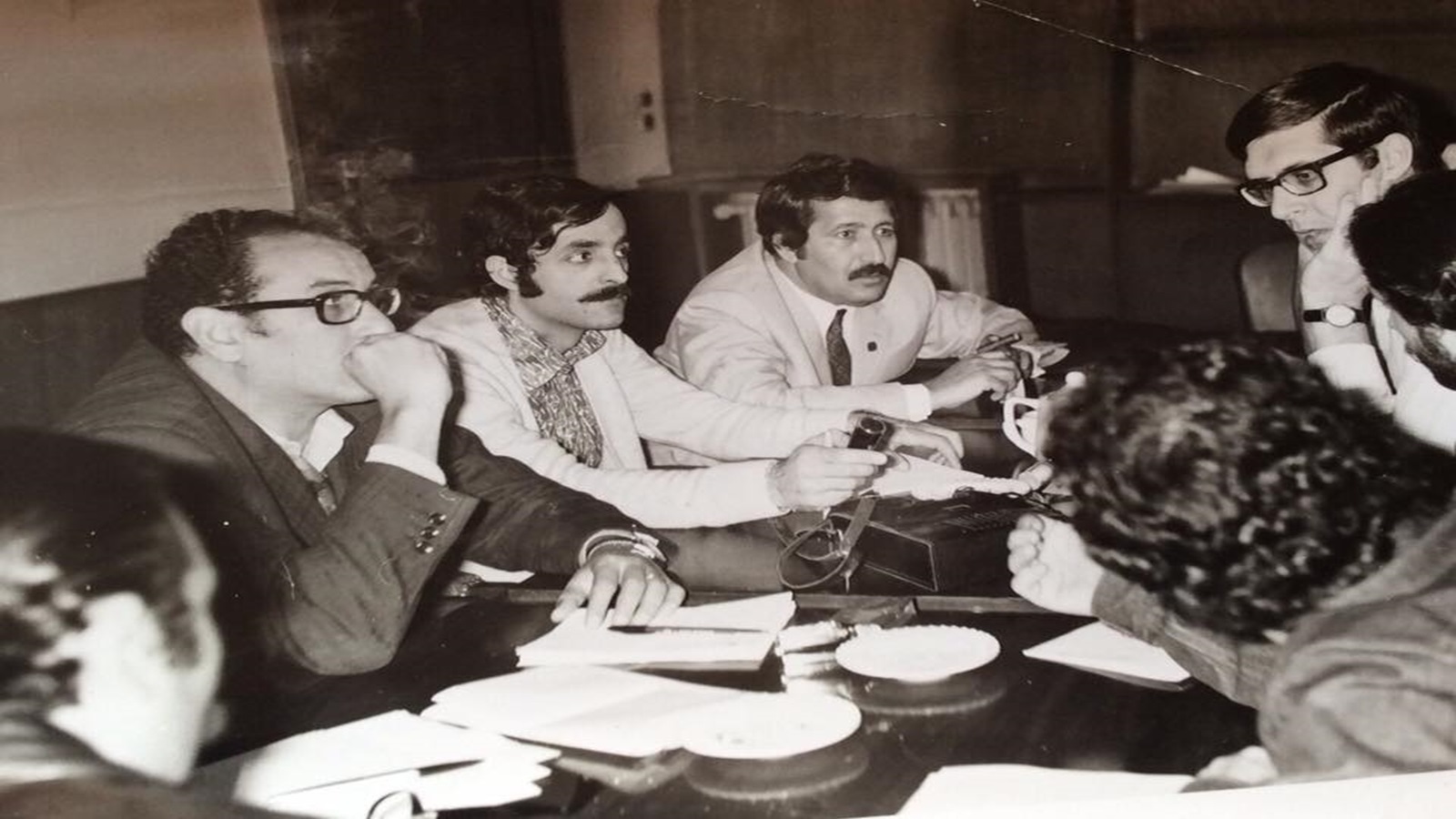
Walid Chamit worked as an assistant director and production manager on quite a few Lebanese, Arab, and foreign films between the late sixties and late seventies. On “Télé Liban,” he presented the programs “History of Cinema in Lebanon” and “History of Cinema in Egypt,” which allowed him to conduct interviews with a large number of Lebanese and Egyptian filmmakers alike, who were among the greats who founded cinema in Lebanon and Egypt, including Maroun Bagdadi, Salah Abu Seif, and Borhane Alaouié. He was able to produce documentary films during the war. He was also a film activist, and in 1974, he founded the “Arab Film Club” with a group of critics, writers, and those interested in cinema. It became a landmark of the city between Corniche El Mazraa and Hamra, and was a prominent stop for interest in quality films and “alternative cinema.” He hosted director Pier Paolo Pasolini on the occasion of the screening of his film “Pigsty.” The playwright Fayek Hmeisi says: “Walid Chamit used to come to Tripoli and moderate the seminar of the Theater Club, which was launched by Emile Chahine in the seventies of the last century at the Scheherazade Cinema. From him, we learned the principles of cinema and the components of industrial and artistic cinema. Then I discovered that he was educating all Lebanese and Arabs through his critical writings on Lebanese, Arab, and international films.”
Walid Chamit wrote a book about the director Youssef Chahine titled “Youssef Chahine and a Life for Cinema” (Riad El-Rayyes Books). In an interview with “An-Nahar” newspaper, he said: “I was keen to highlight the personality of Youssef Chahine the human being through his films, because he is one of the few Arab and international filmmakers whose films are impossible to separate from their personalities. He is himself, he and his films; his cinema speaks of his obsessions and his world, and I was keen to show this aspect in the book, just as I was keen to address the topics that occupied Youssef Chahine and focus on them and remind the reader of the repetition of those topics in his films in order to provide a general idea about Youssef Chahine as a human being, a creative filmmaker, and an intellectual.” There is a critique that the book was not comprehensive.
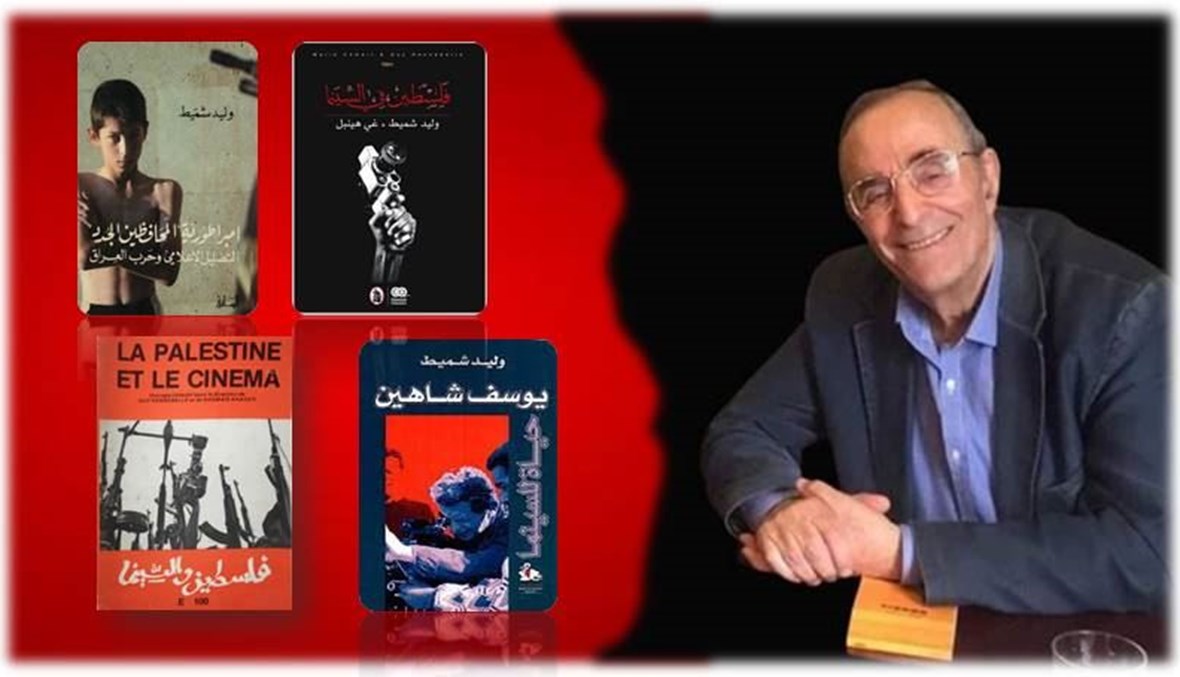
He also has the book “Palestine in Cinema,” which is a translation of most of the content of another book published in French in early 1977 by E 100 Publishing in Paris, titled “La Palestine et le Cinéma” (Palestine and Cinema), as a collective work supervised by the French critic Guy Hennebelle and the Tunisian critic Khémais Khayati. Walid Chamit translated most of the book, added material to it, including articles and interviews, and published it the following year in Arabic through “Al-Fajr” publishing house.
Among his other publications is “The Construction Man in a Time of Demolition,” which Walid Chamit prepared about the Lebanese figure Raja Saab (1927-1988), in cooperation with the “Al-Iktissad Wal-Aamal Group,” covering his biography, achievements, and the role he played. He also wrote “The Neoconservative Empire... Media Misinformation and the Iraq War” (Dar Al Saqi). He was keen to collect the largest possible number of scientific references that supported his ideas and his view of current events with their evils and dangers, and he also relied on valuable books in political and sociological thought. The book deals with the policy of misinformation in the war against Iraq and reviews the tools and methods used to justify this war.
In recent times, he had been preparing a book about the project of the filmmaker Borhane Alaouié, both cinematic and human.