
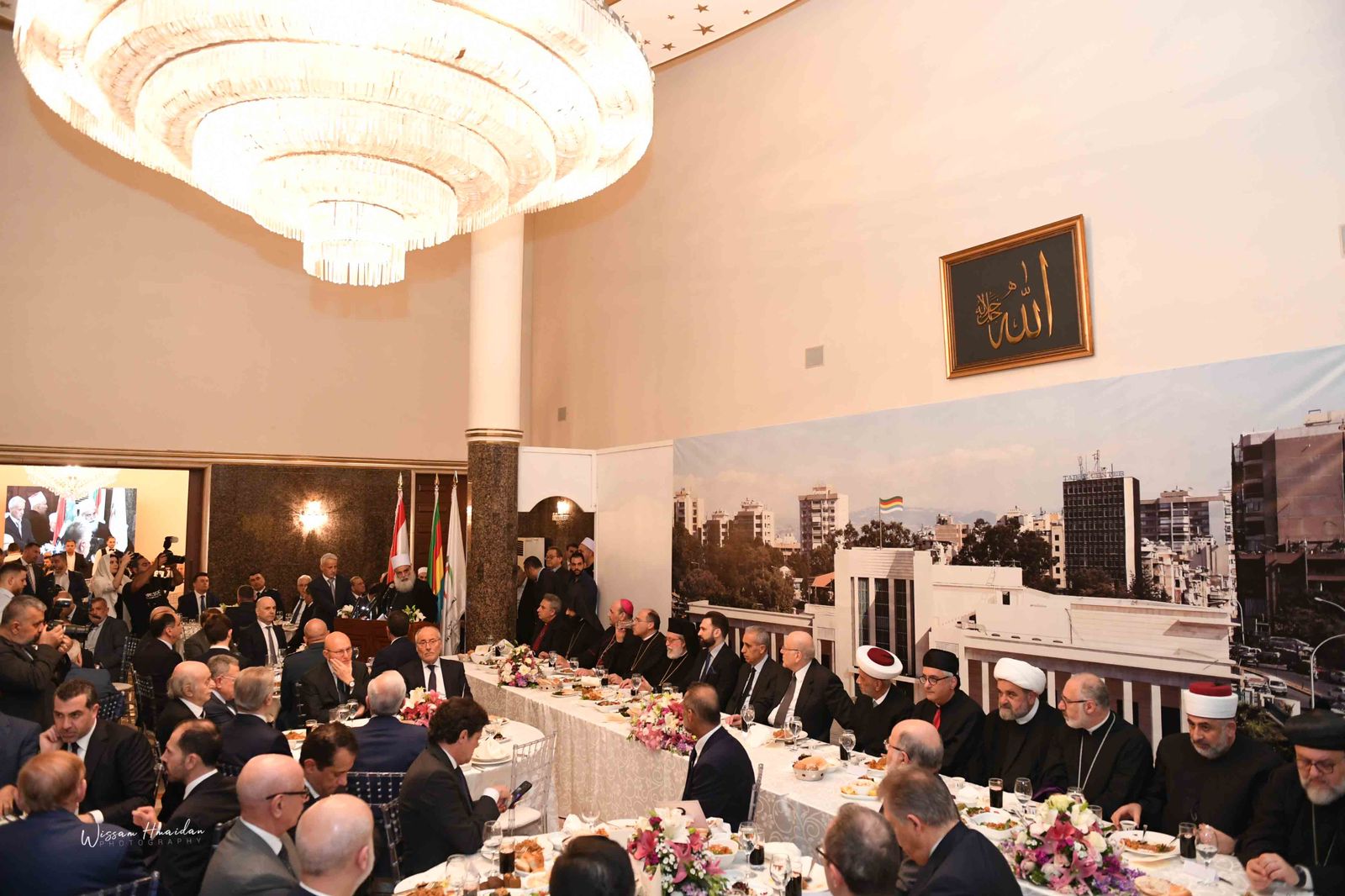
His Eminence the Sheikh Akl of the Unitarian Druze Community, Sheikh Dr. Sami Abi Al-Muna, warned against the danger of any national group seeking to exert power over another, regardless of the motives or justifications. He emphasized the necessity of an internal unity fortified by a strong army and a cohesive popular will, which together form a deterrent against anyone attempting to violate the entity, without dragging the homeland into uncalculated adventures, internal disputes, and crises it cannot endure. He demanded respect for the Constitution, the acceleration of election and appointment processes in accordance with constitutional principles, and the highest possible level of understanding and consensus, in order to preserve the state from fatal disintegration and protect institutions from paralysis. He expressed hope for the full implementation of the Taif Agreement and the establishment of the Senate to carry out its constitutional duties.
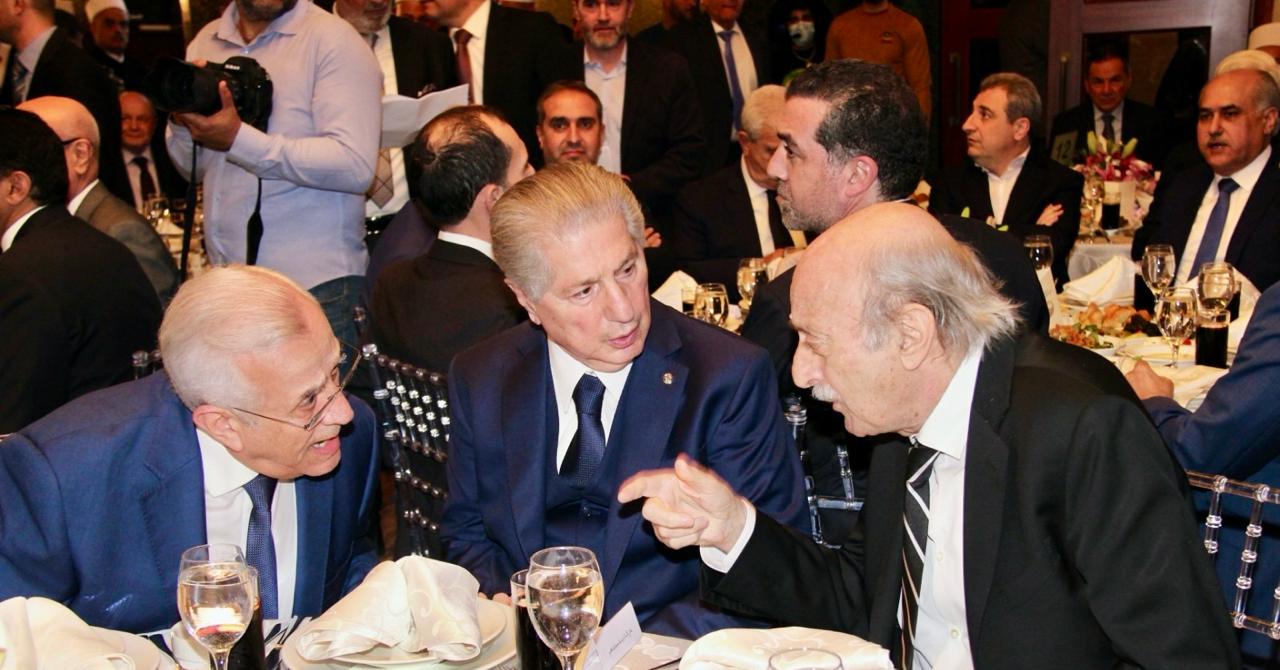
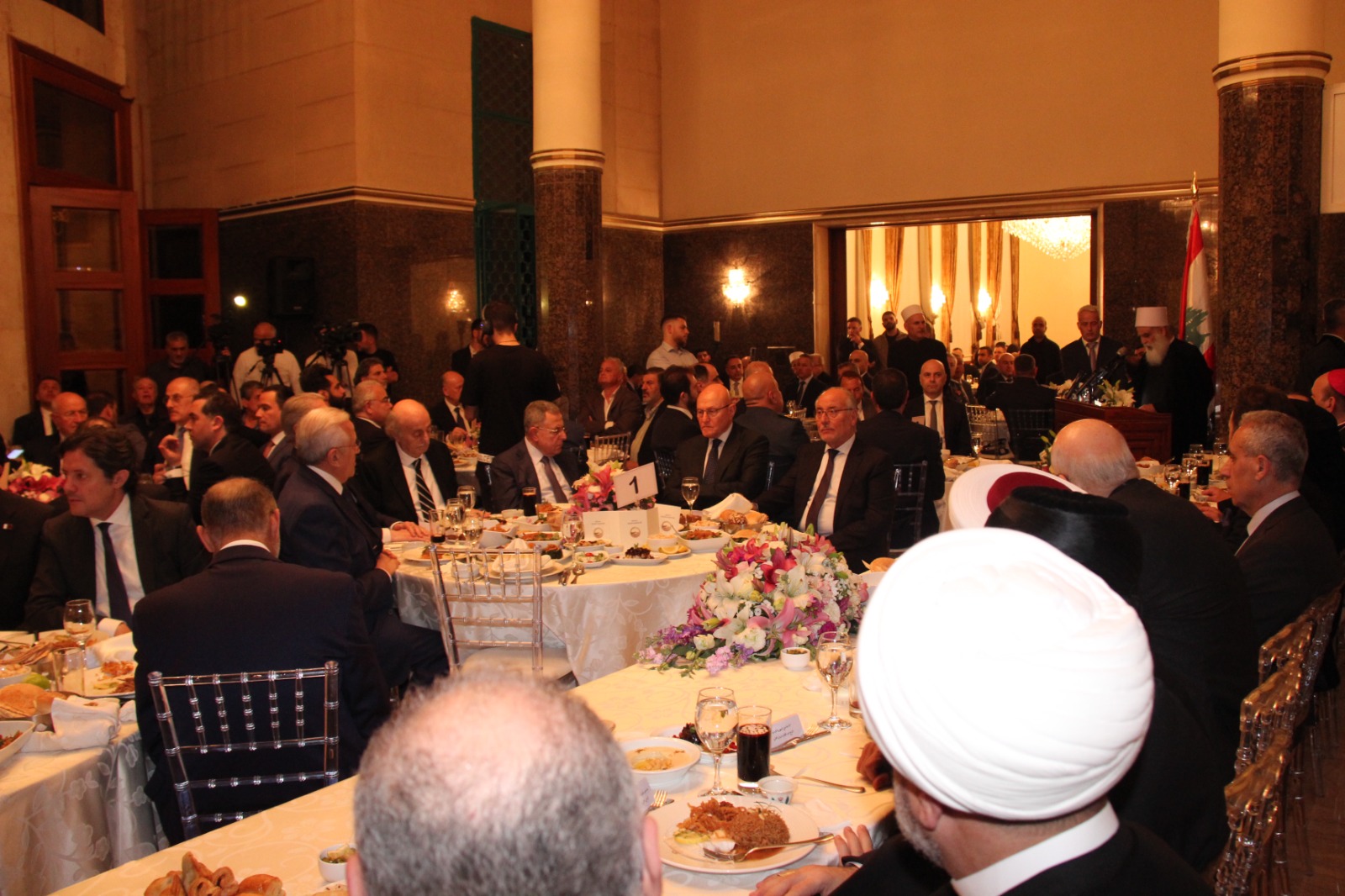
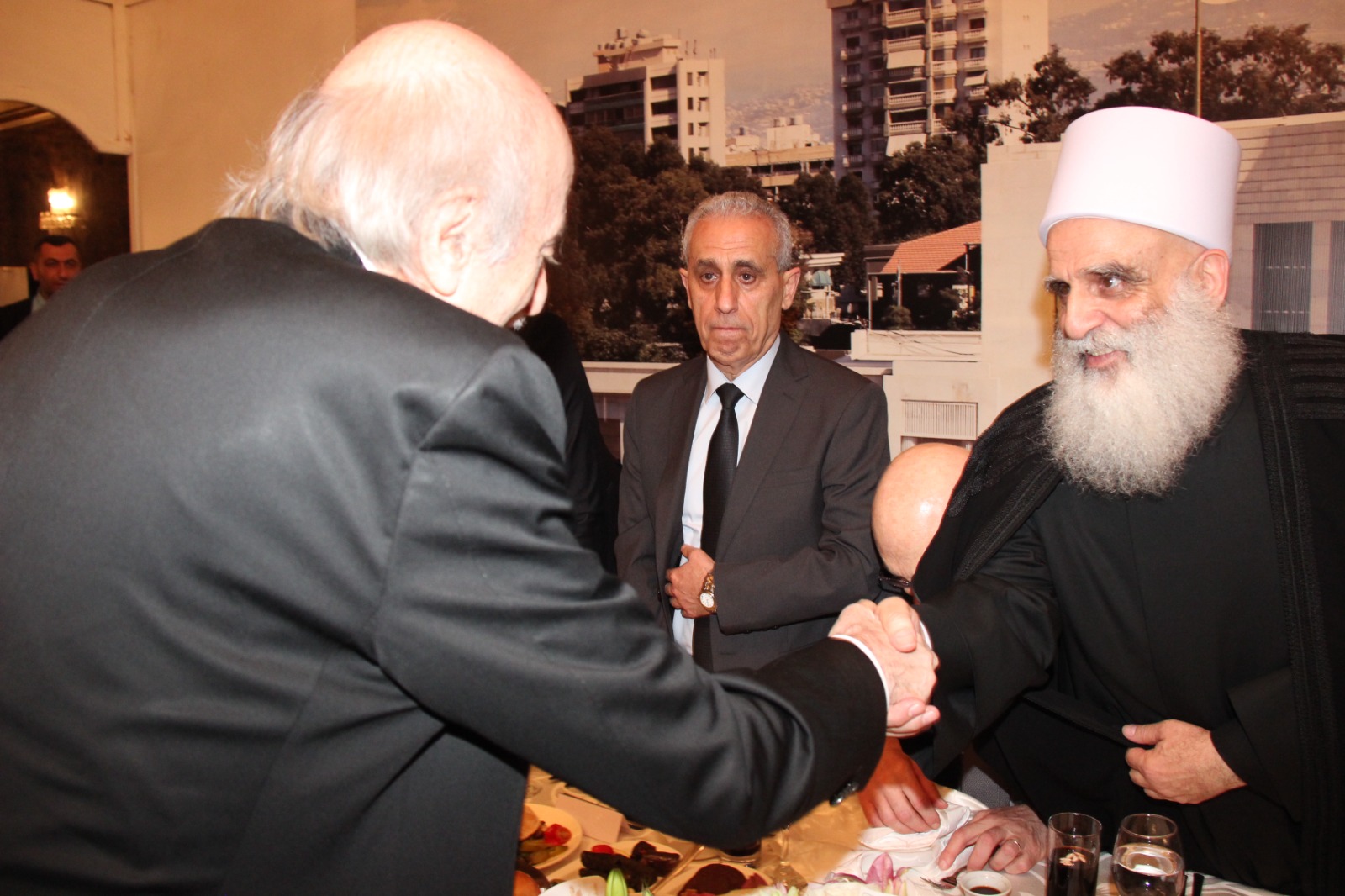
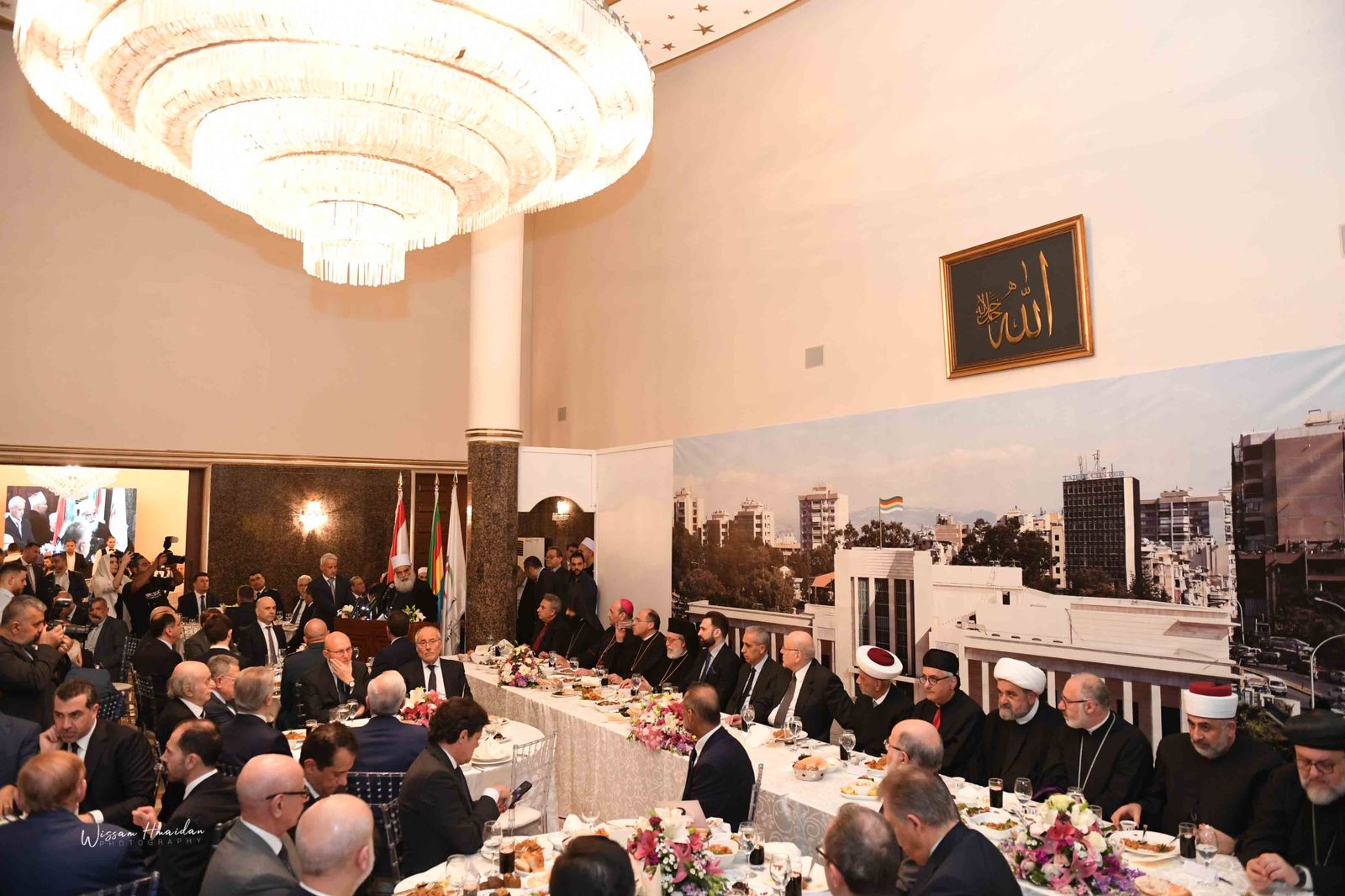
The positions of His Eminence the Sheikh Akl were expressed during his speech at the official and spiritual collective Iftar, held at the Druze Community House in Beirut, upon the invitation of the Mashyakhat al-Aql and the Druze Council yesterday evening, Wednesday. The event was attended by Prime Minister Najib Mikati, Speaker of Parliament Nabih Berri (represented by MP Mohammad Khawaja), former Presidents Michel Suleiman, Sheikh Amine Gemayel, Tammam Salam, Fouad Siniora, and Walid Jumblatt.
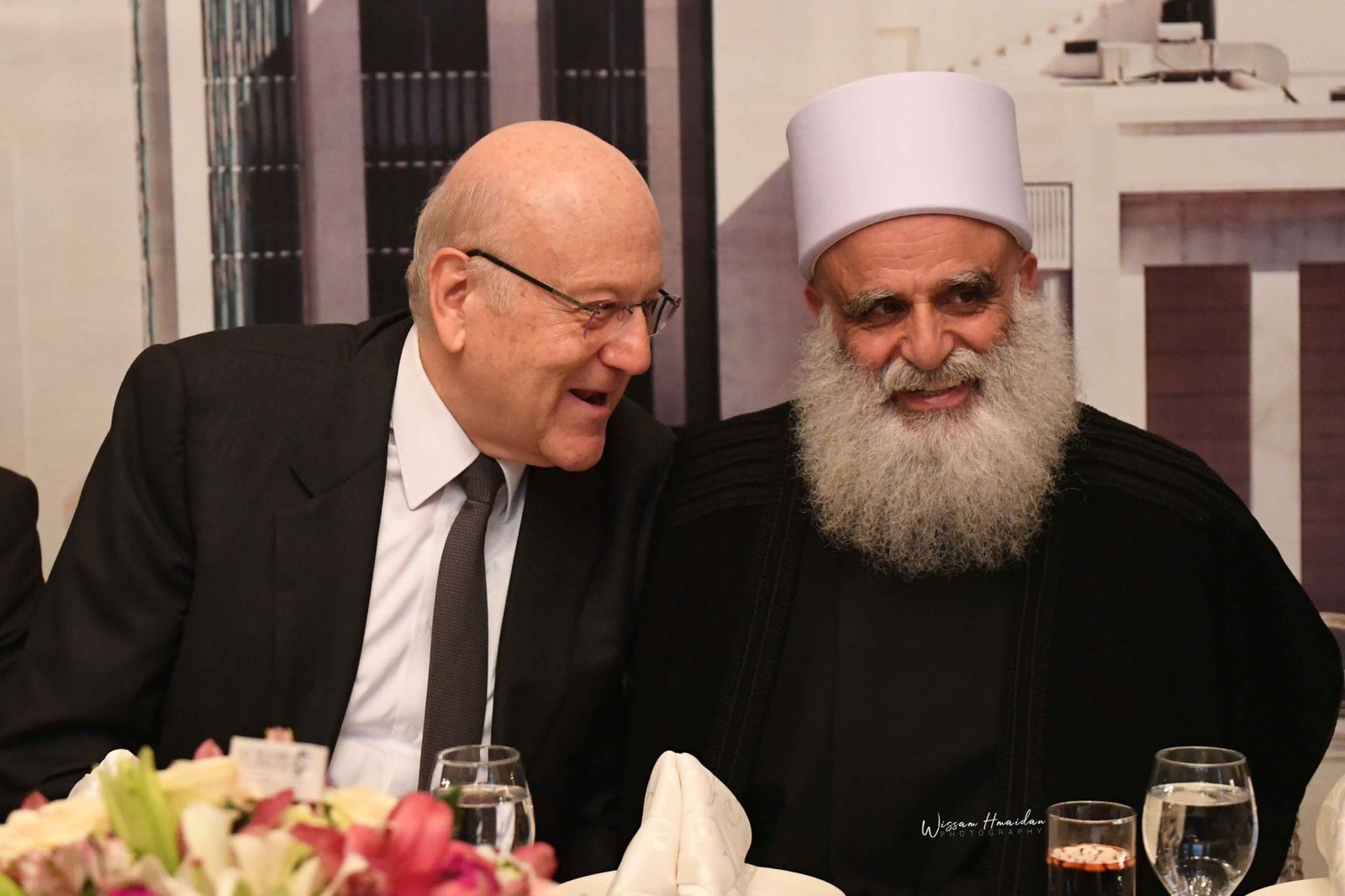
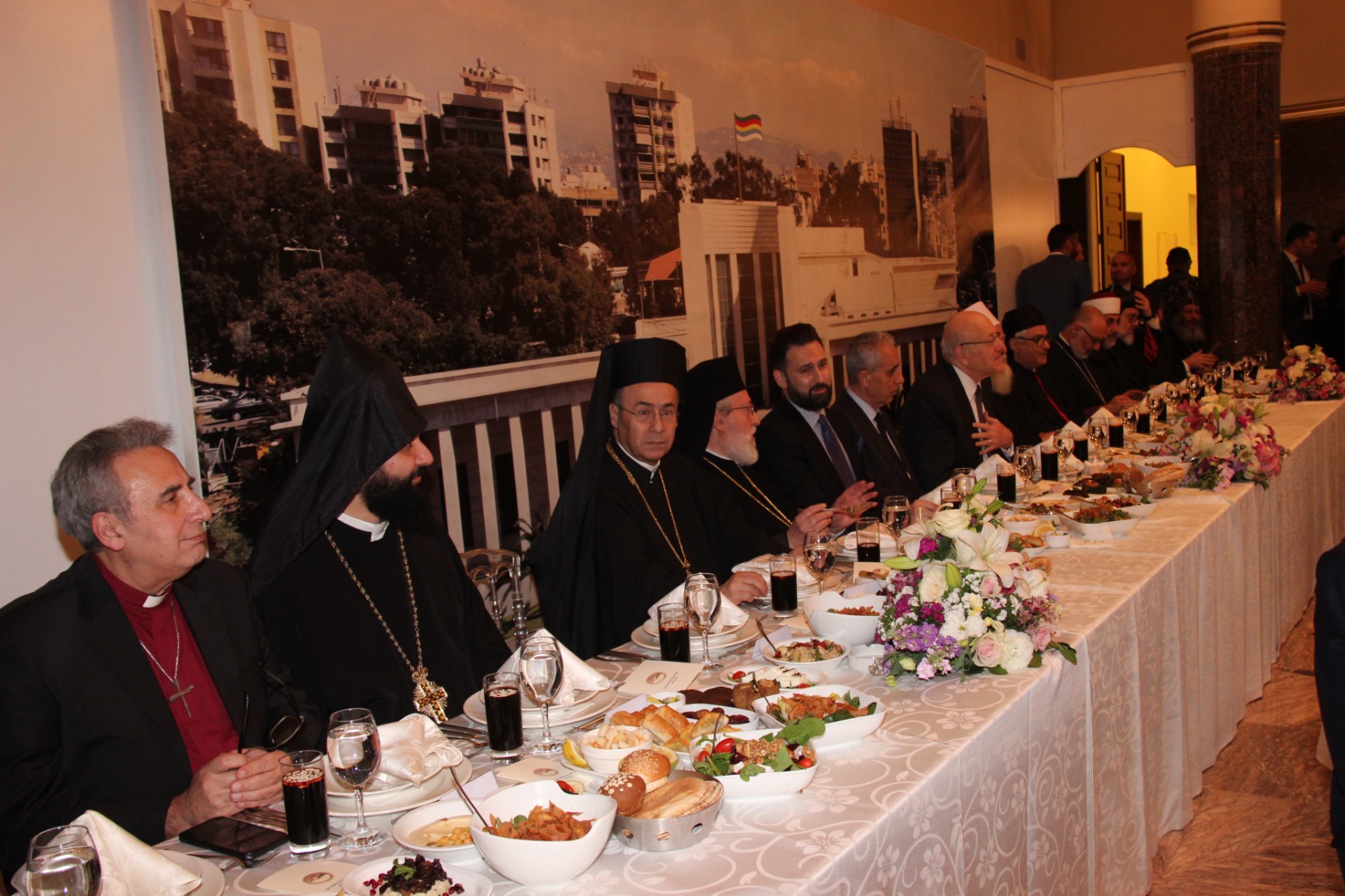
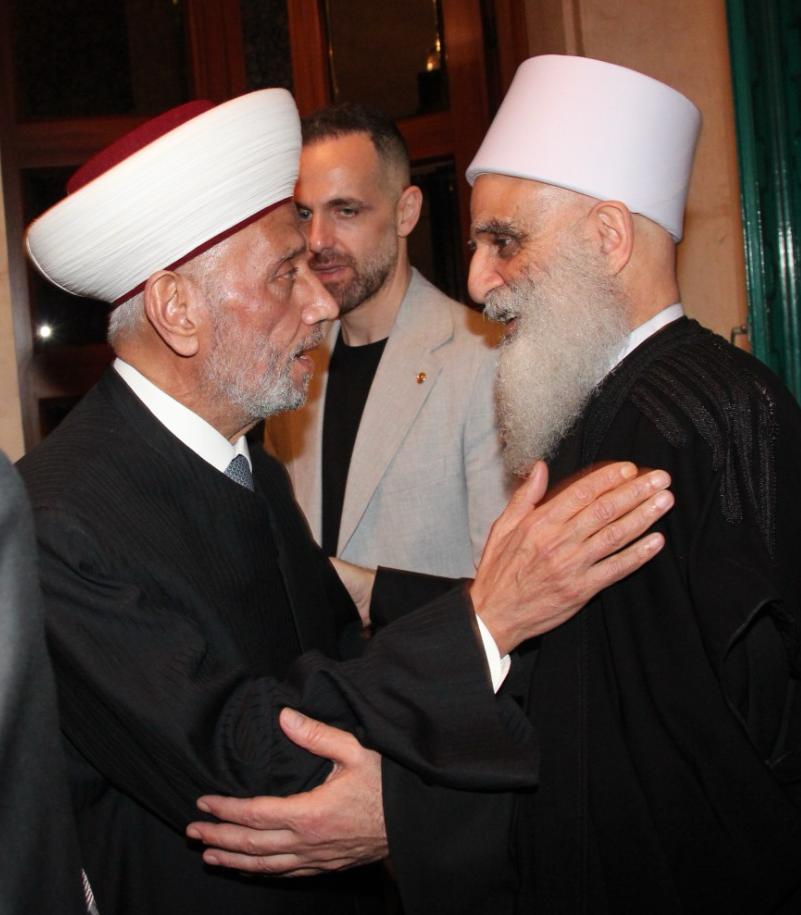
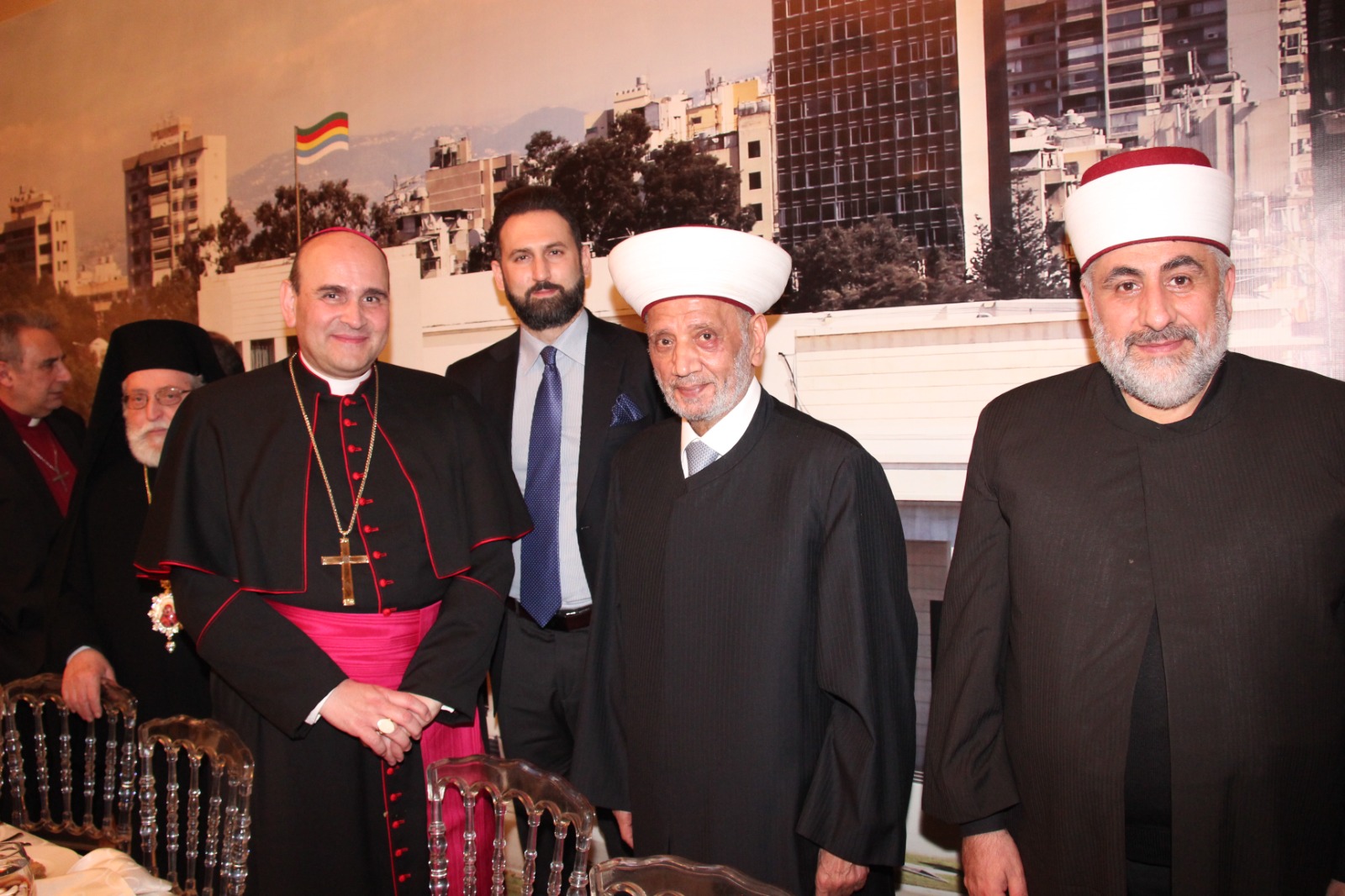
Participants also included the Grand Mufti of the Lebanese Republic, Sheikh Abdellatif Derian; the head of the Progressive Socialist Party and the Democratic Gathering, MP Taymour Jumblatt; and representatives of the Maronite Patriarch Cardinal Bechara Boutros al-Rahi (Bishop Boulos Abdel Sater), the Vice President of the Supreme Islamic Shiite Council (Mufti Hassan Abdullah), the Greek Melkite Catholic Patriarch Youssef Absi (Bishop Elie Bechara Haddad), and the Greek Orthodox Patriarch John X (Bishop Elias Kfoury). Also participating were the head of the Alawite Islamic Council, Sheikh Ali Mahmoud Kaddour; the head of the Supreme Council of the Evangelical Community in Syria and Lebanon, Reverend Joseph Kassab; the head of the Coptic Orthodox Church in Lebanon and Syria, Father Andraos al-Antony; the Papal Nuncio, Monsignor Paolo Borgia; in addition to representatives of the Armenian Catholic Patriarch, Catholicos Raphael Bedros XXI Minassian (Monsignor Narek Namo); the Syriac Orthodox Patriarch, Mar Ignatius Aphrem II (Metropolitan Mar Clemis Daniel Kourieh); the Armenian Orthodox Patriarch of the Great House of Cilicia, Catholicos Aram I Keshishian (Father Sarkis Ibrahimian); and the head of the Chaldean community in Lebanon, Bishop Michel Kassarji, and Monsignor Raphael Traboulsi.
The Army Commander, General Joseph Aoun, was represented by Chief of Staff Brigadier General Hassan Aoude; the head of the Future Movement, Saad Hariri, was represented by Advisor Ali Janani; the head of the Lebanese Forces party, Samir Geagea, was represented by MP Ghassan Hasbani; the head of the Lebanese Democratic Party, Prince Talal Arslan, was represented by Minister Issam Sharafeddine; the head of the Marada Movement, Suleiman Frangieh, was represented by Minister Youssef Saade; the head of the Kataeb Party, Samy Gemayel, was represented by Suhail Hamdan; the head of the Arab Tawhid Party, former Minister Wiam Wahhab, was represented by Dr. Hisham al-Aawar; and the head of the National Liberal Party, MP Camille Chamoun, was represented by Fadi Maalouf. Ministers Bassam Mawlawi (Interior), Youssef Khalil (Finance), Amin Salam (Economy and Trade), Ziad Makary (Information), Abbas Halabi (Education) were present, along with a representative for the Minister of Culture, Judge Wissam Mortada. MPs included: Farid al-Boustani, Major General Ashraf Rifi, Fouad Makhzoumi, Ahmad al-Khair, Ghassan Skaff, Akram Chehayeb, Bilal Abdallah, Nazih Matta, Marc Daou, Hadi Aboul Hosn, Razi El Hajj, Faisal al-Sayegh, Wael Abou Faour, Firas Hamdan, Elias Jarade, and Michel Moawad (represented by Lawyer Romanos).
A number of ambassadors to Lebanon also participated: Sheikh Saud bin Abdulrahman bin Faisal Thani Al Thani (Qatar), Ashraf Dabbour (Palestine), Ahmed bin Mohammed Al-Saidi (Oman), M'Hammed Grine (Morocco), Saudi Arabia (represented by Rajeh al-Otaibi), the Islamic Republic of Iran (represented by Tawfiq Samadi), Kuwait (represented by Deputy Abdullah Suleiman al-Shaheen), Tunisia (represented by Minister Plenipotentiary Mustafa Askari), Algeria (represented by Minister Plenipotentiary Mohammed Ben Sheikh), Turkey (Ali Baris Ulusoy, represented by his deputy), and Ambassador Hadi Jaber, in addition to several consuls and diplomatic figures.
The Iftar was attended by former ministers and MPs: Naji al-Boustani, Ibrahim Shamseddine, Ghazi Aridi, Ayman Choucair, Youssef Salameh, Mohammad Rahal, and Adel Hamieh. Also present were the General Secretary of the Progressive Socialist Party Dhafer Nasser, the party's Media Commissioner Saleh Hudaifa, the Second Vice-Governor of the Central Bank Bashir Yakzan, the head of the General Labor Confederation Bechara Asmar, the head of the Judicial Police Colonel Ziad Kaidbey, and representatives of the General Director of the Internal Security Forces (Brigadier General Moussa Karnib), the General Director of General Security (Brigadier General Najm al-Ahmadieh), the General Director of State Security (Brigadier General Arij Qardab), and the Director of Intelligence (Colonel Tony Hanna). Also attending were the Director General of Customs Raymond Khoury, the Director General of Civil Defense Brigadier General Raymond Khattar, the Secretary-General of the Council of Ministers Judge Mahmoud Makie, the Director General of the Cooperative of State Employees Dr. Yahya Khamis, the Director General of the Ministry of the Displaced Ahmad Mahmoud, the Government Commissioner to the Council for Development and Reconstruction Ziad Nasr, the General Financial Inspector Wael Khodaj, and a representative for the President of the Lebanese University, Dean of the Faculty of Fine Arts Dr. Hisham Zeineddine. Members of the Constitutional Council, Judge Riad Abou Ghaida and Supreme Judicial Council member Judge Afif al-Hakim, were also present. Other participants included the religious scholar Sayyed Ali Fadlallah; the Mufti of Hasbaya, Sheikh Hassan Dalla; the Superior General of the Maronite Mariamite Order, Abbot Edmond Rizk; the Secretary-General of the Middle East Council of Churches, Dr. Michel Abs; the head of the Episcopal Committee for Christian-Muslim Dialogue, Archbishop Mar Matthias Charles Mrad; the head of the Catholic Information Center, Father Abdo Abou Kasm; the head of Caritas Lebanon, Father Michel Abboud; the heads of high religious courts: Sunni (Sheikh Mohammad Assaf), Jaafari (Sheikh Mohammad Kanaan), and Druze (Faisal Nassereddine); the Director General of the Islamic Orphanage Bashar Qoutli, in addition to several religious judges; the head of the Board of Trustees of the Druze Orphanage Anwar al-Nakadi; the Makassed Islamic Charitable Association in Beirut (represented by Dr. Mohammad al-Sammak); the head of the Al-Irfan Foundation, Sheikh Nazih Rafeh; the head of Ishraq Schools, Dr. Sheikh Wajdi al-Jurdi; the head of the Zakat Fund Council in Lebanon, Mohammad al-Jozou; a representative for the Mufti of Beqaa Sheikh Ali al-Ghazawi (Sheikh Bashar Abou Shahine), and Salah Salam. Former Chiefs of Staff Major General Amin al-Arm and Major General Shawqi al-Masri, former head of the Judicial Police Brigadier General Anwar Yahya, several brigadiers in the military and security corps, Dr. Walid Safi, Anwar Daou, the Director General of the Health Foundation for the Druze Community Dr. Zuhair al-Emad, the head of the Social Action League Raed al-Rayes, the head of the Druze Waqf Committee in Beirut Akram al-Zuhairi, and a group of leading businessmen including: Sheikh Camille Sarieddine, Jamal al-Jawhari, Hayel Said, Majid Abou Matar, Rayan Abi Al-Muna, Faisal al-Khalil, Walid al-Rassamni, Walid Farhat, Adel Makarem, Sheikh Khaled Safi, Yasser Gharzeddine, Sheikh Camille Abou Ghanem, Wael Daou, and Ghassan Farhat, along with other figures, sheikhs, and religious leaders from both Muslim and Christian backgrounds, committee heads, members of the Druze Council, and staff from the Mashyakhat al-Aql and the Druze Council.
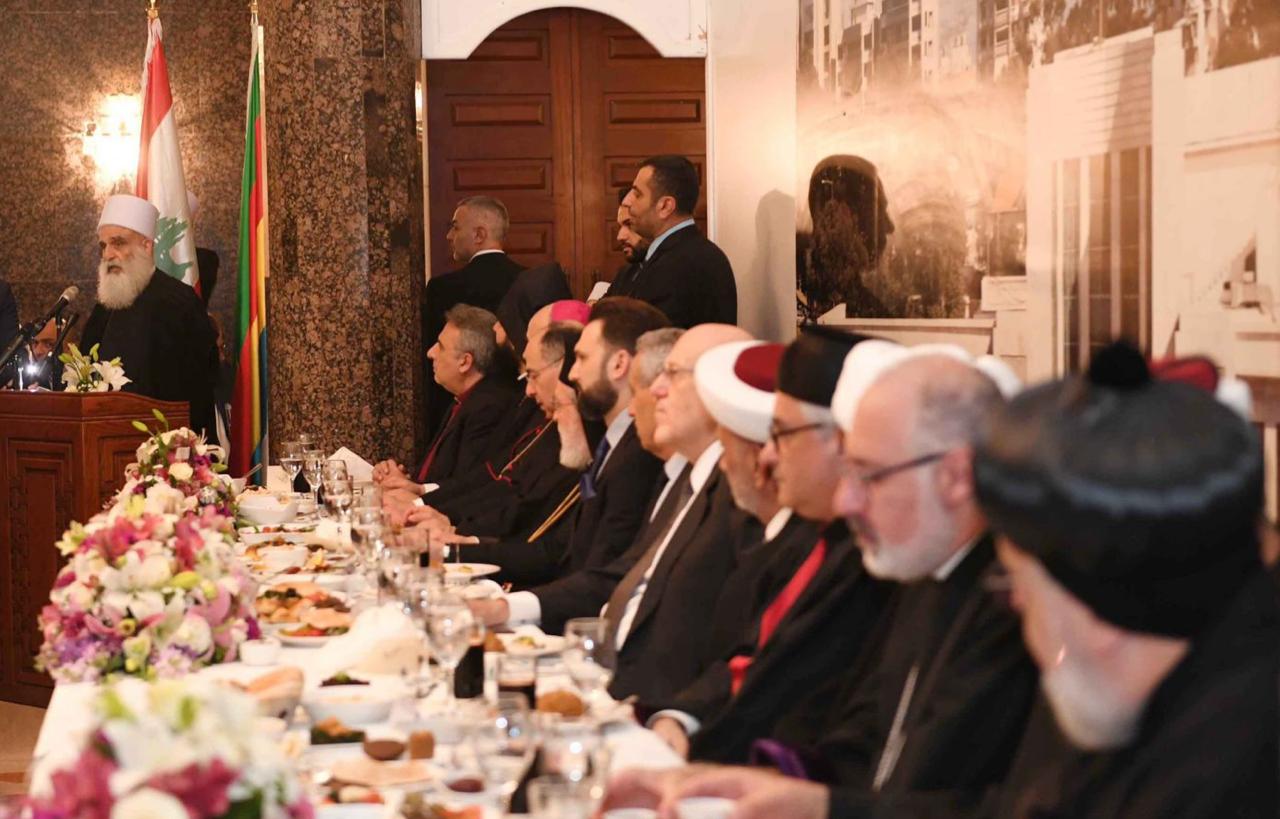
Sheikh Akl
From the speech of His Eminence the Sheikh Akl at the Iftar:
In the name of God, the Most Gracious, the Most Merciful.
Praise be to God, Lord of the Worlds, and prayers and peace be upon the Master of the Messengers, his family, his good companions, and all the pure prophets of God.
Prime Minister, Representative of the Speaker of Parliament, Grand Mufti of the Lebanese Republic, my brother Sheikh Abdellatif Derian, Your Eminences and Beatitudes, the spiritual heads of the communities and their esteemed representatives, Their Excellencies, the ministers, deputies, ambassadors, leaders, directors, judges, sheikhs, dear friends, benefactors, and honorable guests,
We are pleased, on behalf of the Mashyakhat al-Aql and the Druze Council, and on behalf of the hosts, to welcome you in the presence of the blessed month of Ramadan, as spiritual and official leaders, national figures, and social elites. We are gathered between Easter and Eid, regardless of our different sects and diverse appearances, as brothers in nationality and humanity, brothers in moral, cultural, and historical values, in social and practical relationships, and brothers in faith, according to His saying, the Almighty: "The believers are but brothers."
This religious and social occasion par excellence was intended, in coordination with the honorable leader Walid Bey Jumblatt, to be a national and spiritual gathering, reflecting the image of this house and its people—who have always been, and remain, a link of connection rather than separation, and a symbol of unity rather than exclusion. It is the house of "Ma'rouf" (the Druze), a beacon of love, mercy, and brotherhood, without which no life can be stable and no national or social structure can stand, as a sacred trinity: Christian love, Islamic mercy, and Unitarian human brotherhood. These are the pillars of the highest pyramid and the foundations of the strongest structure.
Brothers and loved ones,
We welcome you warmly on one of the nights of this holy month, about which the Prophet (PBUH) said: "A month that is, in the sight of God, the best of months; your deeds in it are accepted, and your supplications are answered." How could it be otherwise when we are living in the atmosphere of the blessed Night of Power, which is better than a thousand months, "Peace it is, until the rising of the dawn"? Together we pray and together we supplicate, a supplication that will be answered by God's will and power, with the hope that we purify ourselves from stubbornness, our state from corruption, and our homeland from enemies, and that souls, land, and rights are protected, dignity is preserved, and peace prevails in our Levantine Arab region.
It is true, brothers, that the scene is tragic, the color of life is becoming the color of blood and destruction, and the leaders of the brutal enemy are moving toward more madness and criminality, as if the language of reason is on vacation, time is reaching its end, and the world is fading. But the truth is otherwise; right exists, and hope is placed in the people of reason and wisdom and in the advocates of peace in every place and time. Responsibility, even if it falls primarily on the major powers who make decisions, means that every one of our states is concerned with preserving its people, addressing its conditions, and protecting its entity, and every nation is worthy of forging its unity and preserving its culture and existence. None of us should abandon our responsibility, whether our position is high or low, for as the Prophet (PBUH) said: "Every one of you is a shepherd and every one of you is responsible for his flock."
Let us work together with responsibility, and with the spirit of the passengers on one ship. Our national ship is one; together we sink if we fight and divide, and together we survive if we cooperate and look forward. Even if the captain has been absent for over a year, which is not reassuring, we are all concerned with the safety of the ship and responsible for its passengers—step by step, in education, culture, productive work, legislation, elections, administration, and implementation, in diverse but integrated tasks that embrace one cause: the cause of Lebanon as a mission-homeland. This is the essence of partnership and care, the sunnah of national life, and the path to salvation.
Loved ones, dear brothers,
I find this an occasion to express what is on our minds as spiritual leaders. I do not think any of us opposes another, and even if we have not yet succeeded in holding an anticipated spiritual summit due to the rapid developments, it exists constantly between us. We still open doors to it and to any collective meeting that reflects the truth of our spiritual, social, and national unity and the content of our moral and human mission. In the bilateral meetings we have held, we have pledged to work together to strengthen the ties of common living among our spiritual families, to create positive climates in the country, and to open the way for officials to engage in effective dialogue and sincere cooperation for the sake of rescuing the homeland and advancing the state.
We praise the Creator, Almighty and Exalted, for the blessing of faith that unites us, and for the deep meanings contained in the truth of us being sons of this unifying civilized homeland and this highest model of diversity in unity. It has a right over us to be understood deeply, and for us to manage and benefit from it well, and to reject voices calling for any form of partition or regional or sectarian fragmentation. We must bear the responsibility of preserving its charter, its high human mission, and its existence.
We have repeatedly demanded respect for the Constitution, the acceleration of election and appointment processes in accordance with constitutional principles, and the highest level of understanding to preserve the state from fatal disintegration. We reject procrastination, waiting, internal vetoes, and surrender to immediate settlements that, while sometimes seemingly pleasant, are often weak and produce governed officials. Internal disintegration has become an invitation for external intrusion, as if Lebanon has become its own enemy. The outside world, while interested in us through a quintet committee, individual contacts, or bilateral initiatives, should not mislead anyone into thinking we are at the top of their priorities, allowing us to rest on the silk of promises and illusions as if we are not the ones concerned with producing solutions and saving the homeland.
We have demanded, and continue to demand, that officials—each in their place and according to their position, despite the painful vacancy in the presidency—prioritize the living and social conditions, and take the initiative to find possible solutions to alleviate the suffering of the Lebanese people and curb the brain drain. We thank the Council and the government for some necessary achievements that prevented despair from taking hold of the people. This is the required minimum, and perhaps the maximum possible in the light of the unnatural state the country is experiencing.
We have also warned, as others have, of a range of risks and challenges, with Syrian displacement at the forefront, along with the resulting uncontrolled borders and smuggling operations. This calls for a unified vision on how to deal with the displaced and refugees in a way that ensures the safety of Lebanon first from negative economic, social, security, and political repercussions, and preserves the dignity, safety, and acceptable living of the displaced and refugees on the other hand.
We also warned, and continue to warn, against the danger of any national group seeking to exert power over another, regardless of the motives or justifications. Lebanon is only built on a fixed golden moral rule that dictates every spiritual family must preserve its partner in the homeland, not only itself. This requires working to strengthen a culture of citizenship as an alternative to any factional culture, in addition to strengthening the culture of national belonging and the culture of self-defense and confronting any aggression against the homeland, based on an internal unity fortified by a strong army and a cohesive popular will. Together, these form a deterrent force for anyone who attempts to violate the entity and does not drown the homeland in uncalculated adventures, internal disputes, and crises it cannot bear.
On another level, we have emphasized the necessity of self-reliance and stimulating well-off Lebanese people, expatriates, and capable businessmen to invest in Lebanon and participate in raising the level of local production and self-sufficiency, in addition to the importance of investing endowment lands belonging to the communities in a way that achieves their purpose, confirms the religious duty towards them, and helps in providing job opportunities for Lebanese youth and contributing to the economic recovery process.
We have also called together to confront a danger no less significant than any political, security, or economic threat: the danger of moral looseness and the spread of a culture that erodes principles, which contradicts our noble culture and traditions. We have emphasized with our brother spiritual leaders the importance of embracing educational, cultural, and social initiatives that aim to preserve the family and values, which is something we have begun with the Ministry of Culture—thankfully—and we insist upon it with the Ministry of Education and civil society institutions.
Prime Minister, Your Eminences and Beatitudes, honorable guests,
We have become accustomed to calling with you for the adoption of wisdom and consultation (Shura) in making national decisions, and in dealing with issues related to regional conflicts, to ensure that Lebanon is not detached from its Arab surroundings and the causes of the nation, and does not align itself with conflicting axes that expose it to destructive wars and confrontations. From the beginning, we raised our slogan: "Neutrality towards everything that divides, and alignment with everything that unites," in the hope of fully implementing the Taif Agreement and establishing the Senate to take on this task constitutionally. We hope that the steadfastness of the South, the pain of the Southerners, and the blood of the martyrs will be an incentive for us to be alert, achieve understanding, and protect the state, and that the people's daily living pain will be a motivator for us to adopt realistic initiatives and serious treatments.
Lastly, we reiterate our solidarity with the oppressed Gaza, and our condemnation of the barbaric Israeli aggression on the Palestinian Arab people, the violation of their land, the usurpation of their rights, the violation of their dignity, property, and the blood of their children, women, and elderly. We also condemn the blatant, repeated attacks on Southern Lebanon, the Lebanese people, and the UNIFIL forces recently. We hold the international community and the decision-making states responsible for working to stop these attacks and ignoring UN resolutions and international charters related to the rights of humans and peoples, demanding the deterrence of aggression, the cutting off of its means of support, and the finding of final, just solutions to the Palestinian cause so that the Palestinians may have their unified, independent, and fully sovereign state.
Brothers, honorable guests,
These are some realistic ideas and positions that we all agree on, as they are what we would have had to issue in any potential meeting or spiritual summit. The Islamic month of fasting and the happy Eid have met with the time of the Christian fasting and the glorious Easter, as if this meeting urges us towards a constitutional fast and a national resurrection, or as if it is akin to a spiritual, social, and national summit, in which we had the honor of hosting you today at the table of goodness and blessing. Perhaps we open from here—from the unifying Community House—and with your intertwined hands, the doors of understanding, rescue, and the hope that the Lebanese people await, hoping for God's mercy and help, and wishing you happy days and blessed holidays.
Happy New Year, our thanks and appreciation to you all, and may peace and God's mercy and blessings be upon you.
To watch the video click here