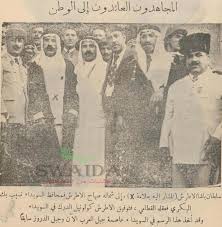

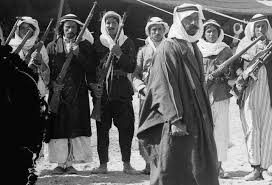
After nearly 10 years spent by the General Commander of the Great Syrian Revolution, Sultan Pasha al-Atrash, and his companions and their families in exile in Wadi al-Sirhan, and the signing of the Independence Agreement in 1936 and the issuance of a general amnesty for the rebels in May 1937, a farewell ceremony was held for the rebels.
At this ceremony, the Lebanese historian, writer, and man of letters Ajaj Nuwayhed addressed the General Commander and his companions, saying: “You are returning to Jabal al-Druze, or rather to Jabal al-Arab...”, to which Sultan interrupted him, saying: “Yes, Jabal al-Arab, this is the true name, and anything other than it is unacceptable.”
The name Jabal al-Druze became famous after the French Mandate authorities turned it into an independent state in 1921, as that name began to appear in French decrees, books, and publications.
Jabal al-Arab has been a refuge for those fleeing injustice throughout history, and its people have been protectors of those seeking asylum. This was expressed by Fares al-Khoury, one of the most important Syrian national figures of the modern era, when he said in a parliamentary session that: “This mountain was and still is a home for the Arabs fleeing from Ottoman-Western colonial injustice, and we ought to call it Jabal al-Arab instead of Jabal al-Druze.”
It is worth mentioning that Jabal al-Arab has many names, including Bashan, which appeared in the Torah and in Aramaic writings, meaning the fertile land; Trachonitis (a Greek name meaning the land of stones); Giranway (an Assyrian name meaning the hollow lands); Auranitis (a Roman name meaning the land of caves), in addition to many Arabic names such as al-Rayyan, al-Batina, Bani Hilal, Hauran, and others.