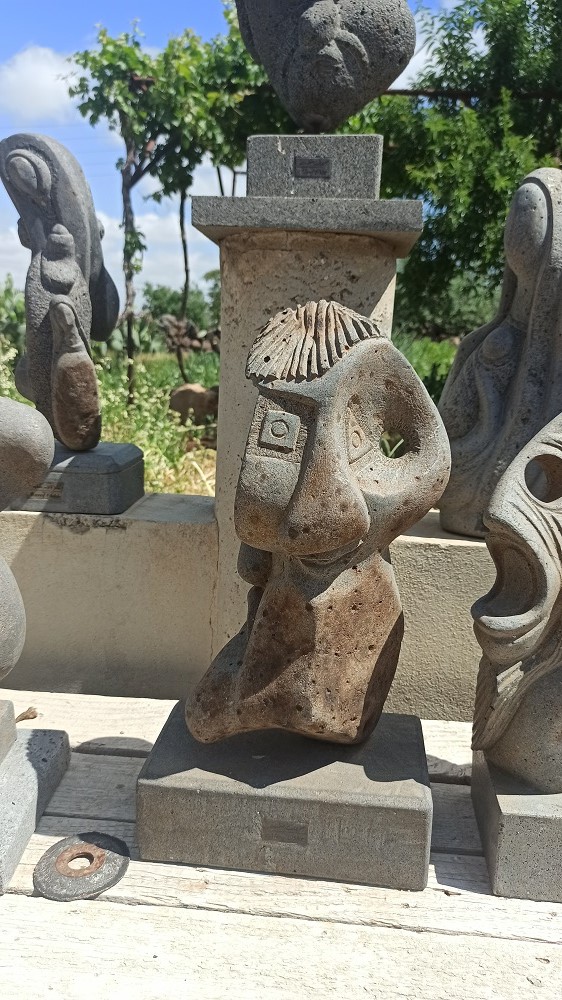

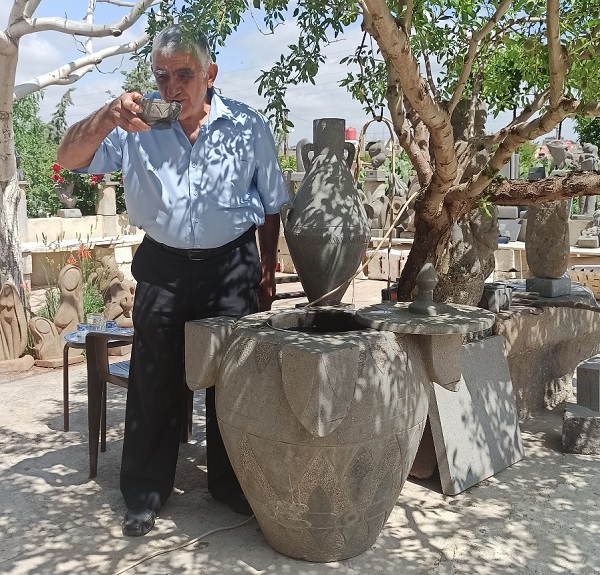
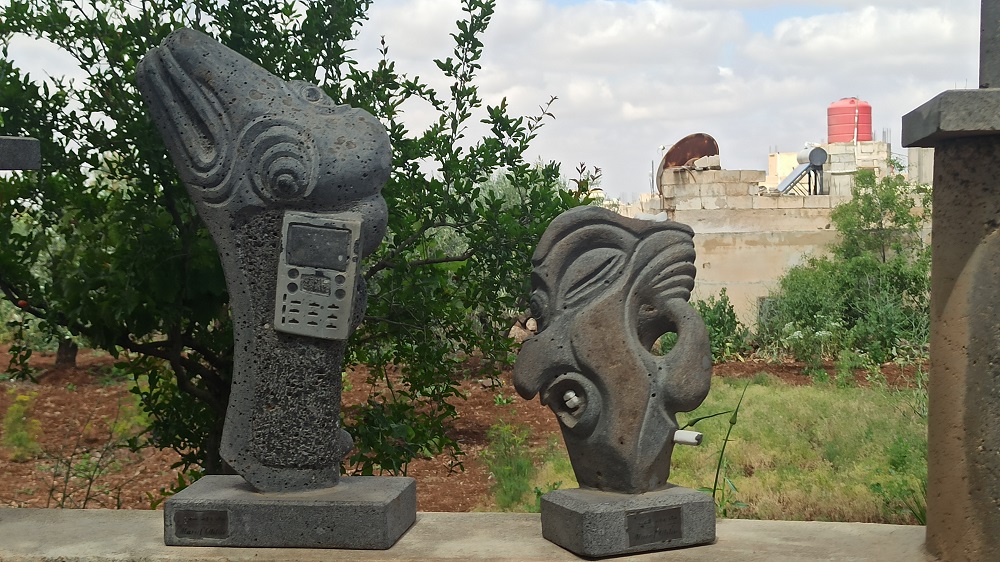
Maarouf Shuqair, a visual artist in the town of Al-Qurayya in the southwestern countryside of As-Suwayda, has specialized in basalt sculpture for decades. He is considered a pioneer of this art in Syria, having managed to extract hundreds of wonderful works of art from the hardness and rigidity of the stone.
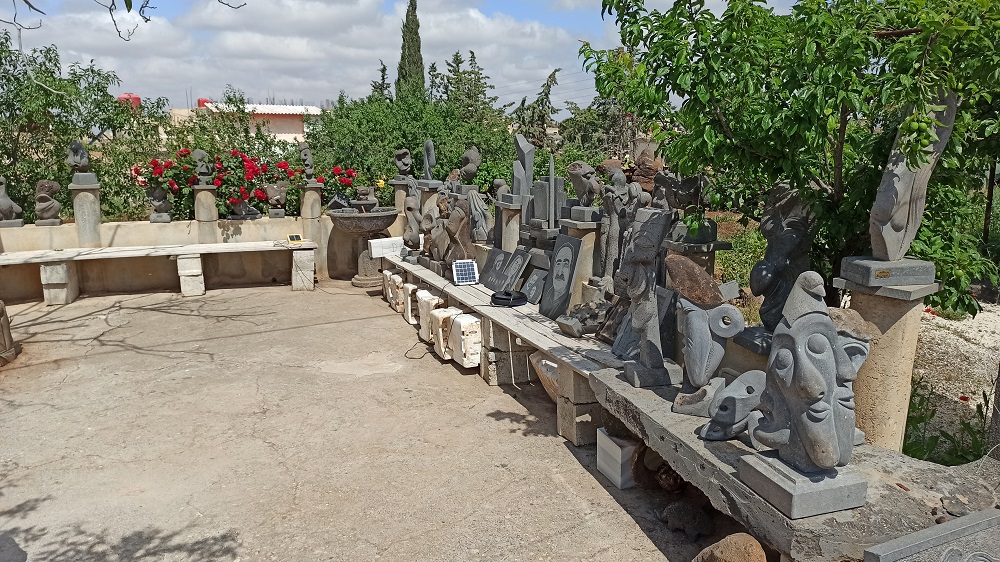
Shuqair's passion for sculpture and nature led him to establish a natural museum in his home, where he exhibits his hundreds of sculptures.
A talent influenced by surrounding Roman antiquities
Shuqair (67 years old) says that his artistic beginnings in basalt sculpture were in 1983, as the surrounding environment was a catalyst and influence on his artistic start. He used to observe the antiquities known as Roman ruins, such as Shahba, Qanawat, and Bosra Al-Sham, which, in my opinion, are ruins built during the Roman occupation by local Arab hands, including in the fields of plastic arts and architectural engineering,” pointing out that “those ruins used to grab attention with the precision of construction, their function, and the skill of workmanship, so they remained in my memory and imagination.”
The first to introduce basalt to the Syrian visual arts scene
Shuqair continues, “I consider myself one of the first to introduce this material to the Syrian visual arts scene, although there were colleagues who practiced this craft and created some sculptural works, their pieces remained local.” He adds, “I presented it in official exhibitions, and I continued to hold an exhibition in Syria every two years to spread this art.”
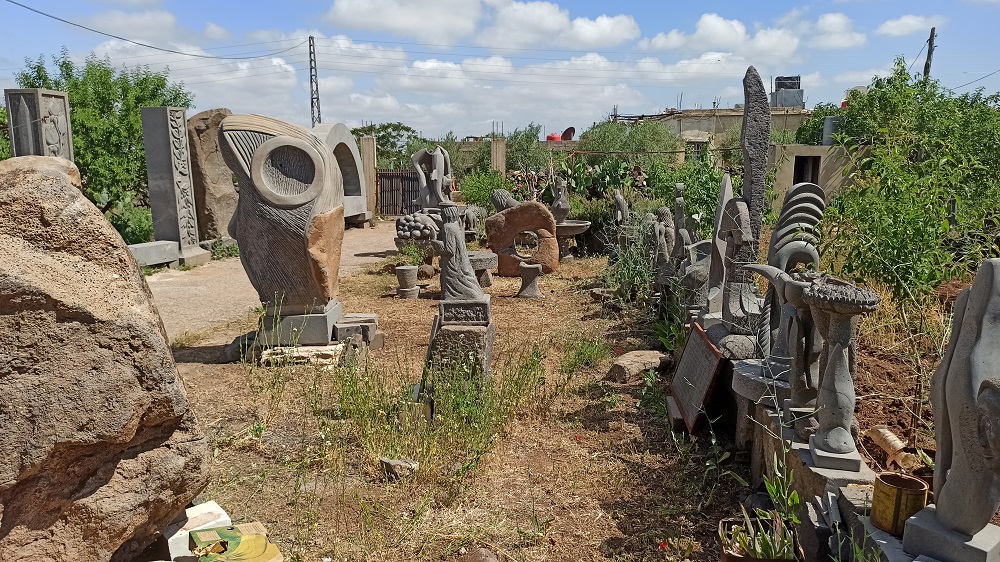
Shuqair added, “I was able to employ artistic schools such as abstract, cubist, and expressionist art in this field. I introduced them to this stone because you are an artist and you must address the minds and brains of people, and consequently, your works are for time. The contemporary generation will perish and the artist will perish, so these works remain to speak about the thought of this human in a visual language that they desired, and it became an important, eternal, and everlasting historical document.”
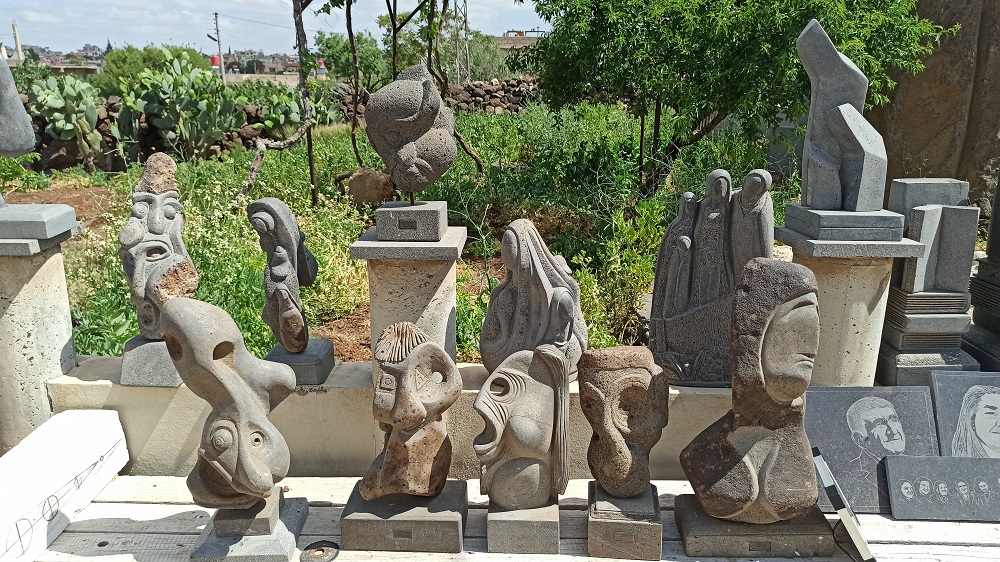
Maarouf Shuqair's participations have exceeded 150 exhibitions, including his own private exhibitions and exhibitions by the Ministry of Culture, including an exhibition in Paris on the sidelines of the announcement of Damascus as the Capital of Arab Culture.
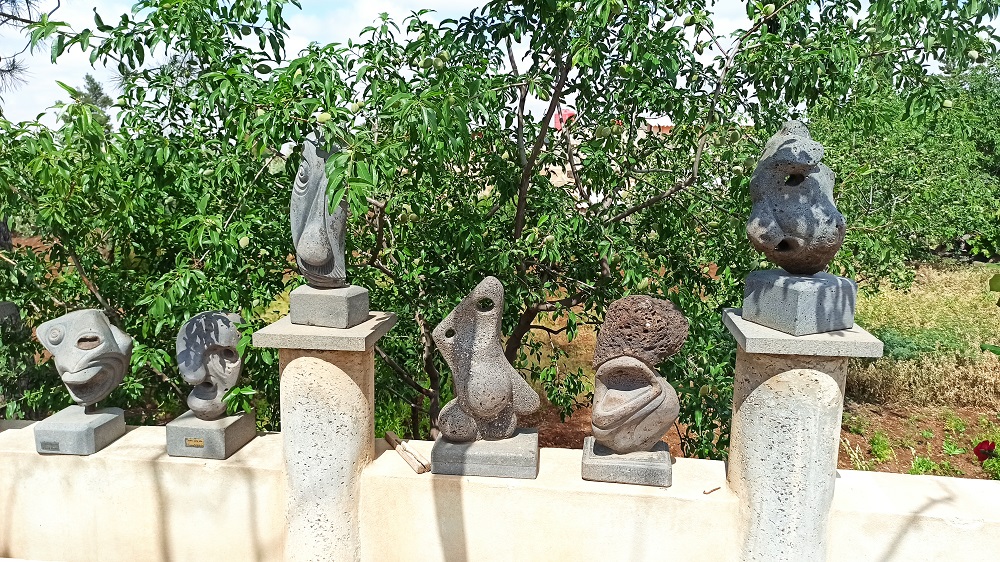
The lengths of Shuqair’s sculptural works, which reach the hundreds, range between 2 cm and 5 meters.
Shuqair has completed dozens of sculptures and monumental works of basalt that are distributed in public squares in Syrian governorates, which are linked to people's lives and heritage. In addition, his works have spread to neighboring countries through private exhibitions that I used to hold in Damascus, which were acquired by some ambassadors and members of the diplomatic corps, as some considered them to be antique works.
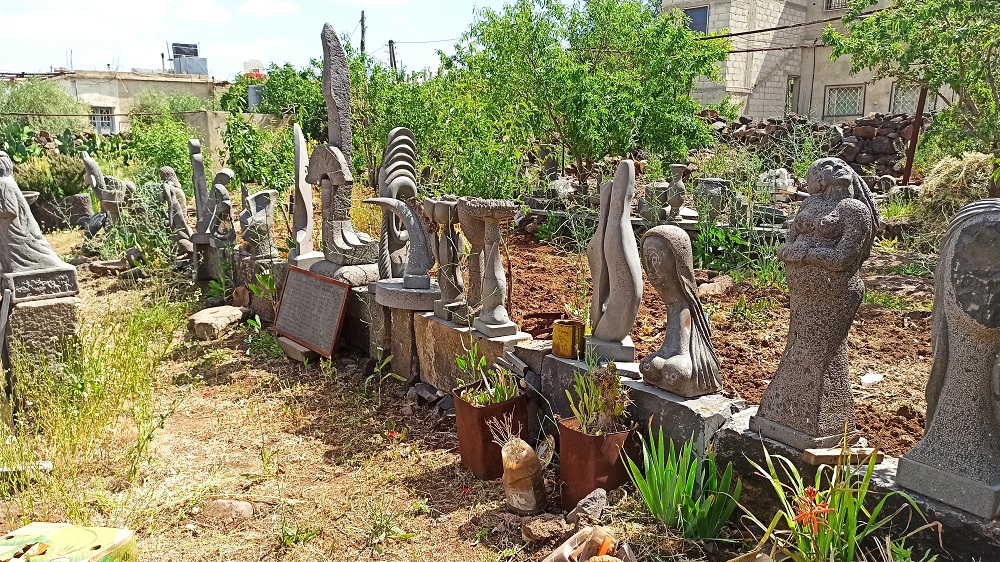
Basalt works are immortal
Shuqair describes basalt sculpting as “difficult because of its hardness and resistance,” considering that “the love of work and conviction in basalt as an immortal work make this stone soften.”
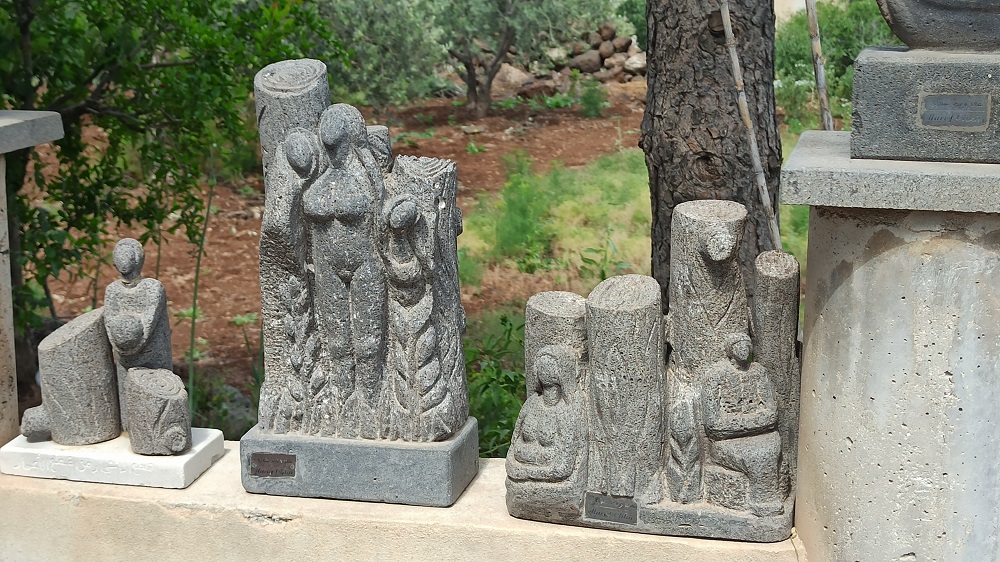
Shuqair added that he “worked in his beginnings for 10 years using primitive tools such as a hammer and chisel, as if I were living in the Roman era, in addition to the suffering of transporting large rock masses in the absence of heavy machinery.”
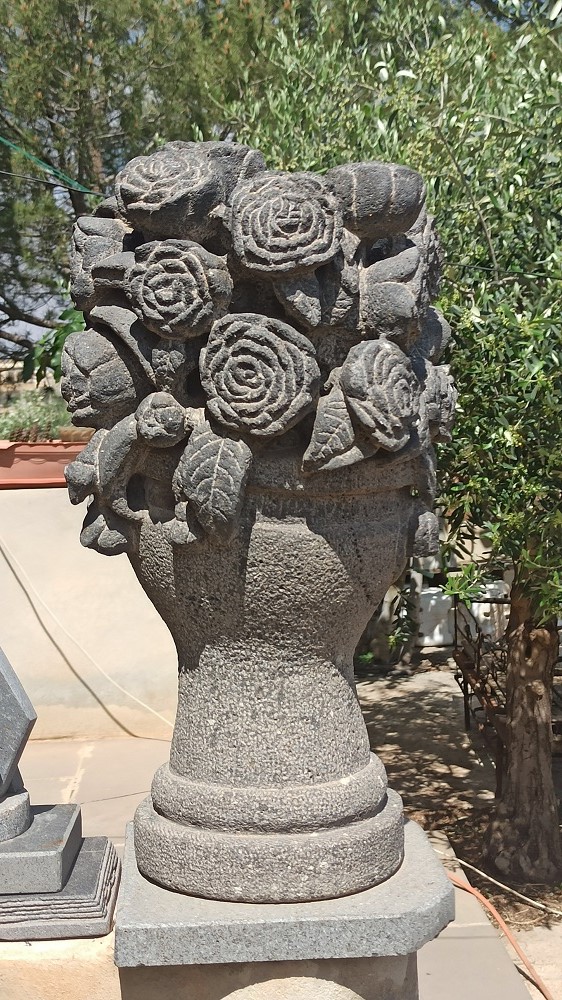
Natural museum
With his passion for art and sculpture, Shuqair transformed his home into a museum to display artworks, the first Syrian to do such a thing.
Shuqair says that we “generally used to see sculptural works in galleries for a limited time, so the idea of opening a permanent open-air museum occurred to me, for people and fans of visual arts to visit and see the sculpted works and the tools used, as well as to interact with the artist by talking to him and watching him work.”
Shuqair added that “the goal of this museum is to encourage talented people of all age groups to practice and hone their skills.”